Choosing among interior design styles is harder than it looks, because the names overlap. "Modern" and "contemporary" get used as synonyms, "farmhouse" and "coastal" both lean on white walls and natural textures, and half the rooms on Pinterest are labelled "minimalist." This guide compares 11 interior design styles on the things that actually decide how a room looks and lives: where the style came from, which materials and colors it relies on, how much upkeep it needs, and which homes suit it best.
Read it once, then use the table and the decision guide near the end to narrow your shortlist to two. You can see every style applied to a real room on our interior style pages before you commit to paint or furniture.
Four Questions That Separate One Style From Another
Most style confusion disappears when you stop looking at photos and ask four questions about each look.
- Where did it come from? Styles tied to a historical movement (Art Deco, mid-century modern, industrial) have fairly fixed features. Styles tied to a lifestyle or a region (coastal, farmhouse, bohemian) are looser and easier to adapt.
- How much ornament does it allow? Modernism rejected decoration for its own sake. Art Deco and traditional interiors embrace it. This single question explains most of the visual difference between the two camps.
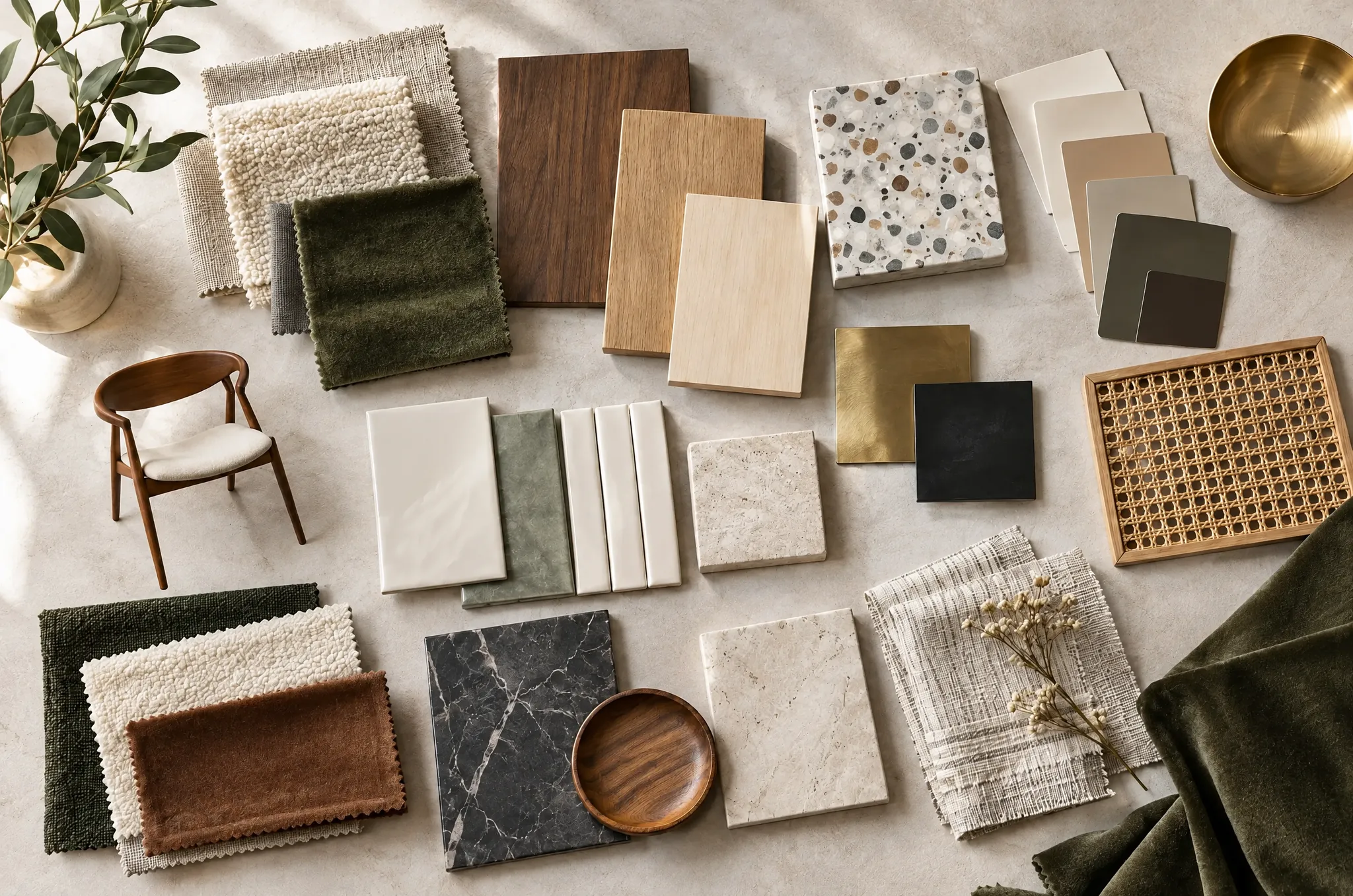
- What are the hero materials? Wood species, metals, stone, and textiles do more to define a style than furniture silhouettes do.
- How much does it ask of you? Some styles look best with almost nothing on the surfaces. Others only work when the room is layered, collected, and a little lived in.
The Quick Comparison Table
| Style | Roots | Palette | Hero materials | Ornament | Best for |
|---|---|---|---|---|---|
| Modern minimalist | Early 20th-century modernism | White, gray, black | Glass, steel, concrete, light wood | Almost none | Small rooms, people who dislike clutter |
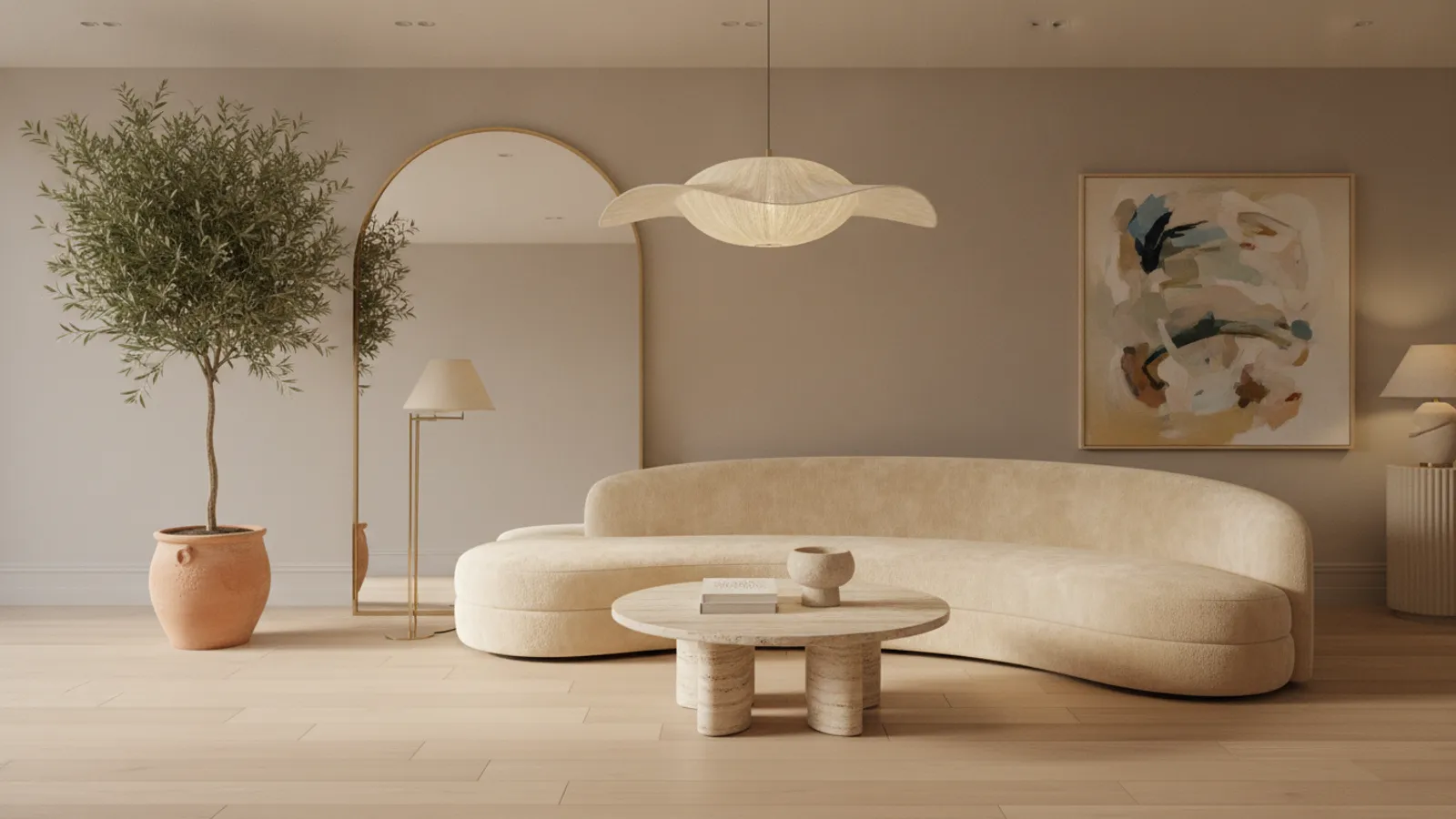
| Contemporary | Became distinct around the 1970s; always changing | Neutrals with bold contrast | Mixed, often glossy or smooth | Low to moderate | Open plans, anyone who wants a current look |
| Scandinavian | Danish and Nordic design of the 1940s–50s | Whites, pale woods, soft gray | Pale wood, wool, linen | Low | Homes with limited daylight, families |
| Japandi | Japanese and Scandinavian design combined | Warm neutrals, muted earth tones | Oak, walnut, ceramics, linen | Very low | Calm bedrooms, small living rooms |
| Mid-century modern | Post-war design, roughly 1945–1969 | Warm wood plus saturated accents | Teak, walnut, molded plywood | Low | Ranch homes, vintage furniture lovers |
| Art Deco | Paris, 1920s–30s | Jewel tones, black, gold | Lacquer, chrome, glass, brass | High and geometric | Dramatic dining rooms, powder rooms |
| Industrial | New York loft conversions, 1950s–60s | Gray, black, brick red, tan | Brick, concrete, steel, aged leather | Low, raw finishes | Lofts, basements, garages turned into rooms |
| Traditional | Classic European and American interiors | Deep, rich, layered | Dark wood, silk, brass | High | Formal homes, collectors of antiques |
| Farmhouse | Rural American homes | White, cream, black accents | Shiplap, reclaimed wood, iron | Moderate | Family kitchens, open living areas |
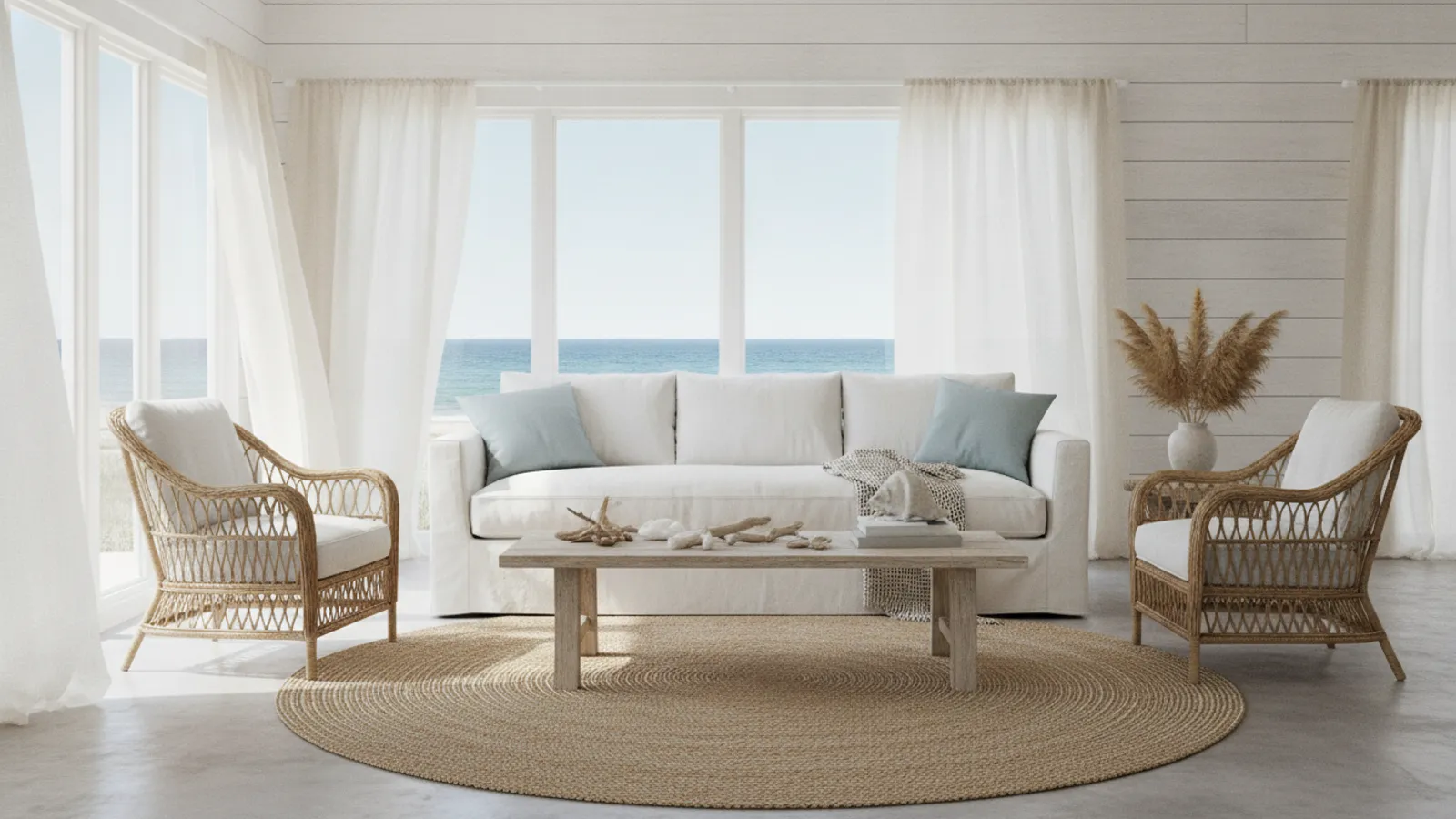
| Coastal | Seaside homes | White, sand, sea blue | Whitewashed wood, rattan, cotton | Low to moderate | Sunny rooms, vacation-style bedrooms |
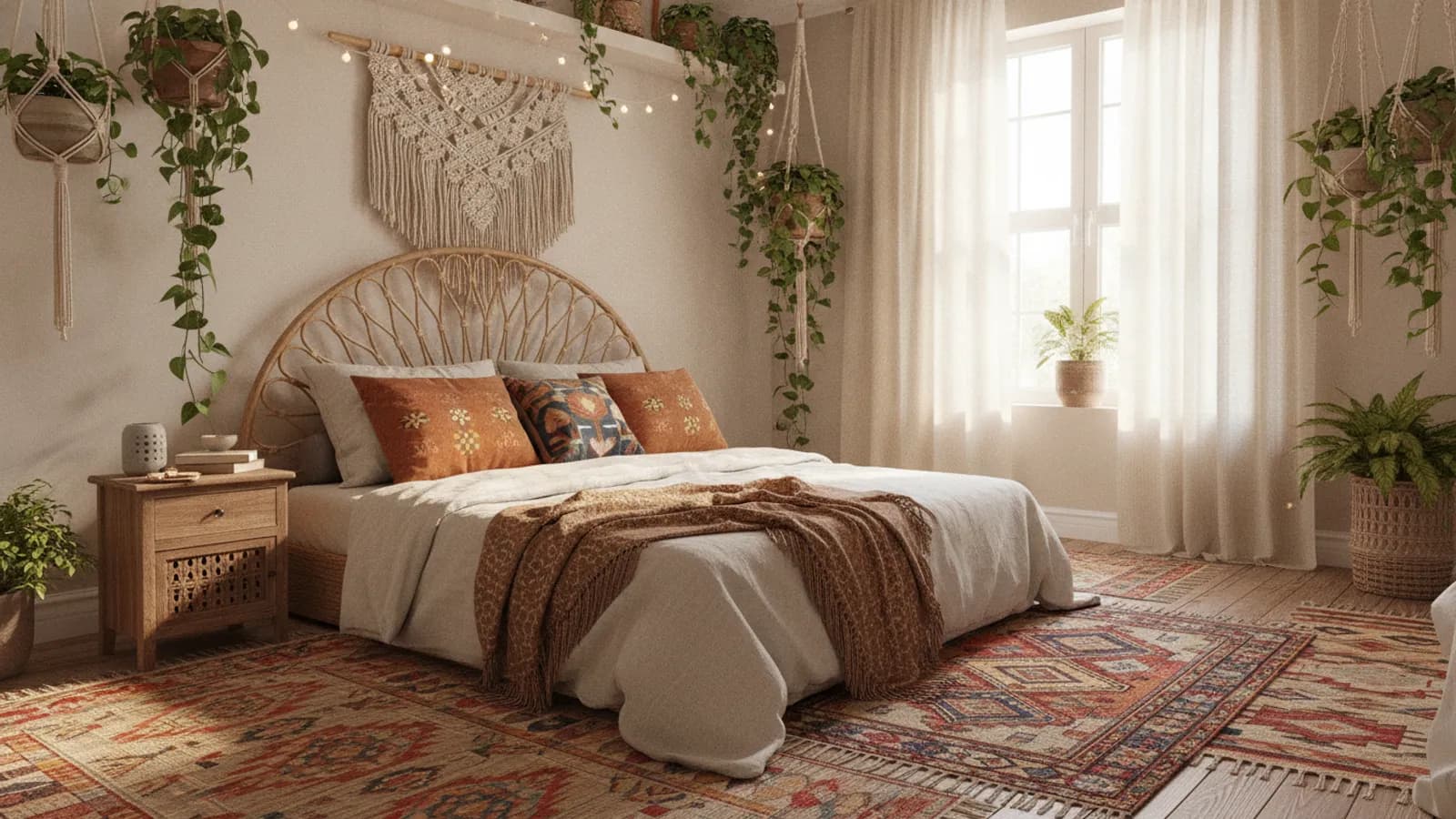
| Bohemian | Artistic, travel-collected interiors | Saturated, mixed | Rattan, kilim, macramé, plants | High and eclectic | Renters, collectors, creative spaces |
Group One: The Pared-Back Styles
Modern Minimalist
Modern minimalist design descends from the modernist movement. The V&A describes modernism as promoting sleek, clean lines and eliminating decoration added purely for embellishment, taking its cues from technology, factories, and usefulness. The Bauhaus school, founded in Germany in 1919, pushed the idea that form follows function.
In practice, that means flat planes, hidden storage, a limited palette, and large areas of empty surface. It works well in small apartments because there is little to visually compete with the room itself. Its weakness is the flip side of that discipline: a single stack of mail on a minimalist counter shows. If you shed belongings reluctantly, this style will feel like constant editing. Our modern minimalist interior design guide shows how to keep it warm.
Contemporary
Here is the distinction that trips most people up. Modern is a historical movement. Contemporary simply means what is current. Architectural Digest quotes designers who describe modern as a style that has already passed, and contemporary as fluid and ever-changing. Contemporary design as a recognizable look emerged around the 1970s, borrowing from modernism, postmodernism, Art Deco, and other sources.
Today that usually reads as clean lines, smooth finishes, a neutral base, and one or two bold contrasts. Because it is defined by the present rather than a rulebook, it is the easiest style to update: swap the accent color and the lighting and the room moves with the times. The contemporary interior design guide covers what is current without dating the room.
Scandinavian
Scandinavian design grew out of Nordic functionalism. According to denmark.dk, Danish design became popular in the 1940s and 1950s, when its light, simple furniture suited the clean lines of the new International Style architecture, and its core traits are simplicity, functionality, and elegance. The Design Museum Denmark frames Danish Modern as a rebellion against the crowded Victorian living room.
Hygge is often attached to this style, but it is better read as a way of living than a decorating rule. The Danish government's own explainer describes it as taking time away from the daily rush to relax with people you care about, and says the word dates to around 1800 in its present meaning. In a room, that translates into warm, layered light, soft textiles, and pale wood against white walls. It is a good fit for dim northern rooms because light surfaces bounce daylight around. See the full Scandinavian interior design guide.
Japandi
Japandi takes the restraint of Japanese design and the warmth of Nordic design and keeps the best of both. Japanese wabi-sabi values imperfection and empty space. Scandinavian hygge adds comfort. The Metropolitan Museum of Art notes that this East-West exchange is not new: in the post-war years Scandinavian designers combined natural materials with advanced technology, while Japanese designers balanced traditional Asian and international modern aesthetics.
A Japandi room has fewer objects than Scandinavian, more softness than strict minimalism, and a palette of warm neutrals and muted earth tones. Handmade ceramics, low furniture, and natural fibers carry the look. It is an excellent choice for bedrooms. Start with our Japandi interior design guide for palettes and materials.
Group Two: Styles Rooted in a Specific Era
Mid-Century Modern
Mid-century modern is usually dated from the mid-1940s to the late 1960s. The Metropolitan Museum of Art describes a post-war boom in design driven by the need for inexpensive housing and furnishings, with new materials developed during wartime freeing designers from tradition. Herman Miller notes the era's open floor plans, large windows, and furniture built from teak, rosewood, oak, and walnut alongside molded fiberglass and plastic.
Charles and Ray Eames made molded-plywood chairs that were unveiled to the public in 1946. Their approach, in Ray Eames's words, was that what works is better than what looks good. The look today: tapered legs, low profiles, organic curves, warm wood, and saturated accent colors. It suits ranch-style and split-level homes especially well. Read more in our mid-century modern interior design guide.
Art Deco
Art Deco is the maximalist cousin of modernism. Britannica traces it to France in the mid-to-late 1910s, maturing at the 1925 Paris Exposition Internationale des Arts Décoratifs et Industriels Modernes, the exhibition from which the name later derived. It combines sleek, geometric or stylized forms with luxury materials: the National Museums Liverpool lists precious metals, chrome, glass, ivory, lacquer, and hardwoods, plus jewel tones such as ruby red, emerald green, and vivid blue.
Unlike pure modernism, Art Deco keeps its ornament. Expect sunburst mirrors, stepped forms, fan motifs, and glossy finishes. It is a lot for an entire house, so most people apply it to a single dramatic room such as a dining room or powder room. Our Art Deco interior design guide shows how to dose it.
Industrial
Industrial style is a by-product of a housing story. In New York in the 1950s and 1960s, artists moved into former factories and warehouses for cheap, spacious live-work space, and the features that had served manufacturing became the look: open plans, high ceilings, large windows, exposed brick, concrete, beams, and ductwork. The movement started out illegal, and artists' advocacy led to the Artist in Residence program that began legalizing loft living.
At home, that means raw brick or concrete, black steel, aged leather, and muted colors that complement those materials. It works brilliantly in lofts, basements, and converted garages. In a standard drywall room, use it sparingly: a steel shelf, a pendant light, one brick wall. The industrial interior design guide explains how.
Group Three: Warm, Layered, Lived-In Styles
Traditional
Traditional interiors are built on symmetry, classic furniture shapes, and richly layered fabrics, with deeper colors and more ornament than any modern style. The room is composed in pairs: matching lamps, matching chairs, a clear focal point. If you inherited furniture or you love antiques, this is the style that gives them a proper home. Its demands are mostly about maintenance of finishes and fabrics. See our traditional interior design guide.
Farmhouse
Farmhouse borrows from rural American homes: shiplap or board walls, reclaimed wood, iron hardware, and a white or cream base with black accents. It is warm and forgiving, which is why it dominates family kitchens. The risk is that it turns into a catalogue of rustic props. Choose a few real materials, such as a thick wood table or a farmhouse sink, and edit the signs and faux accessories. The farmhouse interior design guide shows how to keep it authentic.
Coastal
Coastal style uses white, sand, and sea-blue tones with whitewashed wood, rattan, cotton, and linen to make a room feel breezy. It works best when there is natural light to bring the palette to life. Inland, the trick is restraint: pick one blue and let texture, not seashell decor, do the work. Our coastal interior design guide has room-by-room ideas.
Bohemian
Bohemian rewards collectors. Layered rugs, plants, rattan, macramé, and art from different places make a room that looks accumulated over years. It is flexible for renters since much of the look is portable. The discipline it needs is a loose through-line, usually a repeating color or material, so the room reads as collected rather than cluttered. Explore the bohemian interior design guide.
How to Choose: A Short Decision Guide
- You want calm and have little storage: Modern minimalist, Japandi, or Scandinavian.
- You love vintage furniture: Mid-century modern, or traditional if your pieces are older.
- Your home has strong architecture, such as exposed brick or concrete: Industrial.
- You want drama in one room: Art Deco for a dining room or powder room.
- You need a forgiving, family-friendly look: Farmhouse or coastal.
- You collect things and change your mind often: Bohemian or contemporary.
- You are not sure: Choose contemporary or Scandinavian as a base. Both accept additions without clashing.
Let the architecture of your home vote too. A low-slung 1960s ranch invites mid-century pieces. A brick warehouse conversion argues for industrial. A cottage near the water gives coastal a head start.
Mixing Styles Without Making a Mess
Most real homes blend two styles. A few rules keep it coherent.
- Pick one dominant style and one supporting style. About two-thirds to three-quarters of the room should read as the dominant one.
- Share a common thread. A repeated wood tone, a common metal finish, or a consistent color temperature ties very different pieces together. Japandi works because Japanese and Nordic design already share natural materials and restraint.
- Mix eras through accents, not architecture. Add a mid-century chair to a contemporary room, but keep the big surfaces consistent.
- Test before you buy. Furniture and paint are expensive to reverse.
See Your Own Room in Each Style
The cheapest way to compare styles is to see them on your actual room. Upload a photo to our AI interior design tool, pick a style, and you will get a redesigned version in seconds. To try several looks on the same photo, use the style transfer tool and compare them side by side. For inspiration first, browse the before and after gallery to see real room transformations across kitchens, bedrooms, and living rooms.
Sources
Historical and definitional facts were checked in October 2026. Style descriptions that are not tied to a source are general design guidance.
- V&A — What was Modernism?
- Britannica — Interior design: 20th century (Bauhaus founded 1919)
- Architectural Digest — Contemporary interior design 101
- Better Homes & Gardens — Contemporary vs. modern design
- denmark.dk — World-famous Danish design (1940s–50s)
- denmark.dk — What is hygge
- Design Museum Denmark — Danish Modern
- The Metropolitan Museum of Art — Design, 1950–75
- Herman Miller — An in-depth look at the mid-century modern home
- Library of Congress — The work of Charles and Ray Eames: furniture
- Britannica — Art Deco
- National Museums Liverpool — What is Art Deco?
- Chicago Scholarship Online — The Lofts of SoHo (artist lofts, 1950–1980)
- Smithsonian Archives of American Art — Artist Tenants Association records (Artist in Residence program)