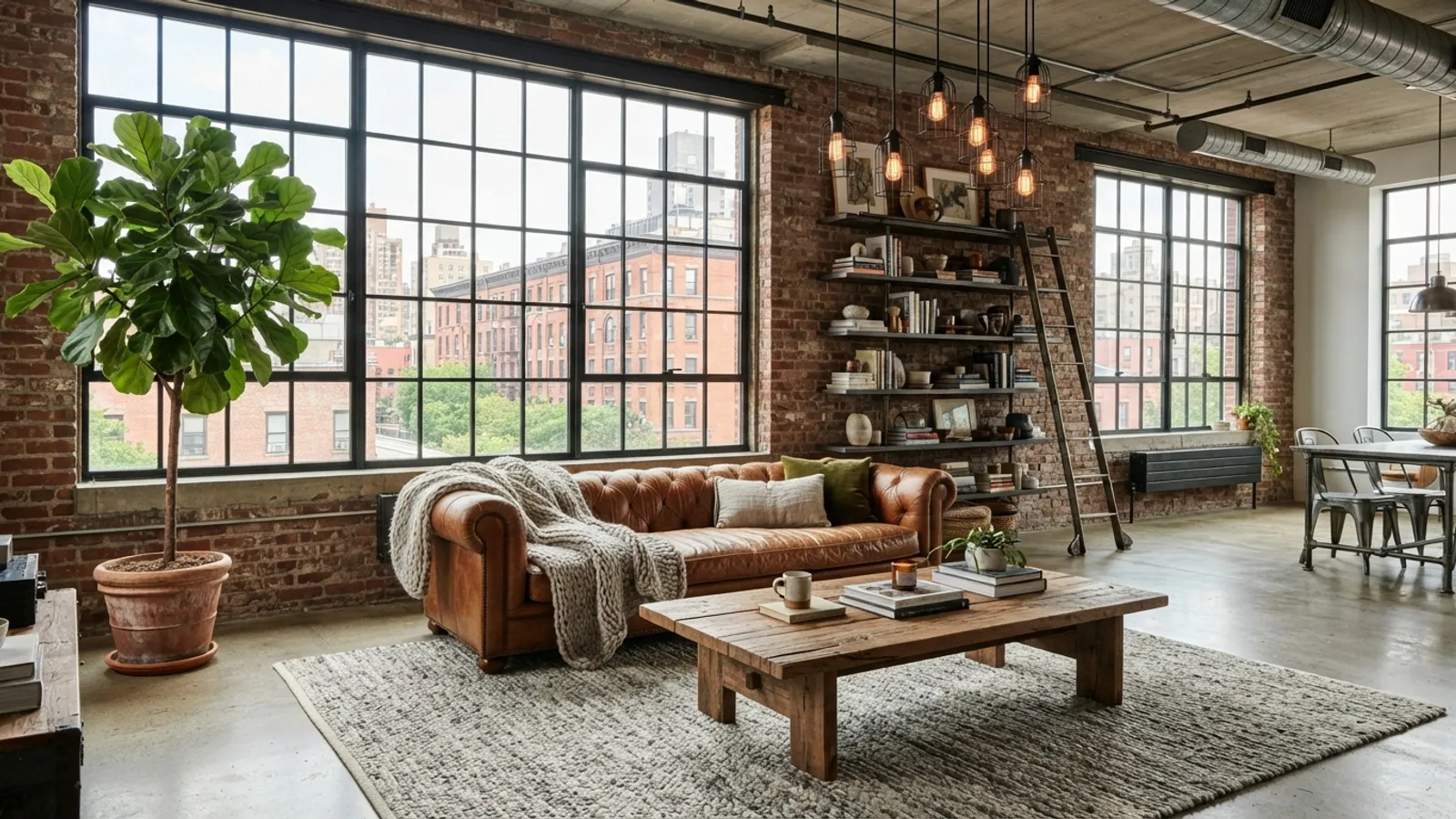
Industrial design is the style that treats a home like a workshop that happens to be comfortable. Brick is left bare, steel is left dark, beams are left visible and everything else is chosen to look as though it has earned its place. Done well, it is one of the most characterful interior styles available. Done badly, it feels like a storage unit with a nice sofa.
This guide explains how the style developed, what its defining features are and how to make them work in a real home, whether you live in a converted warehouse or an ordinary apartment. It includes a shopping list, room-by-room advice, a budget breakdown and the mistakes that most often make industrial rooms feel cold. For a shorter overview, see our industrial interior style page.
How Industrial Style Began
Industrial interiors started by accident. As manufacturing moved out of city centers in the mid-twentieth century, large factories and warehouses in places like New York, London and Manchester stood empty. Artists and other people priced out of conventional housing moved into them. The buildings came with high ceilings, huge windows, cast-iron columns and brick walls, and the new residents largely left them as they were, because renovation was expensive and the raw spaces were striking.
By the 1970s and 80s "loft living" had become fashionable, and developers began converting old industrial buildings deliberately. Designers borrowed the look for buildings that were never industrial at all. Today you can find the style in new apartments with concrete ceilings, in cafes, in kitchens with steel shelves and in family houses that use a few industrial pieces to add contrast.
The unifying idea is honesty. Structure and utility are shown rather than hidden, and the beauty comes from material and proportion rather than decoration.
The Defining Features
Most successful industrial rooms combine five ingredients.
- Raw surfaces — Exposed brick, concrete, plaster that has been left unfinished, and visible pipes or ducts.
- Metal — Black or dark steel in window frames, shelving, table legs and lighting, often with an aged or blackened finish.
- Reclaimed or heavy timber — Thick boards, beams and tabletops with visible grain, knots and wear.
- Big windows and tall ceilings — Large panes of glass, often in a grid, and vertical space that lets the room breathe.
- Utilitarian lighting — Cage pendants, factory-style domes, swing-arm lamps and exposed bulbs.
You do not need all of them. Two or three, used consistently, are enough to set the tone.
Building a Palette That Isn't Cold
The classic industrial palette is grey, black, rust and brown. On paper it is austere; in practice it works because each tone is a material rather than a paint color. Brick is red-brown, concrete is grey, steel is almost black and timber is warm. The risk is that, without warmth, the whole room slides toward cold.
Build the palette in layers:
- Base — Warm grey or off-white walls, concrete or dark timber floors.
- Structure — Black metal for windows, shelving and lighting.
- Warmth — Leather, wood, wool and linen in cognac, caramel, rust and cream.
- Accent — Deep green, mustard or navy in a rug, cushion or artwork.
If your room lacks natural light, keep walls lighter and add warm bulbs so that the metal reads as a detail rather than a mood.
Materials Guide
Invest In
- Solid or reclaimed wood for tables, shelves and beams. It ages well and gives the room warmth.
- Genuine leather that will develop a patina over time, rather than a coated imitation that cracks.
- Steel or iron with a durable finish, such as powder coating or a blackened wax finish.
- Wool rugs to soften hard floors and reduce echo.
Be Careful With
- Faux brick and plastic panels — Quality varies widely. Real brick slips are more convincing than printed wallpaper.
- Over-distressed furniture — Factory-made fake wear rarely looks right. Choose either genuinely aged pieces or clean modern ones.
- Too many bare bulbs — Exposed bulbs are fashionable, but a whole room of them is harsh. Use dimmers and warm bulbs.
What to Buy: An Industrial Shopping List
- A leather sofa or deep armchair — The most important soft piece. Cognac and dark brown suit the palette.
- A reclaimed-wood or butcher-block table — Dining or coffee, on steel legs.
- Metal shelving — Open shelving with a black frame gives storage and structure.
- Statement lighting — A cluster of cage pendants, a large dome lamp or an adjustable arm lamp.
- A large wool or kilim rug — The easiest way to add color and warmth to hard floors.
- Stools or chairs with metal frames — Tolix-style stools, school chairs or wooden bench seating.
- Vintage objects — Wall clocks, drafting lamps, crates and signs, used in moderation.
- Plants — Large leafy plants offset the hard materials. Rubber plants, monstera and olive trees all work well.
Room-by-Room Guide
Kitchen
The kitchen is where industrial design works best because its materials are already practical. Combine dark or grey cabinets with a butcher-block or concrete-effect worktop, add open steel shelving and hang pendant lights over the island. Stainless steel appliances belong naturally here. Warm the room with wooden stools and a rug. See our industrial kitchen ideas for layouts and finishes.
Home Office
An industrial workspace needs little more than a sturdy desk, a good chair and focused lighting. A steel-framed desk with a timber top suits the style, and a leather or wooden chair adds warmth. Use track lighting or an adjustable arm lamp. Browse industrial home office ideas for desk and storage options.
Living Room
Let the architecture lead. If you have a brick wall or large window, orient seating toward it. A leather sofa, a wool rug, a reclaimed coffee table and metal shelving make a complete room. Add warm lamps at different heights so that the space feels inviting in the evening. Our living room ideas page has more layout options.
Bedroom
Industrial bedrooms can feel stark, so prioritize softness. Use an iron or timber bed, layered linen and wool bedding, a large rug and warm bedside lighting. A single exposed brick or concrete wall behind the bed is plenty.
Bathroom
Use concrete-look tile, black fixtures and a steel-framed shower screen. Add wood in a vanity or shelf to warm the surfaces, and use warm lighting at the mirror.
Industrial Style in an Ordinary Home
You do not need a loft to enjoy the look. In a typical apartment or house, a few changes create the effect:
- Paint one wall in a dark charcoal or a concrete-effect finish.
- Swap lighting for metal pendants and swing-arm lamps.
- Add black metal details, such as picture frames, shelving brackets and cabinet hardware.
- Introduce reclaimed wood through a table, a shelf or a bench.
- Use brick slips or tile on a feature wall, such as behind a kitchen worktop.
- Replace window treatments with simple black rods and heavy linen, or leave windows bare if privacy allows.
The aim is contrast between rough and refined, not a literal reproduction of a factory.
Lighting and Acoustics
Industrial spaces have two practical problems: harsh light and echo. Both are easy to manage.
For lighting, use three layers. Ambient light from dimmable pendants or track fittings, task light from adjustable lamps and accent light from a wall washer or a lamp in a corner. Warm bulbs of around 2700K soften metal and concrete. Avoid cool white bulbs in living areas.
For acoustics, hard surfaces reflect sound. Large wool rugs, heavy curtains, upholstered furniture and bookshelves absorb it. Even in a loft with tall ceilings, a few soft items make conversation more comfortable.
Common Mistakes and How to Fix Them
- Using only black and grey. Add warm wood, leather and textiles so the room has life.
- Ignoring comfort. Metal chairs and hard sofas look great but are not good places to sit. Make sure seating is soft and supportive.
- Overusing props. A few vintage objects add character; shelves full of gears, signs and crates look like a theme restaurant.
- Skipping rugs. A bare concrete or timber floor is loud and cold. A rug makes the space usable.
- Forgetting plants. Greenery softens the hard materials and brings life to the palette.
- Neglecting ventilation and insulation. Brick and concrete can be cold in winter. If you are renovating, consider insulation before exposing walls.
Budget Breakdown
These ranges are typical for a kitchen or living area of around 200 square feet. Structural work such as exposing brick or installing steel windows can add significantly.
Refresh ($500 – $2,000)
Paint one wall dark, replace lighting, add metal shelving, a rug and a few vintage pieces from a thrift store or salvage yard.
Mid-Range ($4,000 – $12,000)
A leather sofa, a reclaimed table, a new lighting scheme, steel-look partitions or windows and refreshed finishes.
Full Transformation ($15,000 – $40,000+)
Exposed brick or concrete restoration, steel-framed windows and doors, custom metalwork and professional lighting design.
Salvage yards and architectural reclamation stores are the best sources for authentic pieces, and they are often more affordable than new "industrial-style" furniture from large retailers.
Industrial Compared With Similar Styles
| Feature | Industrial | Modern Minimalist | Farmhouse |
|---|---|---|---|
| Mood | Raw, urban, characterful | Calm, architectural | Warm, rustic, family-oriented |
| Materials | Brick, steel, concrete, leather | Stone, oak, matte metal | Painted wood, iron, linen |
| Palette | Grey, black, rust, brown | Neutral white and grey | Warm white, soft green and blue |
| Decor | Vintage objects and utility | Almost none | Collected and handmade |
If you like the character of industrial design but want it quieter, see our guide to modern minimalist interior design. If you prefer a warmer rustic look, our farmhouse interior design guide is a good next step.
Frequently Asked Questions
Can industrial style work in a small apartment?
Yes. Choose one or two industrial features, such as a dark wall, metal shelving and pendant lighting, and keep the rest of the room light and warm. Avoid heavy furniture that crowds the space.
Is industrial design too masculine?
Not necessarily. Pairing raw materials with soft textiles, plants and warm lighting produces a balanced, welcoming look. The hard-soft mix is what keeps it from feeling austere.
What colors go with industrial style?
Grey, black, brown and rust are the basics. Deep green, navy, mustard and warm white work well as accents.
How do I get the brick look without real brick?
Brick slips are thin brick veneers that can be applied to an existing wall and look convincing. High-quality panels and paint techniques can work in rentals. Avoid cheap printed wallpaper in a room where the wall is a focal point.
Is industrial style still fashionable?
The raw, loft-inspired version has been popular for more than two decades and has evolved toward warmer, more refined versions. Its focus on durable materials and character makes it more lasting than most trends.
See Industrial Style in Your Own Room
If you are not sure whether industrial design suits your space, upload a photo to our AI interior design tool and preview it in seconds, free. You can also compare different looks with our AI room design tool.