Bohemian design is the style that most clearly says "someone lives here". It is built from layered textiles, mismatched furniture, plants, art and objects collected over years, and it rejects the idea that a room has to match. That freedom is the style's appeal, and also its risk. A bohemian room that is thoughtfully edited feels warm and personal. One that is merely crowded feels chaotic.
This guide shows how to build a bohemian interior with intention: where the style comes from, how to unify color and pattern, what to buy and what to find secondhand, how to handle each room and how to avoid the pitfalls. For a short overview, see our bohemian interior style page.
The Roots of the Style
The word "bohemian" originally described artists, writers and musicians who rejected conventional society in nineteenth-century Paris. They named themselves after Bohemia, the region from which many Romani travelers were believed to have come, and they decorated their homes with the items they could find or afford: used carpets, antique furniture, books and painted fabrics.
The look returned in the 1960s and 70s with the counterculture movement. Travelers brought back textiles, rugs and furniture from Morocco, India and Turkey, and the interior fashion of the period leaned into macramé, low seating, plants and earth tones. A new wave of popularity in the 2010s and 2020s, driven by social media, made the style widely accessible.
Today's bohemian interior is more considered than its ancestors. It still prizes collected objects, global influences and imperfection, but it usually has a stronger underlying structure: a defined palette, anchoring furniture and clear zones for living, sleeping and working.
The Elements That Define Boho
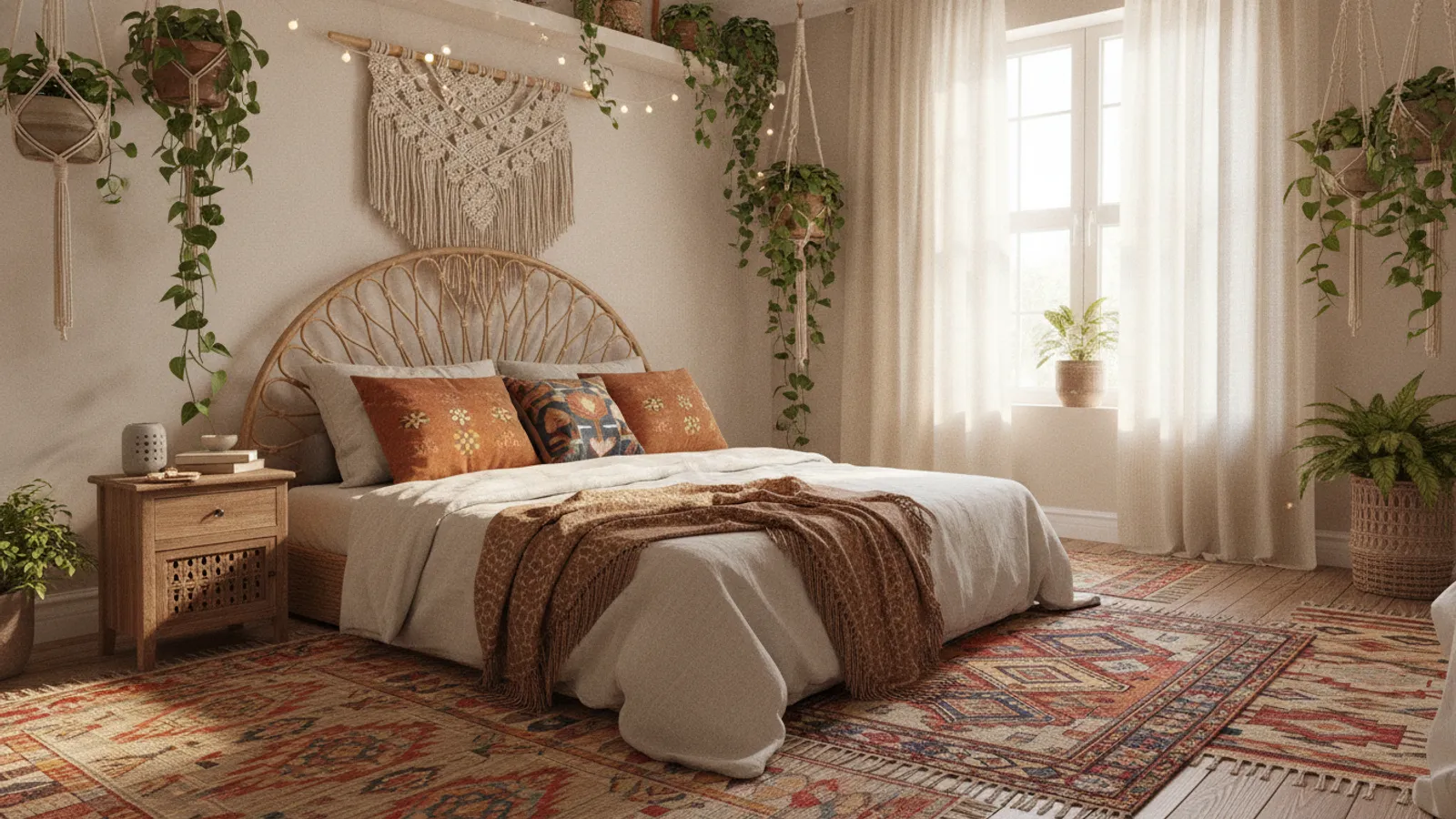
- Layered rugs and textiles. Kilims, Persian rugs, woven throws and embroidered cushions, often layered on top of each other.
- Mixed patterns. Ikat, paisley, block prints and geometric weaves combined within a shared palette.
- Plants. Trailing pothos, large palms, hanging planters and herbs on windowsills.
- Natural materials. Rattan, wicker, jute, bamboo, raw wood and macramé.
- Collected decor. Vintage finds, travel souvenirs, handmade pottery and found objects.
- Warm, saturated color. Terracotta, mustard, rust, deep teal and jewel tones.
- Low, relaxed seating. Floor cushions, poufs, daybeds and low sofas.
How to Make It Cohesive
The difference between a boho room and a jumble is usually a handful of decisions.
Choose a color family
Pick three to five colors that sit well together, such as terracotta, ochre, cream, deep green and indigo. Everything, from rugs to cushions to art, should draw from that family. This allows you to combine very different patterns without chaos.
Vary the scale of patterns
Combine one large-scale pattern, such as a bold kilim, with medium and small patterns. Stripes, dots and florals of different sizes read as layered rather than clashing.
Anchor with solid pieces
Keep large furniture, such as the sofa or bed, in a solid, neutral color. Pattern and color then live in the layers on top, which are easy to change.
Leave breathing space
Keep some walls bare, shelves partially empty and floor areas clear. A boho room needs air so that the layers can be seen.
Choose a focal point
A large artwork, a daybed or a gallery wall gives the eye a place to rest. Without one, the room can feel scattered.
Materials Guide
- Rattan, cane and wicker for chairs, headboards, baskets and lampshades. Natural, lightweight and relatively inexpensive.
- Jute, sisal and seagrass for rugs and baskets. Durable and neutral.
- Cotton, linen and wool for throws, cushions and curtains. Look for natural dyes and hand-woven textures.
- Aged wood for tables, shelves and stools. Weathered finishes suit the style.
- Brass and copper for lamps, trays and mirrors. Aged or antique finishes are better than polished ones.
- Ceramics and glass in earthy colors, hand-thrown shapes and imperfect glazes.
What to Buy and What to Find Secondhand
Bohemian design rewards patient, secondhand shopping, but a few core pieces are worth buying new for comfort and durability.
Buy new
- A comfortable sofa or bed in a solid, neutral color. These carry daily use, and quality matters.
- Good lighting. Warm bulbs, lamps with fabric or rattan shades and string lights.
- A basic rug or underlay. A neutral base keeps layered rugs from slipping.
Find secondhand
- Rugs and kilims. Vintage or antique rugs at markets and online resale sites.
- Wooden furniture. Carved chests, side tables, stools and trays.
- Textiles. Embroidered cushions, quilts and throws.
- Art and mirrors. Framed prints, paintings and mirrors with character.
- Ceramics and objects. Hand-thrown pots, brass bowls, baskets and candlesticks.
Room-by-Room Guide
Bedroom
The bedroom is where boho design is most at home. Layer bedding in mixed textures, add a rattan or upholstered headboard and hang a woven wall piece above the bed. Place a rug on each side of the bed, add warm lamps and string lights, and bring in a few plants. See our bohemian bedroom ideas for specific combinations.
Living Room
Combine a low sofa with floor cushions, poufs and a mix of chairs. Layer rugs under a low table, and add plants at different heights. Keep the walls interesting but not crowded, with a gallery wall or a tapestry. Our living room ideas include layout suggestions.
Dining Area
A reclaimed or vintage wood table, mismatched chairs and a woven or rattan pendant create a relaxed gathering place. Add a runner, ceramics and candles.
Home Office
A vintage desk, a rattan chair, a pinboard and plants suit a creative workspace. Keep the desk surface clear and use baskets for storage.
Kitchen
Open shelves with ceramics, hanging herbs, patterned tile and a woven pendant add personality. Choose a simple base so that the decor stands out.
Outdoor Spaces
Extend the style to a balcony or patio with cushions, lanterns, potted plants and a rug. Outdoor-rated fabrics keep the look lasting.
Gallery Walls and Plants: Doing Them Well
Two features define a bohemian wall and shelf: art grouped in a relaxed collage, and plants at many heights. Both look best with a little planning.
A gallery wall that holds together
- Choose a unifying element. Use frames in one or two finishes, such as aged wood and brass, or keep the artwork within a color family.
- Lay it out on the floor first. Arrange pieces on the floor or on paper templates, then transfer to the wall.
- Keep spacing even. Leave around two to three inches between frames, and center the group at roughly eye level, about 57 inches from the floor.
- Mix media. Combine prints, paintings, textiles, mirrors and small objects such as woven plates or a mounted ceramic.
Plants that suit the style
- Low light: pothos, snake plants and ZZ plants tolerate dim corners and need little attention.
- Bright indirect light: monstera, rubber plants and philodendrons grow large and bring a lush look.
- Sunny windows: succulents, aloe and herbs enjoy direct sun.
- Hanging and trailing: string of hearts, spider plants and ivy soften shelves and macramé hangers.
Group plants in odd numbers at different heights, and use baskets and ceramic pots in earth tones so that the containers reinforce your palette.
Lighting and Mood
Lighting is crucial to the boho atmosphere. Aim for warm, low and layered light.
- Pendants and lamps with woven, rattan or fabric shades.
- String lights over a bed, window or balcony.
- Candles and lanterns for evening atmosphere.
- Floor lamps with warm bulbs in corners and beside seating.
Avoid harsh overhead lighting. Use dimmers and bulbs of around 2200K to 2700K to give the room a gentle, golden glow.
A Realistic Two-Weekend Plan
A boho room does not need to be built in one go, and it usually looks better if it is not. Use the first weekend for structure: set the paint or wall color, lay the largest rug, arrange the main seating and decide where the strongest light will come from. Live with that for a few days before adding anything else.
Use the second weekend for layers. Add cushions and a throw in two or three repeating colors, hang one anchor piece of art or a woven wall hanging, bring in plants at different heights and place a few meaningful objects on a tray or shelf. Then stop. Leaving some surfaces bare is what lets the patterns and textures read as deliberate rather than chaotic.
Common Mistakes and How to Fix Them
- Clutter instead of curation. Boho should feel collected, not crowded. Remove items that have no meaning or function.
- No unifying palette. Keep to a color family so that patterns and objects work together.
- Too much mass-produced "boho". Store-bought boho sets lack the character of genuine pieces. Mix them with vintage and handmade items.
- Ignoring practicality. Make sure there is storage, comfortable seating and a clear path through the room.
- Neglecting plants' needs. Choose plants that suit your light, and group them for ease of watering.
- Using too many themes. Mixing Moroccan, Indian, Scandinavian and Japanese objects works only if they share colors and materials.
Budget Breakdown
These ranges are typical for a bedroom or living room of around 200 square feet. Secondhand shopping reduces costs significantly.
Refresh ($300 – $1,200)
Textiles, plants, secondhand finds, a few rugs and some paint. This is the best way to start, and you can add pieces over time.
Mid-Range ($2,500 – $7,000)
A new bed or sofa, rattan furniture, a good rug, lighting and art.
Full Transformation ($8,000 – $20,000+)
Handcrafted textiles, antique rugs, custom furniture and lighting, plus professional painting or plaster finishes.
Build the room slowly, buying a piece only when you love it. A boho home gains character as it grows.
Bohemian Compared With Similar Styles
| Feature | Bohemian | Scandinavian | Japandi |
|---|---|---|---|
| Mood | Free-spirited, layered | Bright, cozy | Quiet, grounded |
| Pattern | Abundant | Subtle | Rare |
| Color | Saturated and warm | Pale and muted | Earthy and neutral |
| Objects | Many, collected | Few, practical | Few, handmade |
If you want a calmer, more edited feel, see our guides to Scandinavian interior design and Japandi interior design.
Frequently Asked Questions
What is the difference between bohemian and eclectic?
Eclectic design mixes styles and periods in a deliberate, curated way. Bohemian design is a subset that emphasizes natural materials, global textiles, plants and a relaxed, artistic mood.
Can a small space be bohemian?
Yes. Use a few rugs, plants, textiles and wall art, and avoid overfilling. Keep the base furniture simple and light-colored.
How do I mix patterns without making the room look messy?
Limit the palette, vary the scale of patterns and balance them with solid colors. Use one large, one medium and one small pattern in each area.
What colors suit a bohemian room?
Terracotta, mustard, rust, deep green, indigo and blush are common. Cream, sand and warm white provide a calm backdrop.
Is bohemian design suitable for renters?
It is one of the best styles for renters because most of the look comes from movable items such as rugs, textiles, plants and art.
Preview Boho Style in Your Own Room
Upload a photo of your room to our AI interior design tool and see how it would look in a bohemian style in seconds, free. You can also compare it with other styles using the AI room design tool.