Traditional interior design has an unfair reputation. To some people it means a dim room full of dark furniture and frilly curtains, inherited from a grandparent. In fact, the best traditional rooms are some of the most comfortable and enduring spaces you can build: balanced, detailed and made to last. The challenge is not whether the style works, but how to use it in a way that feels fresh.
This guide covers the origins of traditional design, its defining elements, how to build a palette and choose furniture, how to decorate each room and how to avoid the mistakes that make traditional rooms feel heavy. For an overview, see our traditional interior style page.
Where Traditional Design Comes From
Traditional design is not one style but a family. It draws on the interiors of eighteenth- and nineteenth-century Europe and America: the proportions of Georgian houses, the elegance of French salons, the comfort of English country homes and the craftsmanship of early American furniture makers.
What these traditions share is a belief in order. Rooms were planned around architectural features such as fireplaces and windows, furniture was arranged symmetrically, and surfaces were decorated with carved details, fabrics and artwork. Craftsmanship mattered, and pieces were meant to be inherited.
In the twentieth century, traditional design absorbed influences from modernism, producing lighter and less formal versions often called "transitional". Today a traditional room might include a classic rolled-arm sofa, a traditional rug and wainscoting alongside a contemporary lamp or a modern piece of art. The key is to keep the structure and proportions of the original, but with a lighter touch.
What Defines Traditional Style
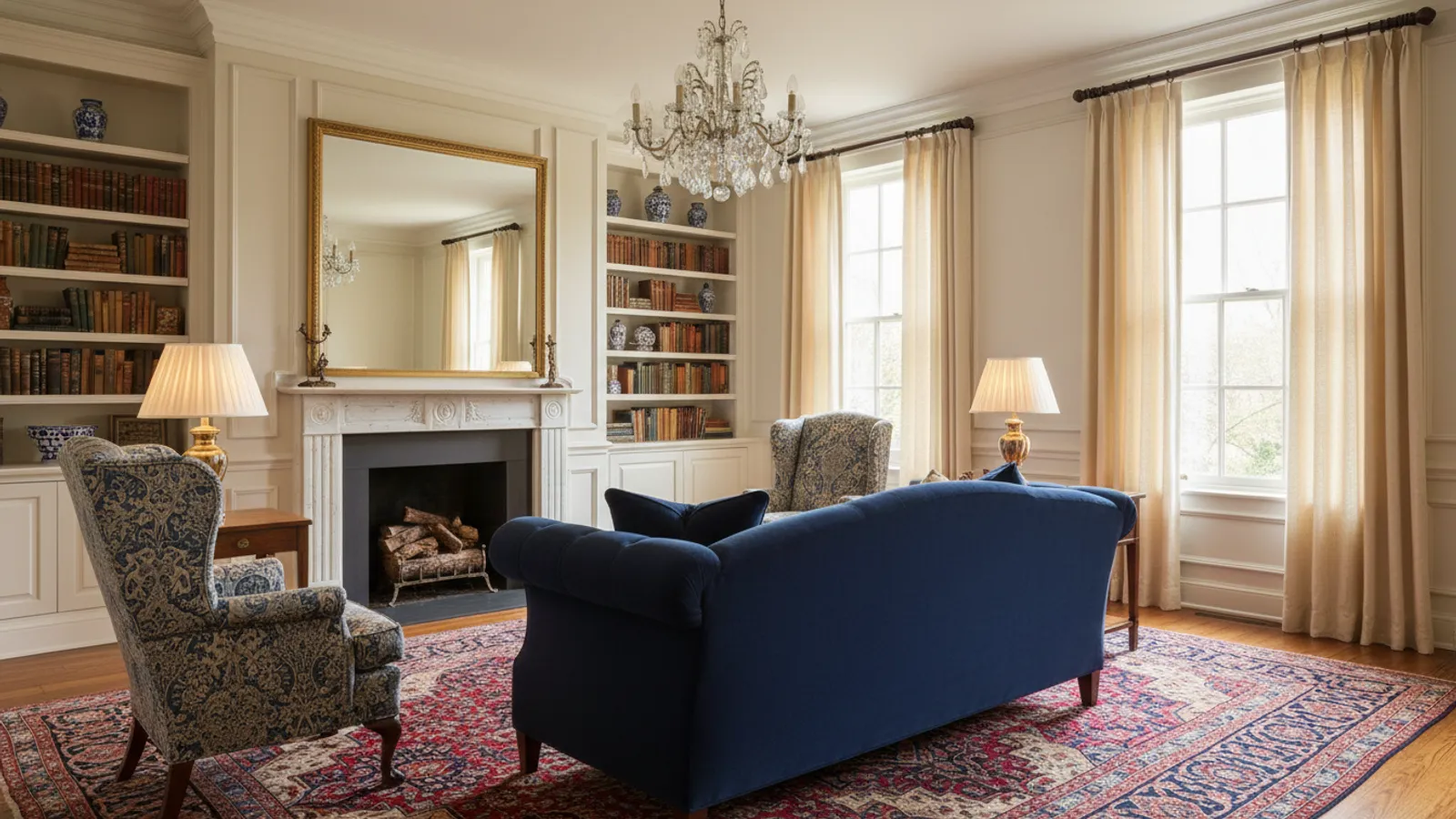
- Symmetry and balance. Matching lamps, a pair of chairs, sconces on either side of a mirror or fireplace.
- Architectural detail. Crown molding, wainscoting, picture rails, paneled doors and ceiling medallions.
- Layered, rich textiles. Damask, velvet, silk, chintz and wool in coordinated patterns.
- Classic patterns. Stripes, florals, plaids, toile and Oriental rug designs.
- Furniture with form. Rolled arms, turned legs, carved details, curved backs and button tufting.
- Warm, deep wood. Mahogany, cherry and walnut, often with a polished finish.
- Elegant lighting. Chandeliers, wall sconces and table lamps with fabric shades.
Building a Palette
A traditional palette is built on a neutral foundation, enriched with deep or muted colors.
Classic combinations
- Navy, cream and gold — A crisp, timeless scheme suitable for living and dining rooms.
- Burgundy, forest green and brass — Rich and library-like, suited to studies and formal rooms.
- Soft sage, ivory and dusty blue — A lighter, more relaxed version for bedrooms and everyday spaces.
- Warm taupe, cream and chocolate — A calm, neutral scheme that relies on texture.
Painting tips
Paint ceilings and trim in a slightly different shade or finish from the walls. Satin or semi-gloss on trim highlights molding, while flat or matte walls feel softer. If your room lacks natural light, choose a lighter version of your color. In a bright room, deeper tones can feel cozy rather than dark.
Materials and Finishes
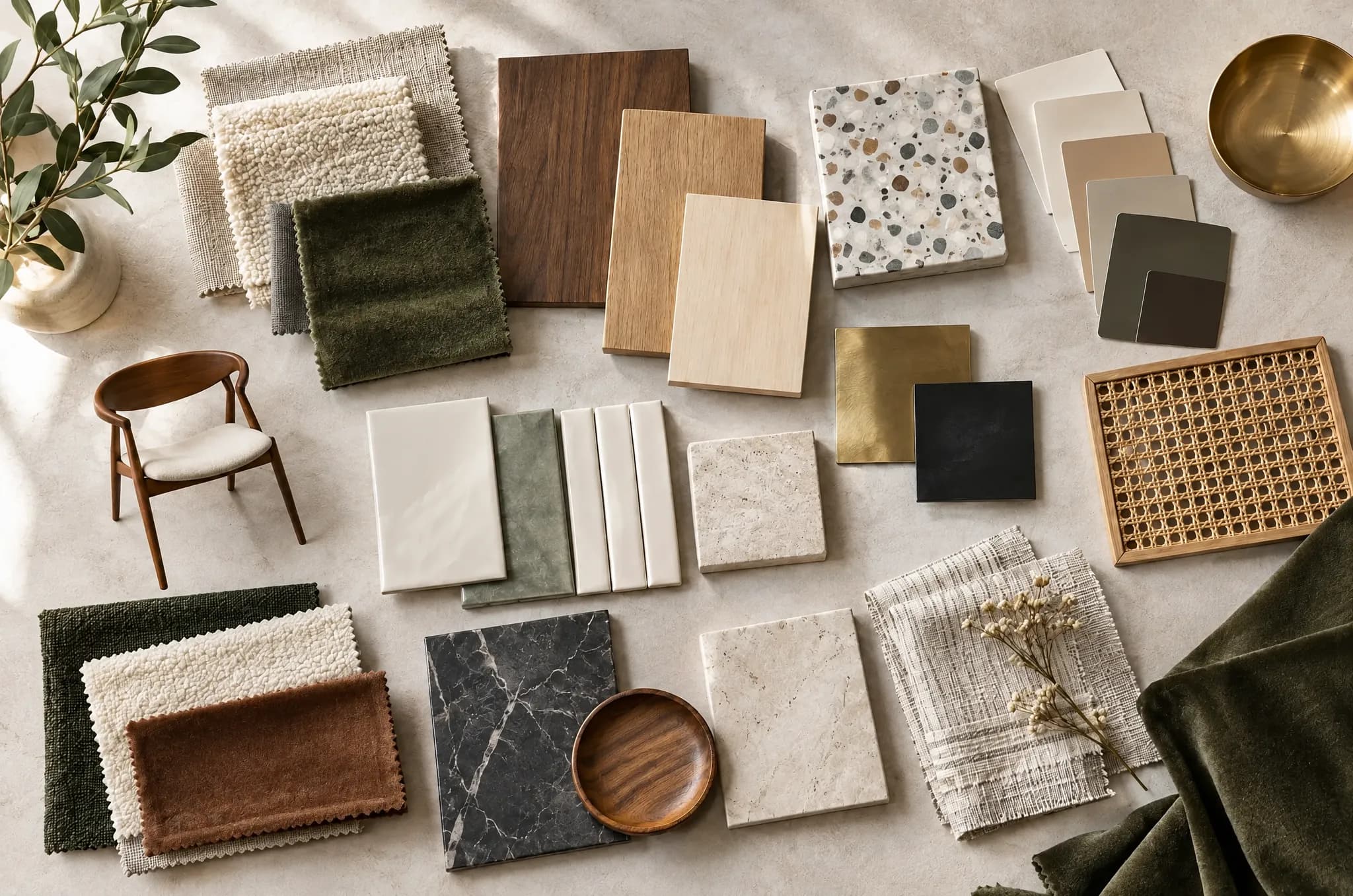
- Wood: mahogany, cherry, walnut and oak with a warm, polished finish.
- Fabric: velvet, damask, linen, silk blends and wool. Choose performance fabrics if you have children or pets.
- Metals: polished or antique brass, bronze and silver on lamps, hardware and mirror frames.
- Stone: marble and limestone for fireplaces, worktops and floors.
- Floors: hardwood, parquet or carpet with a large area rug on top.
Traditional design rewards good materials more than most styles, because the detail is on display. A well-made wooden chest with dovetail joints stays beautiful for generations. A cheap imitation with applied carving never does.
What to Buy: A Traditional Shopping List
- A rolled-arm or Chesterfield sofa. Velvet, linen or a quality performance fabric in a mid-tone color, ideally with a skirted or turned-leg base.
- A pair of wingback or club chairs. Arrange them in a pair, facing each other or the fireplace.
- A wood coffee table or tufted ottoman. Turned legs, a polished top or a leather surface.
- An Oriental or traditional-style rug. Wool in deep reds, blues or soft, faded tones. Sized to anchor the seating.
- A chandelier. Crystal, brass or iron, scaled to the room.
- Table lamps in pairs. Ceramic or brass bases with fabric shades.
- Layered window treatments. Full-length curtains with a pelmet or valance, sheers beneath.
- Framed art and mirrors. Landscapes, portraits, botanical prints and gilt-framed mirrors.
Room-by-Room Guide
Living Room
Arrange the seating around a fireplace or coffee table. Place a sofa opposite a pair of chairs, add matching lamps on side tables and cover the floor with a rug large enough for the front legs of every seat. Add built-in shelves or a bookcase, and include a few plants and framed art. If your home lacks a fireplace, a console table with a mirror can serve as a focal point. See our living room ideas for more layouts.
Dining Room
A wooden table, upholstered chairs and a sideboard are the foundation. Hang a chandelier about 30 to 36 inches above the table. Add a large mirror or artwork on the main wall, and layer a rug beneath the table that extends at least 24 inches beyond the chairs.
Bedroom
A tufted or paneled headboard, matching nightstands and lamps, layered bedding and curtains give the room its character. Keep the palette soothing and add a chair or bench at the foot of the bed.
Study or Library
Built-in bookshelves, a wooden desk, a leather chair and a rich wall color make a classic study. Add a green banker's lamp or brass reading lights, and display books and objects with care.
Kitchen
Use Shaker or raised-panel cabinets, a stone worktop, brass or nickel hardware and a classic tile backsplash. A farmhouse sink and a freestanding range can add character.
Entryway
A console table, a mirror, a runner and a pair of sconces set a formal tone. Add a bench or umbrella stand for practicality.
Getting the Details Right: Curtains and Rugs
Two elements do more than most to make a traditional room look finished, and both are often done badly.
Curtains
Hang the rod close to the ceiling, or at least four to six inches above the window frame, and extend it eight to twelve inches beyond each side so that the curtains frame the glass rather than covering it. Choose panels long enough to just touch the floor, or to pool slightly for a formal look. Use lined curtains in a heavy fabric, with sheers underneath if you want diffused daylight.
Rugs
Pick a rug large enough that at least the front legs of every sofa and chair rest on it. In a living room that usually means 8 x 10 or 9 x 12 feet. In a dining room, the rug should extend at least 24 inches beyond the table edge so that chairs stay on the rug when pulled out. Classic Oriental, Persian and floral designs in softened tones suit the style, and a flat-weave wool is a good choice for high-traffic rooms.
Keeping Traditional Rooms Fresh
The most common reason traditional rooms feel dated is excess. The following changes keep the structure while lightening the effect.
- Lighten the walls. Warm white, cream or soft sage make traditional rooms feel airier.
- Edit the accessories. Remove half of what is on display and give the remaining pieces space.
- Mix patterns carefully. Combine two or three patterns of different scales in a shared palette.
- Add a modern element. A contemporary lamp, an abstract painting or a streamlined side table prevents the room from feeling like a period piece.
- Simplify window treatments. Replace heavy swags with simple full-length curtains.
- Use fewer matching sets. Mix finishes and fabrics within a color family.
For a more current take on how traditional pieces mix with modern ones, see our contemporary interior design guide.
Common Mistakes and How to Fix Them
- Matching everything. A fully matched suite looks stiff. Mix wood tones and fabrics.
- Too much dark wood. Break up heavy pieces with painted furniture, glass and mirrors.
- Ignoring scale. Oversized furniture in a small room feels cramped. Measure carefully and leave circulation space.
- Cheap reproduction details. Applied carving, glossy veneers and plastic "crystal" cheapen the look. Choose fewer, better pieces.
- Overly formal arrangements. Make sure there is comfortable seating, reachable side tables and good lighting.
- Neglecting lighting. A single chandelier is not enough. Add lamps, sconces and picture lights for layers.
Budget Breakdown
These ranges are typical for a living room or dining room of around 200 square feet. Antiques and custom millwork can add considerably.
Refresh ($600 – $2,000)
Paint, lamps, curtains, a patterned rug and framed art. Estate sales and secondhand shops are good sources for lamps, mirrors and small furniture.
Mid-Range ($5,000 – $14,000)
A new sofa, a pair of chairs, a rug, lighting, curtains and wall paneling or molding.
Full Transformation ($20,000 – $60,000+)
Custom millwork, designer upholstery, antiques, a chandelier and a full lighting scheme.
Picture-frame molding and board-and-batten paneling are low-cost ways to add architectural detail. Reupholstering a good frame is often better value than buying new.
Traditional Compared With Similar Styles
| Feature | Traditional | Contemporary | Art Deco |
|---|---|---|---|
| Mood | Formal, warm, layered | Current, flexible | Glamorous, bold |
| Detail | Rich and carved | Selective | Geometric and metallic |
| Palette | Deep and warm | Neutral with accents | Black, gold, jewel tones |
| Furniture | Curved, carved, tufted | Clean, mixed | Streamlined, mirrored |
If you like the glamour of the 1920s, our Art Deco interior design guide shows how to bring in geometry and metallic accents. For a calmer, simpler approach, see the modern minimalist guide.
Frequently Asked Questions
What is the difference between traditional and transitional?
Traditional design follows classical forms and detail closely. Transitional design blends traditional elements with simpler, more modern pieces, producing a lighter and less formal look.
Is traditional design expensive?
It can be, particularly with antiques and custom millwork. But secondhand furniture, paint and picture-frame molding allow you to achieve the look affordably.
What colors work in a traditional home?
Navy, burgundy, forest green, gold and cream are classic choices. Soft sage, dusty blue and warm taupe suit lighter, more relaxed rooms.
Can I use traditional furniture in a modern home?
Yes. A single antique chair or a classic chest of drawers adds depth and character to a modern room. Keep the rest of the room simple.
How do I stop a traditional room from feeling dark?
Use lighter wall colors, mirrors and layered lighting. Choose a lighter rug and add a few pale textiles. Keep window treatments simple so that daylight can enter.
See Traditional Style in Your Own Room
Wondering how traditional design would look in your home? Upload a photo to our AI interior design tool and preview it in seconds, free. You can also compare different styles using our AI room design tool.