Mid-century modern is one of those styles that never really went away. The furniture designed between the end of the Second World War and the end of the 1960s is still in production, still copied and still sold at auction for serious money. Part of the reason is nostalgia, but most of it is that the pieces work. They are comfortable, well proportioned and made to be lived with.
This guide explains where the style came from, what defines it, how to build a room around it without creating a museum and how to approach each space in your home. It also covers costs and the most common mistakes. If you want a quick summary of the look, see our mid-century modern style overview.
A Short History
The style takes shape in the years after 1945. Postwar economies were growing, housing demand was surging and manufacturing had learned new techniques during the war. Designers in the United States and Scandinavia used molded plywood, fiberglass, bent steel and plastic to produce chairs and tables that could be made at scale and sold at moderate prices.
In America, Charles and Ray Eames, Eero Saarinen, George Nelson and Harry Bertoia produced furniture that is still recognizable today. In Denmark, Hans Wegner, Arne Jacobsen and Finn Juhl combined the same modern ideas with traditional woodworking. Architects built low, open houses with big windows, flat or gently sloped roofs and floor plans that connected indoor and outdoor space.
The look faded in the 1970s and 80s as tastes turned toward heavier, more ornate styles. Its revival began in the 1990s and gathered momentum in the 2000s, helped by television and a new generation of collectors. Today it is among the most popular interior styles, partly because it mixes easily with other styles.
What Defines the Style
A handful of features recur in almost every convincing mid-century modern room.
- Tapered, splayed legs on sofas, chairs, credenzas and tables, so furniture looks light and raised.
- Organic shapes with clean geometry, such as kidney tables, egg-shaped chairs and starburst clocks beside rectangular casework.
- Warm wood, mostly walnut, teak and rosewood, with a satin finish that shows grain.
- Bold accent colors against a neutral base, including mustard, burnt orange, olive and teal.
- Large windows and a close link between inside and outside.
- Function and honesty, with visible joinery and no heavy ornament.
- Sculptural lighting, such as globe pendants, arc lamps and Sputnik chandeliers.
Building the Palette
Mid-century rooms look best when a quiet base supports a few confident accents.
The Base
Walls in warm white, cream, pale grey or soft greige let wood and color stand out. Floors in oak, walnut or terrazzo suit the period; if you have carpet, a low-pile neutral works well.
The Accents
Pick two or three colors from the classic palette:
- Mustard and ochre for cushions, ceramics or a statement chair.
- Burnt orange and rust for a rug, a lounge chair or a bold artwork.
- Teal and turquoise for a feature wall, a vase or a kitchen cabinet.
- Olive and avocado green for textiles and a few accessories.
Use them in repeating patches so the eye travels around the room, rather than concentrating all the color in one spot.
Materials Guide
- Walnut, teak and oak — The core woods of the style. Choose solid or good-quality veneer with a matte or satin finish.
- Leather — Cognac and tan leather suit lounge chairs and benches and age well.
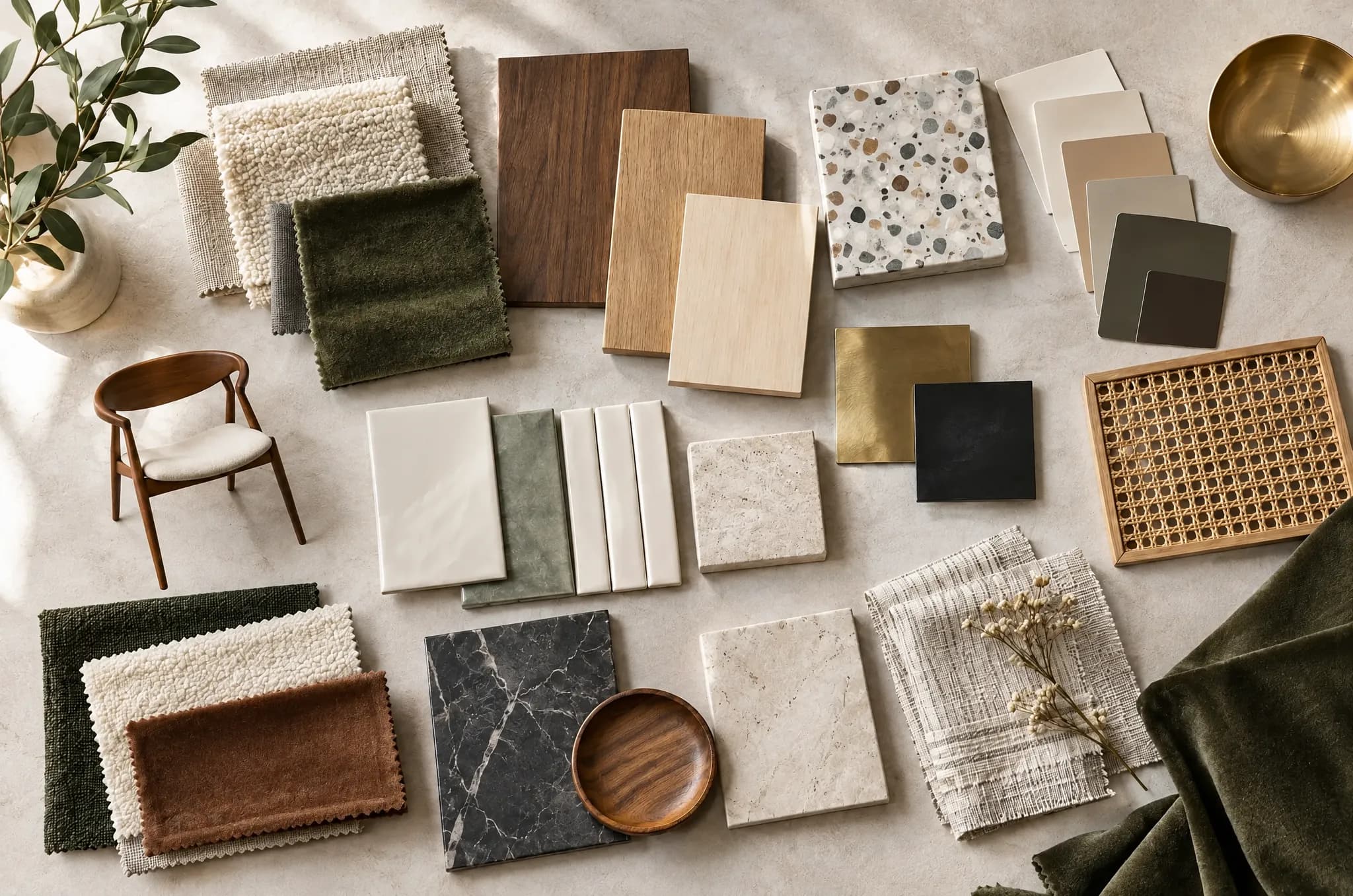
- Wool, tweed and bouclé — Textured upholstery in neutral or muted tones.
- Brass, chrome and black metal — Keep metals to small details such as lamp bases, legs and hardware.
- Glass and ceramic — Simple vases, bowls and hand-thrown pottery in organic shapes.
- Terrazzo and brick — Flooring and feature walls that suit the period.
What to Buy: A Mid-Century Shopping List
- A low-profile sofa with tapered legs. Choose clean tight cushions and a slim arm. Avoid large, overstuffed shapes.
- A lounge chair. If you can afford only one iconic piece, make it this one. Leather and molded wood are classic. A good vintage example or a licensed reproduction both work.
- A credenza or sideboard. A walnut unit with sliding doors and slim legs gives storage and display space. It also anchors a wall.
- A coffee table. An oval, round or kidney shape in wood or glass breaks the rectangular lines of the room.
- A dining table and chairs. A tulip or oval table with molded chairs, or a rectangular teak table with Danish-style chairs.
- Sculptural lighting. An arc floor lamp, a globe pendant or a tripod floor lamp adds shape and warmth.
- A graphic rug. Choose geometric or abstract patterns in warm tones, or a plain wool rug if the room is busy.
- Art and objects. Abstract prints, mobiles, ceramics and a few books. Keep it edited.
Mixing Vintage and New
The most convincing mid-century rooms are not complete period reproductions. They mix genuine vintage finds with modern pieces, which keeps the space from feeling like a stage set.
- Choose two or three genuine vintage pieces, such as a credenza, a lounge chair or a lamp, and build around them.
- Buy new pieces in matching proportions. A modern sofa with tapered legs and clean arms fits easily with vintage wood.
- Use contemporary lighting and textiles to keep the room fresh.
- Avoid reproductions of reproductions. Poorly made imitations flatten the style. Look for solid joinery, real wood and good proportions, even if the piece has no famous name.
Estate sales, vintage shops and online marketplaces are the best sources. Check legs, joints and veneer, and ask about any repairs.
Room-by-Room Guide
Living Room
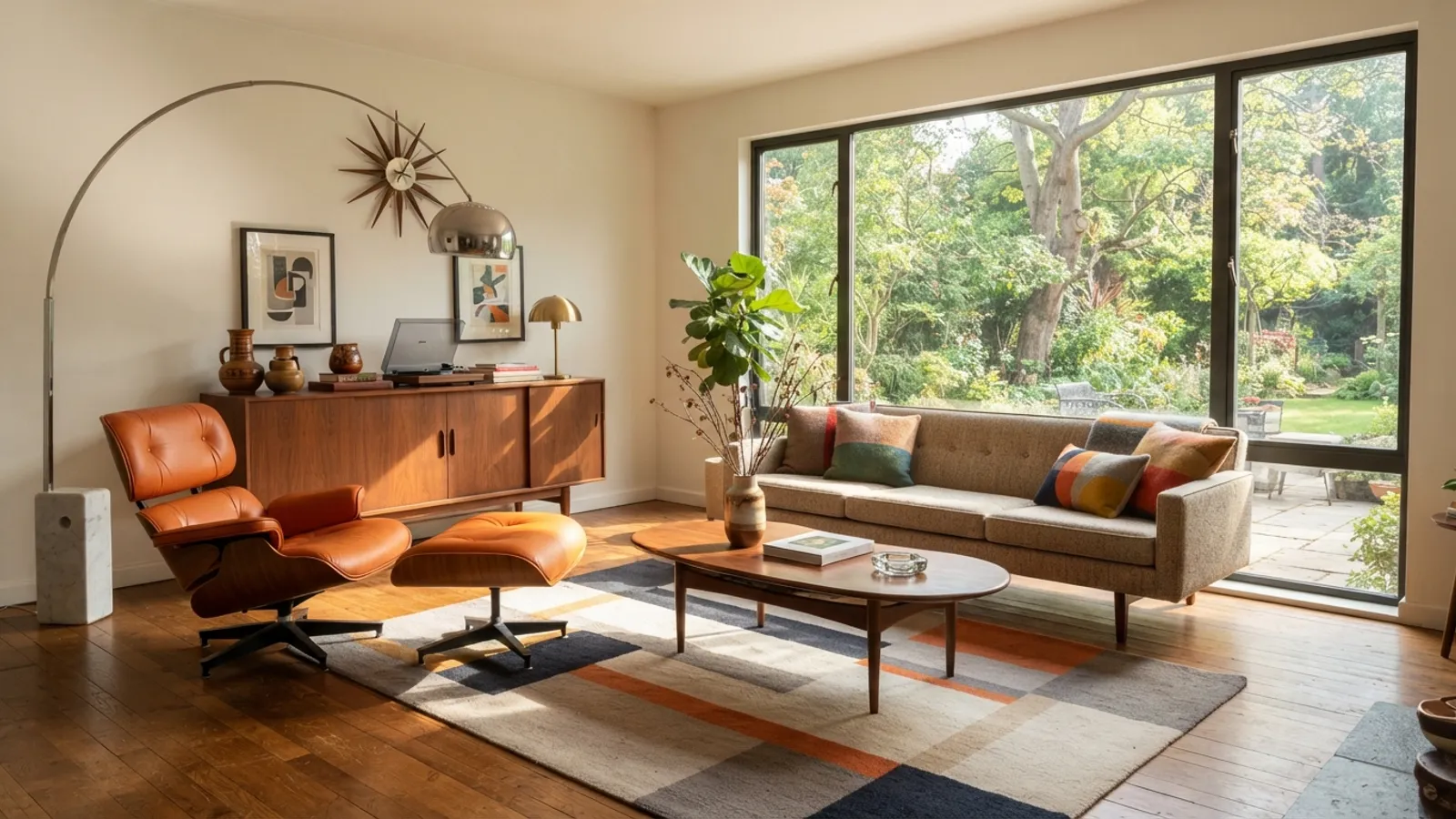
Arrange a low sofa, a lounge chair and a credenza around a rug and a coffee table. Place the lounge chair at a slight angle to the sofa for conversation. Add an arc lamp near the seating and use a large piece of abstract art as a focal point. For specific layouts, see our mid-century modern living room ideas.
Home Office
A walnut desk with tapered legs, a classic task chair and a sculptural lamp make a stylish workspace. Add a wall-mounted shelving system or a credenza for storage, and a bold rug for color. Browse mid-century modern home office ideas for desks and shelving options.
Dining Room
A tulip table with molded chairs, or a teak table with slim Danish chairs, sets the era immediately. Hang a statement pendant low over the table, and display ceramics on a sideboard.
Bedroom
Choose a low platform bed with a slatted headboard, matching nightstands with tapered legs and warm bedside lamps. Add a bold throw or a graphic rug. Keep the walls light and the decor sparse.
Kitchen
Flat-panel wood cabinets, simple handles and a colored accent such as teal, mustard or red recall the original mid-century kitchens. Use terrazzo, quartz or laminate in a speckled pattern for surfaces.
Lighting
Lighting is part of the style's identity. Many of the period's best-known objects are lamps.
- Overhead: a globe pendant, a Sputnik chandelier or a cluster of simple pendants, preferably on a dimmer.
- Floor: an arc lamp over the sofa or a tripod lamp beside a lounge chair.
- Table: ceramic or glass lamps with simple shades.
- Accent: a picture light or small spotlight for art.
Warm bulbs of around 2700K flatter wood and leather. Avoid very cool bulbs, which make walnut look grey.
Common Mistakes and How to Fix Them
- Buying a matching set. A single manufacturer's collection looks like a catalogue. Mix pieces from different sources and eras.
- Too much orange and brown. Warm tones dominate the palette, so balance them with cool neutrals or teal.
- Overdoing the theme. A few atomic accessories are fun, but a room covered in starbursts looks like a costume.
- Oversized furniture. The style relies on lightness. Choose slim profiles and visible legs.
- Ignoring architecture. The style is at its best in rooms with simple lines and good light. If your room has heavy moldings, tone down the decor.
- Neglecting maintenance. Wood furniture in direct sun fades and dries. Keep it out of strong light, and oil or wax it occasionally.
Budget Breakdown
These ranges are for a living room of around 200 square feet. Original vintage and licensed reissues of famous designs can cost far more.
Refresh ($400 – $1,500)
New paint, lighting, vintage accessories, a rug and a few new textiles.
Mid-Range ($4,000 – $10,000)
A new sofa, credenza or sideboard, coffee table, lighting and rug, plus art.
Full Transformation ($12,000 – $35,000+)
Authentic vintage or licensed designer pieces, custom built-ins, new flooring and a full lighting scheme.
Invest first in one signature chair or a high-quality credenza, and fill the rest of the room with more affordable pieces.
Mid-Century Compared With Similar Styles
| Feature | Mid-Century Modern | Scandinavian | Contemporary |
|---|---|---|---|
| Wood tone | Warm, dark: walnut, teak | Pale: birch, ash, oak | Varied |
| Color | Bold accents | Soft and muted | Neutral with accent |
| Furniture | Tapered legs, organic shapes | Simple, rounded, functional | Mixed, current |
| Era | Strongly rooted in 1945–1969 | Timeless Nordic | Constantly changing |
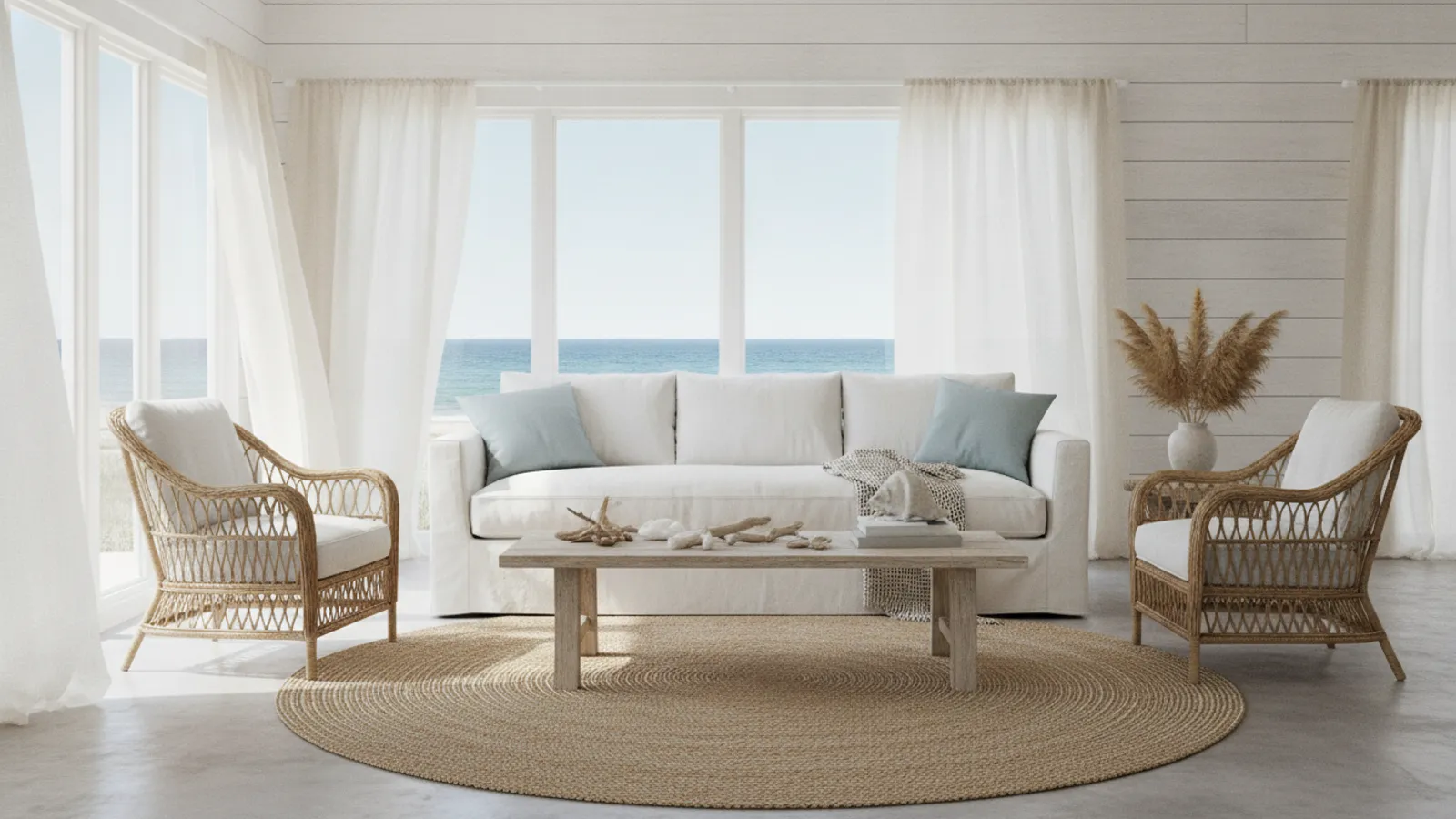
If you like the clean lines but prefer lighter tones, see our Scandinavian interior design guide. For a more current mix of materials, our contemporary interior design guide explains how to combine styles without losing coherence.
Frequently Asked Questions
What is the difference between mid-century and midcentury modern?
They usually refer to the same style. "Mid-century" describes the period, roughly the 1940s to the late 1960s, and "mid-century modern" is the design movement associated with it.
Is mid-century modern expensive?
It can be. Authentic designer pieces are costly, but many vintage and well-made modern interpretations are affordable. Focus on proportions, solid wood and tapered legs rather than famous labels.
Can I mix mid-century with other styles?
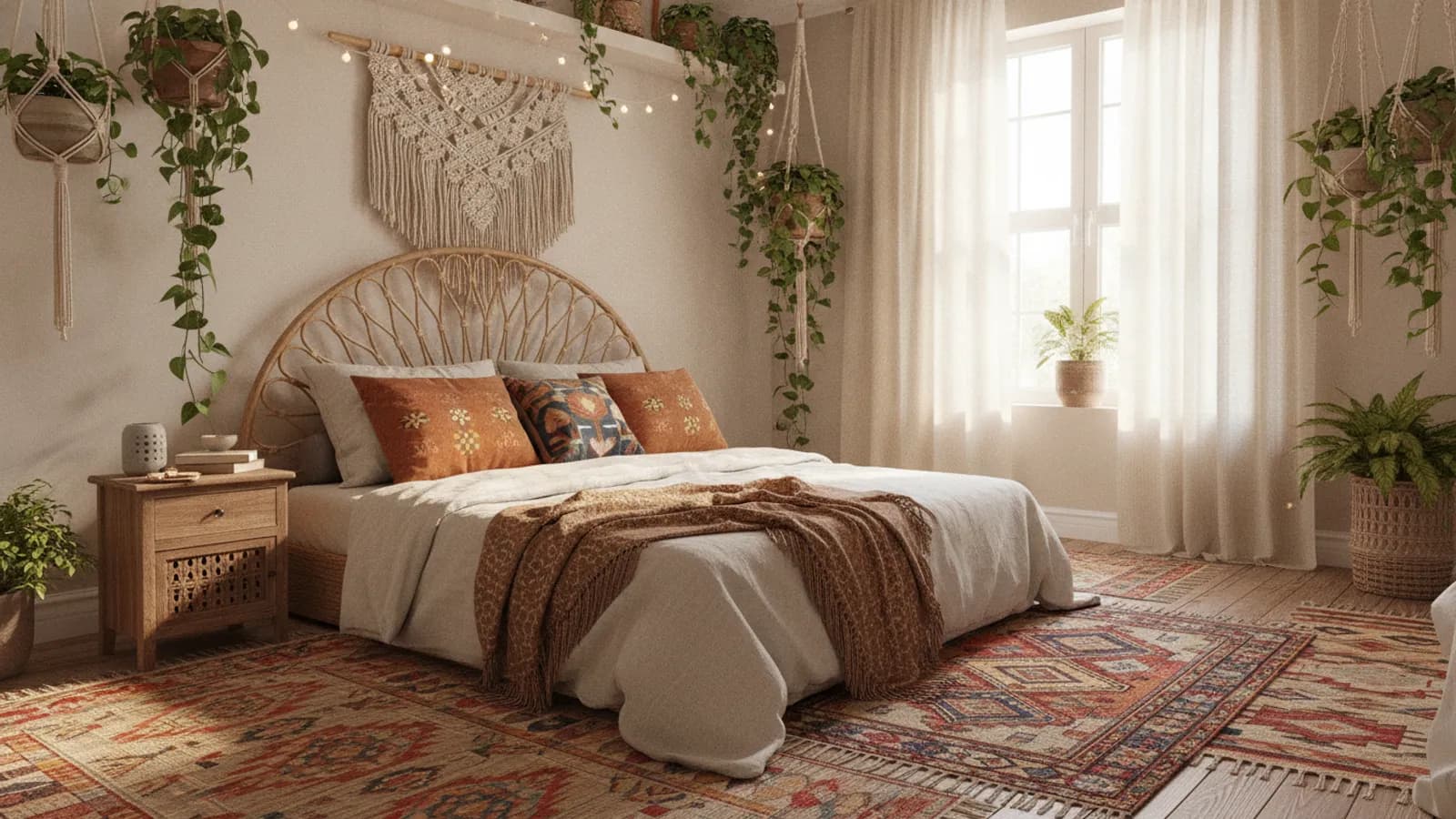
Yes. It works particularly well with Scandinavian, contemporary and even bohemian rooms. Keep the lines clean, repeat a few materials and limit the number of strong colors.
What colors suit a mid-century living room?
A warm neutral base with accents of mustard, burnt orange, teal and olive is the classic combination. Rich wood tones provide the main warmth.
Do I need a mid-century house?
No. The style suits almost any room with reasonable light and simple architecture, though it looks particularly natural in ranch houses and apartments with large windows.
Preview It in Your Own Room
Not sure whether mid-century modern suits your space? Upload a photo to our AI interior design tool and see it restyled in seconds, free. You can also compare it with other styles in our AI room design tool.