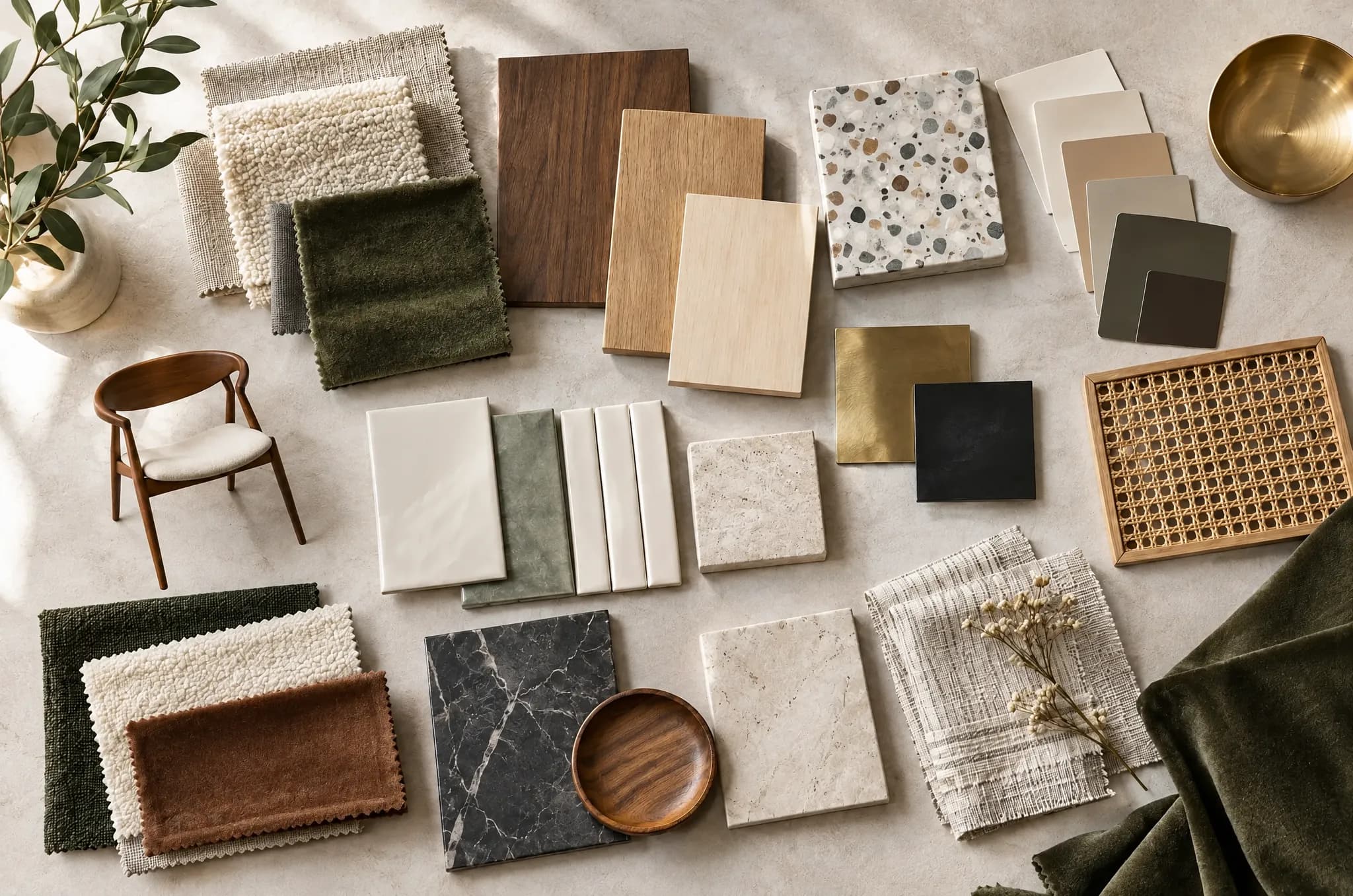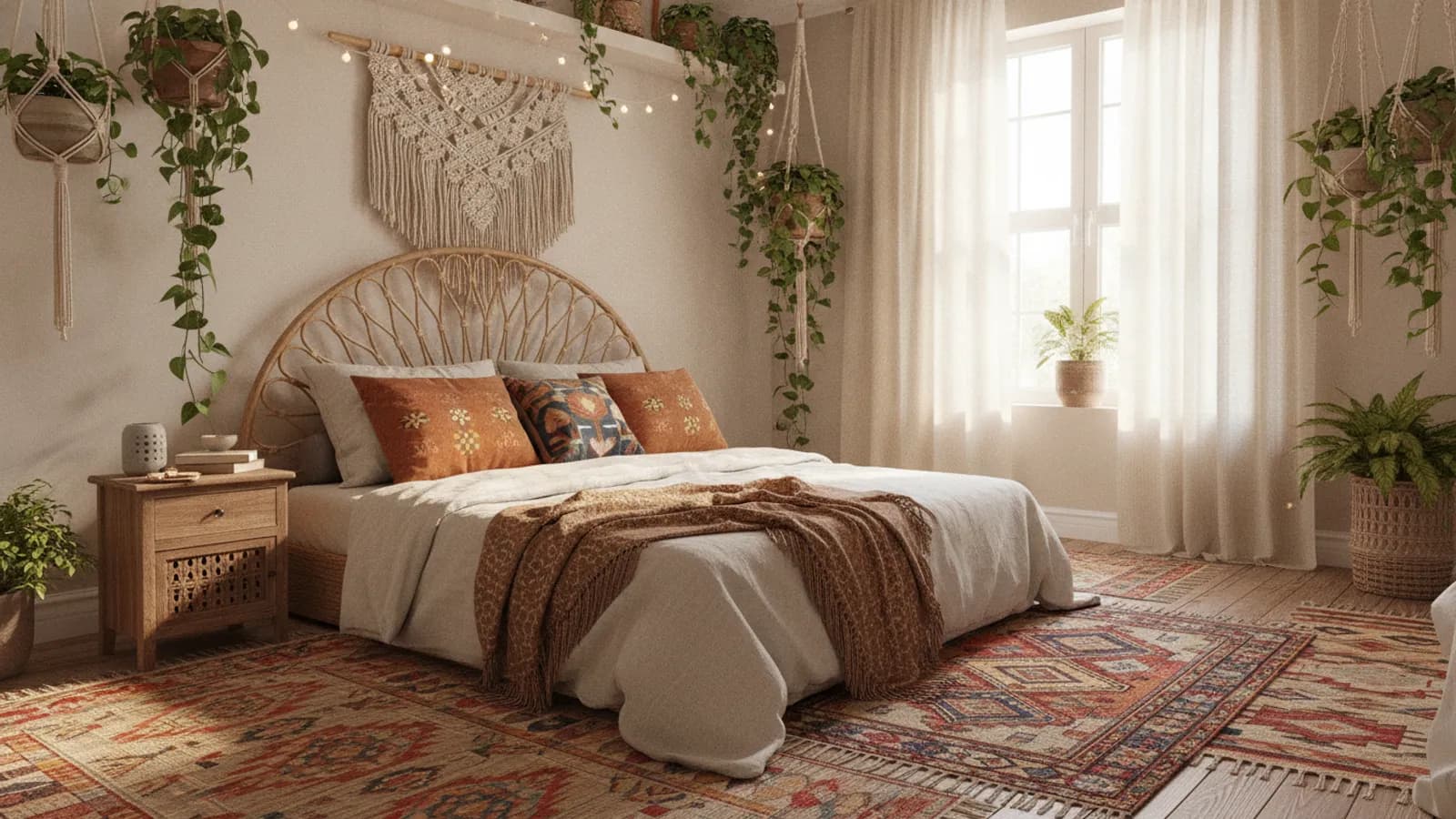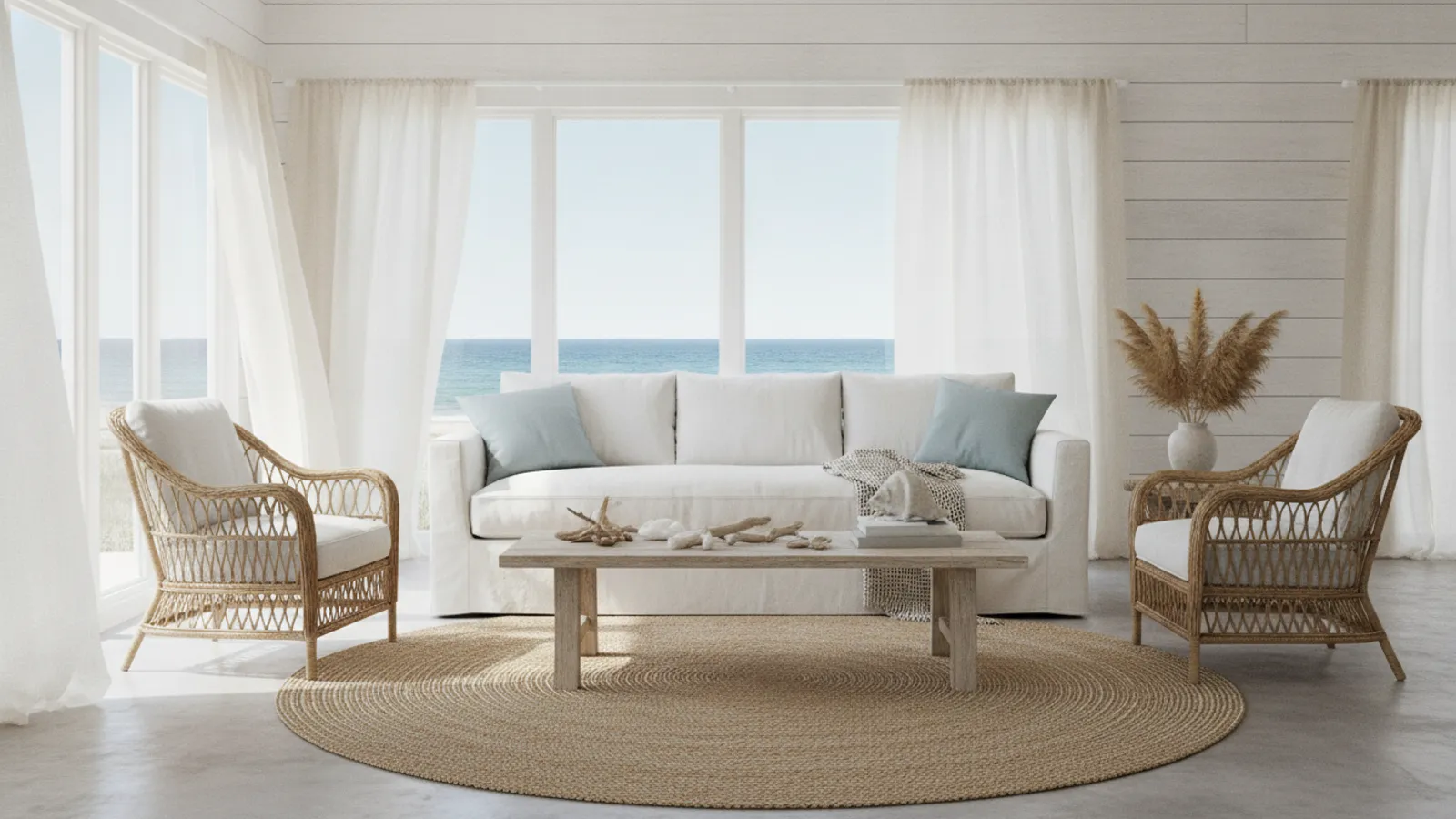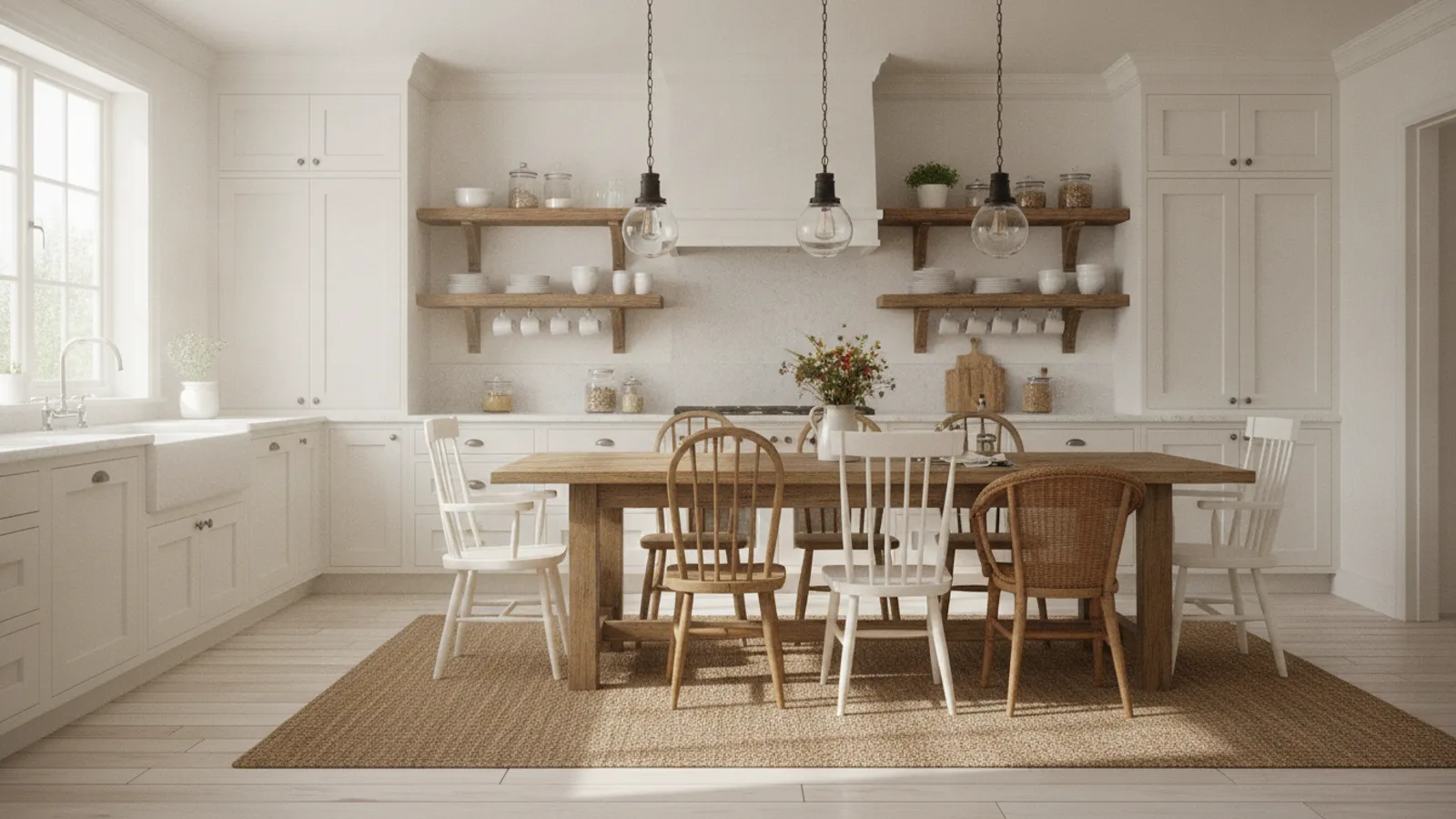
Farmhouse design is, at heart, a style built around gathering. A big table where people eat, a deep sink that handles a day's cooking, shelves holding the dishes you actually use and furniture sturdy enough to survive children, dogs and generations. The charm comes from function. It is easy to lose that when the style is reduced to shiplap and signs that say "Gather".
This guide explains how to build a farmhouse interior that feels genuine: the history of the style, its core features, palette and materials, a shopping list, advice for each room and the mistakes to avoid. For a short overview, see our farmhouse interior style page.
The Roots of the Style
Farmhouse interiors began as the working homes of rural families in North America and Europe. The kitchen was the center of life, and furniture was made locally from available wood. Tables were large because many people ate at them, sinks were deep because they were used to wash everything, and storage was open because there was no point in hiding dishes that were used three times a day.
The twentieth century moved most people off farms, and the style retreated into holiday cottages and antique shops. Its revival came in the 2010s as "modern farmhouse", which combined the traditional features with cleaner lines, white walls, black hardware and a lighter feel. That version, popularized by television and social media, is what most people mean today.
A good farmhouse room remembers the original logic. It is relaxed rather than precious, durable rather than delicate and generous rather than minimal. The best examples blend rustic materials with simple, contemporary details so they feel lived in, not themed.
What Defines Farmhouse Style
- A kitchen at the center. A big table or island is the gathering place of the house.
- Natural wood. Reclaimed beams, butcher-block worktops, plank floors and sturdy tables.
- Painted surfaces. Shaker cabinets, beadboard and shiplap in white, cream or soft muted tones.
- A deep apron-front sink in fireclay, cast iron or stainless steel.
- Open shelving. Everyday dishes and jars on display.
- Black and aged metal. Iron hardware, matte black lighting and galvanized details.
- Honest textiles. Cotton, linen, ticking stripes, gingham and wool.
Building the Palette
The farmhouse palette starts with white and adds warmth and contrast.
Base
Choose warm white, cream or soft greige for walls and ceilings. Painting trim in the same color is a simple way to create a calm, cohesive room.
Supporting colors
- Soft green such as sage or muted olive, associated with gardens.
- Dusty blue or blue-grey for cabinets and doors.
- Warm grey for a more modern farmhouse look.
- Deep charcoal or black for hardware, window frames and lighting.
Accents
Use natural wood tones, black metal and a few deeper colors, such as navy, barn red or forest green, in textiles and art. Keep the main areas light, and concentrate stronger color in details that can be changed easily.
Materials Guide
- Reclaimed or solid wood for tables, beams and shelves. Real wood has variation and ages well.
- Butcher block, soapstone or honed marble for countertops. All develop a patina with use.
- Fireclay or cast iron for apron-front sinks. They are heavy, durable and classic.
- Iron and galvanized steel for hardware, lighting, baskets and buckets.
- Cotton and linen for curtains, upholstery and tablecloths.
- Wool and jute for rugs. They hide wear and suit the style.
- Brick and stone for fireplaces, backsplashes and floors.
What to Buy: A Farmhouse Shopping List
- A large table. Reclaimed wood or a painted base with a wooden top, long enough for family and guests. Mix benches with chairs.
- A deep apron-front sink. Fireclay in white is the classic choice.
- Shaker cabinets. Flat-panel doors with a simple frame, painted or stained.
- Open shelves. Solid wood boards on iron brackets for everyday dishes.
- A comfortable sofa. Deep seating in a washable linen or cotton blend.
- Pendant lights. Black metal, glass or wire fixtures above the table or island.
- A wool or jute rug. Durable and easy to clean.
- Baskets and crates. For storing blankets, toys and kitchen items.
Room-by-Room Guide
Kitchen
The farmhouse kitchen is the heart of the style. Combine painted Shaker cabinets with a butcher-block or stone worktop, an apron-front sink and open shelves. Add a large island or table, pendant lights and stools. Use a classic backsplash such as subway tile or beadboard. Our farmhouse kitchen ideas show specific layouts and finishes.
Living Room
Choose a deep, slipcovered sofa, a reclaimed coffee table, a wool rug and a stone or brick fireplace if you have one. Add wooden shelves, wicker baskets and a few vintage items. Keep patterns simple and fabrics natural. See our living room ideas for more layouts.
Dining Room
A long wooden table, mixed chairs and benches, a simple iron chandelier and a sideboard for storage. Add a runner and a bowl of seasonal produce rather than elaborate centerpieces.
Bedroom
White or soft-colored bedding, a wooden or iron bed, a quilt at the foot and a bench or ladder for blankets. Use simple curtains, a woven rug and bedside lamps with linen shades.
Entry and Mudroom
A bench, hooks, baskets and a hardwearing floor give a practical welcome. Add a rug that can be washed, and keep surfaces clear for keys and mail.
Bathroom
Use white tile, a wood or painted vanity, black fixtures and a framed mirror. Add a wooden stool, woven baskets and cotton towels.
Farmhouse Kitchen Layout Basics
Because the kitchen is the heart of the style, the layout deserves care before any finishes are chosen.
- Plan the table or island first. Leave at least 36 to 42 inches around an island, and about 36 inches behind dining chairs so that people can pass.
- Keep the sink, cooker and refrigerator close. A compact work triangle saves steps and keeps the cook near the table.
- Mix open and closed storage. Open shelves for everyday dishes, and closed cabinets for appliances, packaging and anything that collects grease.
- Choose a deep sink with room to work. A single large bowl, around 30 to 33 inches wide, handles pots and baking sheets, and a bridge faucet adds character.
- Add a pantry or hutch. A freestanding cupboard or built-in pantry stores bulk items and suits the unfitted look of a farmhouse kitchen.
- Select durable surfaces. Butcher block needs oiling, marble can etch and soapstone darkens with time. Pick the one you are comfortable maintaining.
Making It Modern
The most common complaint about farmhouse decor is that it is overused. The following changes keep the style fresh.
- Edit the accessories. Choose a few meaningful pieces rather than shelves of decor.
- Add modern lines. Pair a rustic table with simple, contemporary chairs or lighting.
- Use color thoughtfully. Soft green, blue and warm grey feel current, while stark white can look dated.
- Choose real materials. Faux wood and plastic details undermine the style.
- Avoid slogans. Mass-produced signs and sayings rarely add character.
- Mix old and new. Vintage finds from flea markets or auctions add depth that new items lack.
Lighting
Warm, layered lighting matters in a farmhouse kitchen and dining area.
- Pendants above islands and tables, in black metal, glass or woven materials.
- Under-cabinet lights for bright, practical task lighting on the worktop.
- Table lamps with linen shades in living areas and bedrooms.
- Candles and lanterns for evening atmosphere.
Choose warm bulbs of around 2700K, and use dimmers where possible so that the room can shift from bright preparation space to gentle dining space.
Living With Farmhouse Materials
Part of the appeal of farmhouse design is that it ages well, but each material has its own habits. Butcher block and reclaimed wood tables should be sealed with a food-safe oil once or twice a year, and a coaster habit will save you from rings. Fireclay apron sinks are tough but can chip if a heavy pan is dropped, so use a protective grid at the bottom of the basin.
Painted cabinets benefit from a durable satin or semi-gloss finish that can be wiped clean, and a small touch-up jar kept in the pantry makes minor chips easy to hide. Natural fiber rugs and linen upholstery will show wear honestly, which fits the style, but choose performance fabrics for the pieces your family uses every day so the room stays comfortable rather than precious.
Common Mistakes and How to Fix Them
- Too much shiplap. Covering every wall flattens the room. Use it as a feature.
- Fake rustic accessories. Mass-produced signs and "distressed" decor lack authenticity. Choose real objects with a use.
- Everything distressed. Mix aged pieces with clean ones so that the room looks intentional.
- Too much white. An all-white room can feel sterile. Add wood, texture and color.
- Impractical details. Open shelves need regular dusting, and white surfaces show wear. Choose finishes that suit your household.
- Ignoring architecture. The look is most convincing in homes with simple, honest architecture. Adapt it to your house rather than forcing it.
Budget Breakdown
These ranges are typical for a kitchen or living room of around 200 square feet. A full kitchen remodel costs far more than a living room refresh.
Refresh ($500 – $2,500)
Paint, new hardware, open shelves, textiles and a refinished table. Painting cabinets and replacing hardware transforms a kitchen cheaply.
Mid-Range ($8,000 – $25,000)
New or refaced cabinets, an apron-front sink, lighting, a table and seating.
Full Transformation ($30,000 – $80,000+)
A fully custom kitchen, reclaimed beams, stone surfaces, designer lighting and flooring.
Salvage yards, auctions and flea markets are the best sources for reclaimed wood, vintage lighting and furniture.
Farmhouse Compared With Similar Styles
| Feature | Farmhouse | Industrial | Coastal |
|---|---|---|---|
| Mood | Warm, rustic, family-oriented | Raw, urban | Breezy, relaxed |
| Materials | Painted wood, iron, linen | Brick, steel, leather | Linen, wicker, whitewashed wood |
| Palette | Warm white, sage, black | Grey, black, rust | White, blue, sand |
| Setting | Country and suburban | Loft and city | Beach and holiday |
If you like the rustic materials but prefer a more urban look, see our industrial interior design guide. For a lighter, more airy take, our coastal interior design guide is a good next step.
Frequently Asked Questions
What is the difference between farmhouse and modern farmhouse?
Traditional farmhouse uses rustic, worn and vintage elements. Modern farmhouse simplifies the look with white walls, clean lines, black hardware and a lighter palette.
Is farmhouse style going out of fashion?
The most trend-driven versions, such as signs and heavy shiplap, have faded. The underlying approach of natural materials, practical design and warmth remains popular, especially in versions with less decoration.
What colors are used in farmhouse decor?
Warm white, cream, soft sage, dusty blue and warm grey, with black and natural wood for contrast.
Can I do farmhouse style in an apartment?
Yes. Use a wooden table, simple textiles, open shelves and black fixtures. Keep the palette light and the decor minimal.
How do I make a farmhouse kitchen practical?
Choose durable surfaces, plan storage for everyday items and use closed cabinets for things you do not want on display. Ensure lighting is bright enough for food preparation.
Preview Farmhouse Style in Your Own Room
Upload a photo of your kitchen or living room to our AI interior design tool and see it in farmhouse style in seconds, free. You can also compare different looks with our AI room design tool.