
Design Philosophy
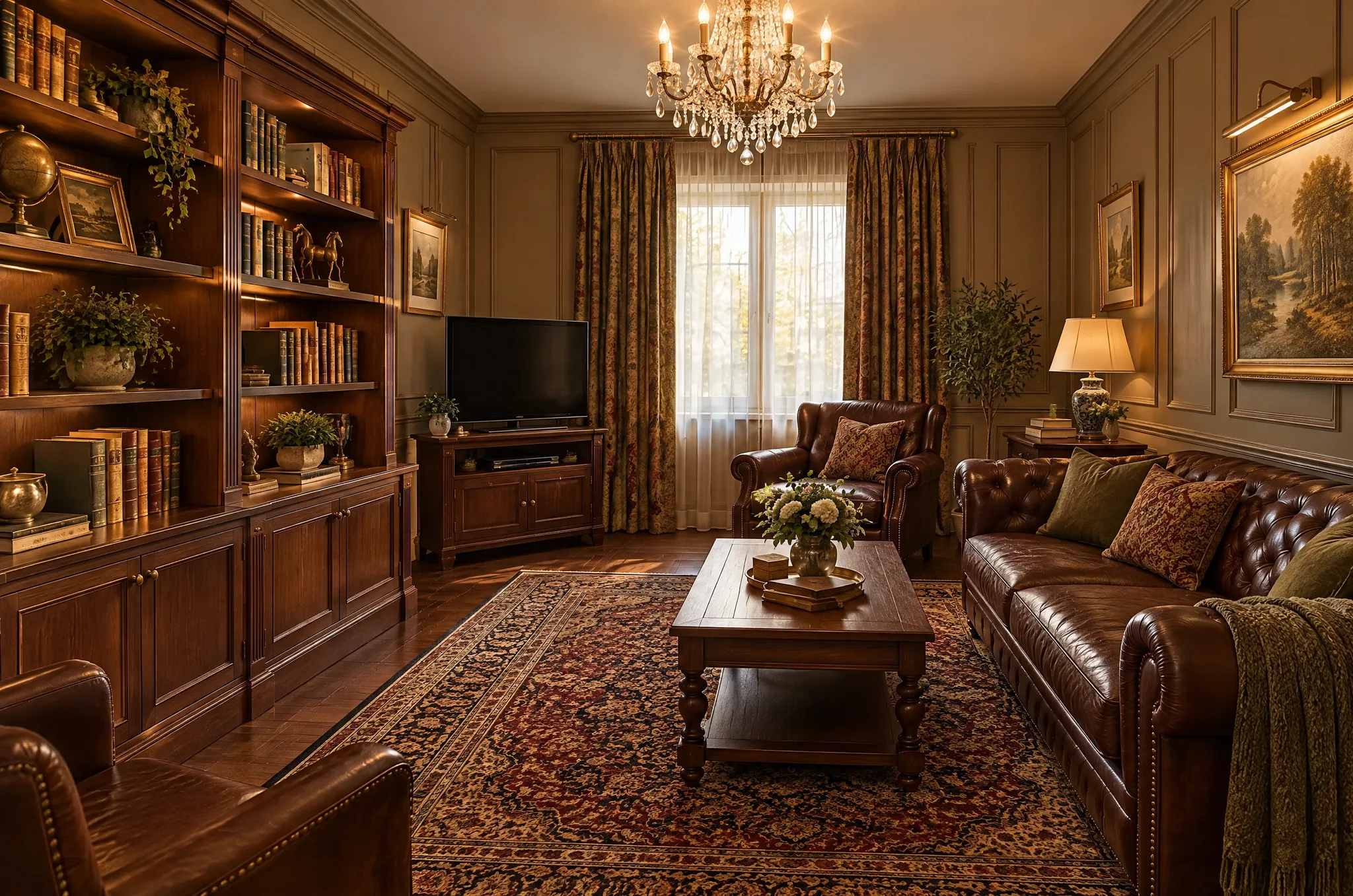
Traditional interior design draws on the classical European decorating of the eighteenth and nineteenth centuries: the symmetry of Georgian architecture, the formality of English country houses, the elegance of French salons and the sturdy craftsmanship of early American homes. Rooms are balanced, orderly and built around the idea that comfort and refinement can coexist.
Where modern styles often try to remove detail, traditional design welcomes it. Crown molding, wainscoting, panelled doors, patterned fabrics and layered window treatments give a room depth and a sense of history. Furniture has carved details, rolled arms and turned legs, and it is arranged in pairs: matching lamps, matching armchairs, matching sconces either side of a mirror.
The style endures because it is reassuring. It does not depend on trends, and it ages gracefully. A traditional room can look as appropriate in a family home today as it did decades ago, and its heirloom quality means pieces can be passed down, restored and reused. Today's version is often lighter and less formal than its ancestors, with softer colors and fewer fussy layers.
Key Design Elements
- Symmetry and balance — Matching pairs, centered focal points and furniture arranged around a fireplace or window.
- Architectural detail — Crown molding, wainscoting, picture rails, paneled doors and ceiling medallions.
- Rich, layered fabrics — Damask, velvet, silk, chintz and fine wool, often with subtle patterns.
- Classic patterns — Stripes, florals, plaids, toile and Oriental rugs.
- Warm, deep color — Navy, burgundy, forest green and gold, or softer cream and sage in lighter versions.
- Dark polished wood — Mahogany, cherry and walnut with carved details.
- Elegant lighting — Chandeliers, crystal or brass sconces and table lamps with fabric shades.
Recommended Furniture & Decor
Furniture & Decor
- A rolled-arm sofa or Chesterfield in velvet or linen, with tufting or a skirted base.
- Wingback armchairs in a coordinating fabric, arranged as a pair.
- A wood coffee table or a tufted ottoman with turned legs or a carved edge.
- A formal dining table with upholstered chairs and a sideboard.
- A large Oriental or traditional-style rug to anchor the seating area.
- A statement chandelier and pairs of matching table lamps.
- Framed artwork in gilt frames, mirrors with ornate edges and symmetrical gallery walls.
Materials & Colors
- Walls in cream, soft taupe, sage, navy or deep green, often with paneling.
- Floors in hardwood, parquet or wall-to-wall carpet with an area rug on top.
- Wood in mahogany, cherry, walnut and oak with deep finishes.
- Metals in polished brass, antique gold and silver.
- Textiles with traditional patterns in rich, saturated colors, or soft neutrals for a lighter look.
Room-by-Room
- Living room — Arrange a sofa and two chairs around a fireplace or coffee table, and add matching lamps and a large rug. Browse our living room ideas for layouts that work with classic pieces.
- Dining room — A wood table, upholstered chairs, a sideboard and a chandelier are the core of the look.
- Bedroom — A headboard in tufted fabric, matching nightstands and layered drapery.
- Study or library — Built-in shelves, a leather chair, a desk with a green lamp and rich wall color.
- Entryway — A console table, a mirror and a runner set a formal tone from the front door.
Common Mistakes
- Matching everything — A full matched suite looks stiff. Mix finishes and fabrics within one color family.
- Heavy, dark rooms — Too much dark wood and velvet becomes oppressive. Use light walls and mirrors to open the room.
- Ignoring scale — Oversized furniture crowds rooms. Measure before you buy.
- Overdecorating — The style is layered, not cluttered. Edit accessories until every piece earns its place.
Best For
- Homes with period architecture such as colonial, Georgian or Victorian houses.
- Families who want durable, long-lasting furniture that can be handed down.
- People who like formality and order in entertaining spaces.
- Collectors of art, books and antiques, since the style is built to display them.
- Anyone who finds modern styles cold and wants more warmth and detail.
If you like some of the tradition but want a lighter feel, try contemporary, which borrows warmth without the formality.
Budget Guide
Typical ranges for a single living room or dining room of around 200 square feet. Antiques and custom millwork can push costs well beyond these.
| Level | Scope | Estimated Cost (USD) |
|---|---|---|
| DIY Refresh | Paint, lamps, curtains, a patterned rug and framed art | $600 – $2,000 |
| Mid-Range | New sofa, armchairs, rug, lighting, curtains and wall paneling | $5,000 – $14,000 |
| Premium | Custom millwork, designer upholstery, antiques and chandelier | $20,000 – $60,000+ |
Cost-saving tips: Estate sales and auctions are rich sources of solid wood furniture at a fraction of retail price. Picture frame molding can imitate wainscoting at a low cost, and reupholstering a good frame often beats buying new.
Maintenance Level
Medium to High — The detail that gives traditional design its character also collects dust and requires regular care.
- Weekly — Dust moldings, polish wood and vacuum upholstery and rugs.
- Monthly — Clean chandeliers, rotate cushions and polish metal finishes.
- Seasonal — Wash curtains, air rugs and inspect antiques for wear.
- Yearly — Professional cleaning for fine textiles and rugs, and re-wax wooden furniture.
Try It Now
Upload a photo of your room and preview a traditional redesign in seconds, free. For a full walkthrough, read our traditional interior design guide, or explore the AI room design tool with other styles.