
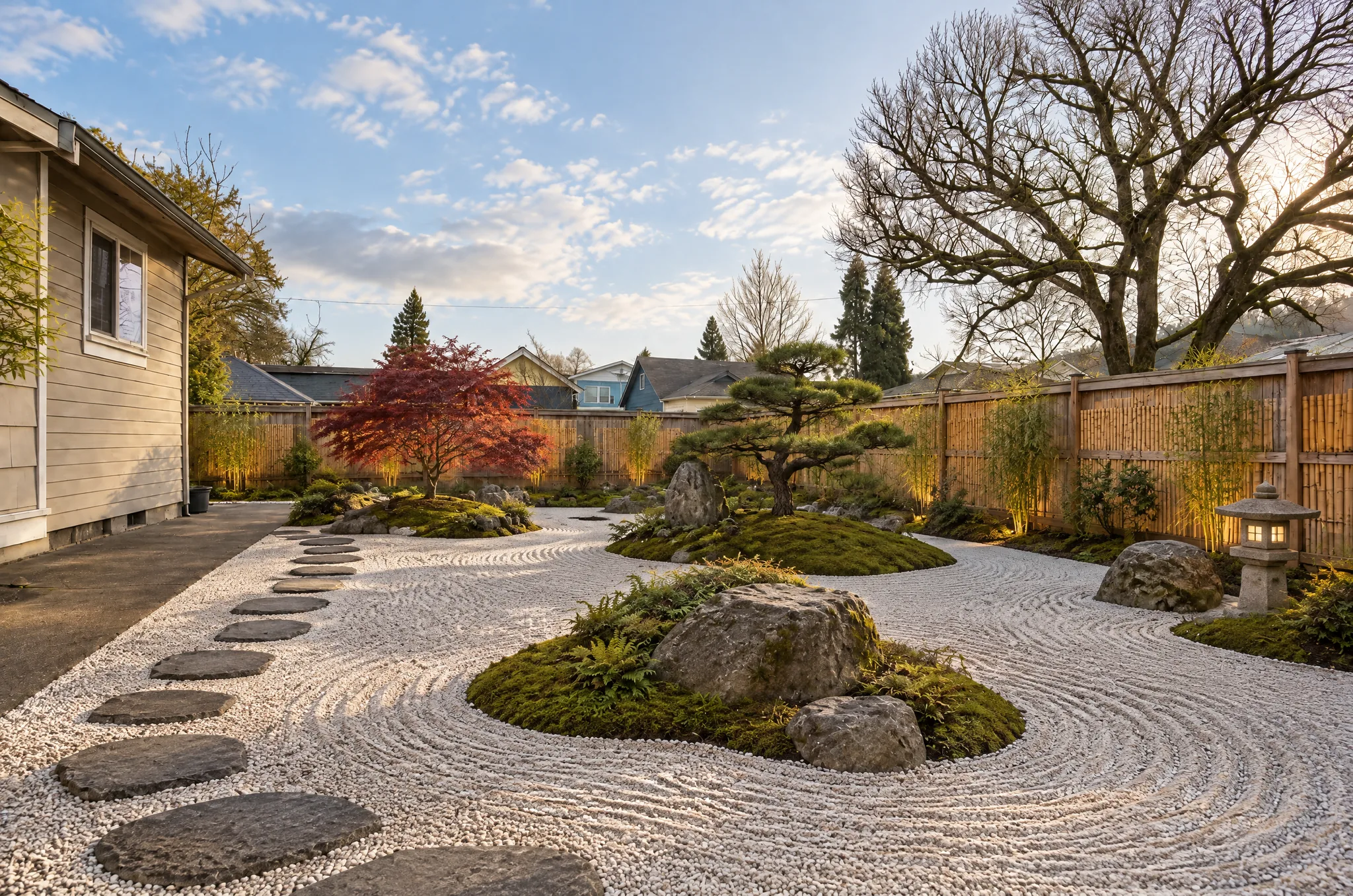
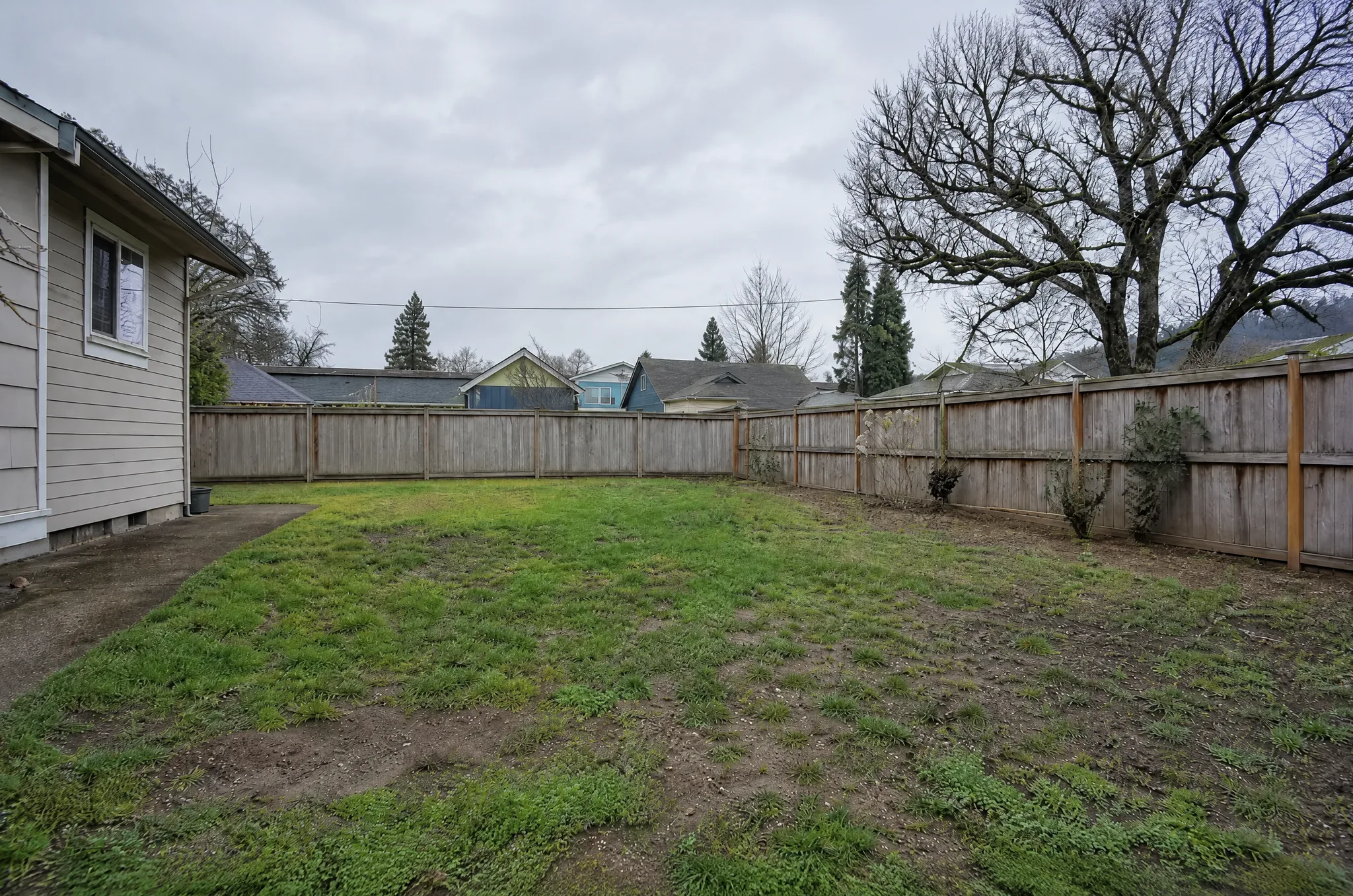
Design Philosophy
The Japanese Zen garden — known formally as karesansui (枯山水), meaning "dry mountain water" — is one of the most distilled expressions of garden design ever conceived. Originating in the 14th-century Zen Buddhist monasteries of Kyoto, these gardens were not created for strolling or socializing. They were designed for contemplation: a monk sits at the edge of a raked gravel court and the garden becomes a landscape of the mind.
The philosophical roots draw from three traditions. Shinto reverence for natural forms — the curve of a stone, the pattern of moss on bark — provides the material sensitivity. Buddhist meditation practice supplies the purpose: a space that encourages stillness and awareness. And the aesthetic philosophy of wabi-sabi — the beauty of imperfection, impermanence, and incompleteness — dictates that a Zen garden should look as though nature placed every element, even when a designer spent weeks choosing the exact angle of a single rock.
The most profound concept in Zen garden design is ma (間) — meaningful emptiness. Western garden design typically asks "what should I fill this space with?" A Zen garden asks the opposite: "what is the quality of the emptiness I am creating, and how does what I place make that emptiness meaningful?" The raked gravel is not empty ground waiting for plants. It is the design — representing ocean, river, mist, or simply void, depending on the pattern and the viewer's state of mind.
By 2026, the Zen garden has become one of the most sought-after styles for small urban spaces. In a world of constant digital stimulation, the idea of a garden that contains almost nothing — and asks you to find everything within that nothing — resonates more than ever. Modern interpretations pair traditional principles with contemporary materials like corten steel edging and LED accent lighting while preserving the essential restraint.
Key Design Elements
- The 70/30 Rule — Approximately 70% of the garden surface is open ground (raked gravel or sand). Only 30% is occupied by stone, planting, or built features. This ratio creates the calm that defines the style. Filling more than 30% is the single most common mistake in Western attempts at Zen gardens.
- Asymmetry (Fukinsei) — Nothing is centered or mirrored. Rocks are grouped in odd numbers (3, 5, or 7) and placed off-axis. Asymmetry forces the eye to move across the composition rather than settling on a fixed point.
- Odd-Number Rock Groupings — A classic arrangement uses three stones: one tall vertical, one low vertical, and one reclining horizontal. This triad represents Buddhist concepts but also creates a naturally balanced visual composition without symmetry.
- Raked Gravel Patterns — Straight parallel lines suggest flowing water. Concentric circles around a stone suggest ripples. Curved lines suggest waves or wind. The act of raking is itself a form of meditation.
- Borrowed Scenery (Shakkei) — The garden framing draws distant mountains, trees, or sky into the composition so that a small courtyard feels connected to a larger landscape.
- Enclosure — Zen gardens are typically bounded by walls, fences, or dense planting that separates the contemplative space from the everyday world. Bamboo fencing, rendered walls, or tall hedge screens all work.
- A Fixed Viewing Point — Unlike strolling gardens, a karesansui is designed to be observed from one primary position, usually a veranda or platform. Every stone, every line in the gravel, is composed for that specific viewpoint.
Recommended Plants & Materials
Plants
The planting palette in a Zen garden is intentionally small, mostly evergreen, and chosen for form and texture rather than flower color:
- Moss (Bryophyta) — The ideal ground cover where shade and humidity allow. Creates the ancient, time-softened quality that defines mature Zen gardens. In drier climates, substitute with mondo grass or baby's tears.
- Japanese Maple (Acer palmatum) — The quintessential Zen garden tree. Choose a dwarf or weeping cultivar like 'Crimson Queen' or 'Tamukeyama' for small spaces. Provides dappled shade and spectacular autumn color.
- Black Pine (Pinus thunbergii) — Sculptural, cloud-pruned pines are iconic in Japanese gardens. Slow-growing and deeply evocative of mountainous landscapes.
- Clumping Bamboo (Fargesia species) — For screening and the gentle sound of rustling leaves. Always choose clumping varieties — running bamboo will invade the entire garden.
- Mondo Grass (Ophiopogon japonicus) — Low, dark green tufts that complement stone and gravel. Use as a moss substitute in sunny positions.
- Ferns (Dryopteris, Athyrium) — For shaded corners. Japanese painted fern (Athyrium niponicum) adds subtle silver coloring.
- Azaleas (clipped, not flowering displays) — Sheared into rounded mounds, azaleas provide evergreen structural form. In a Zen garden, their shape matters more than their flowers.
Materials & Colors
- Gravel/Sand — Pale grey granite chips, cream limestone, or white quartz in 6–10mm grain size for clean raking patterns. Lay over weed-suppressing membrane at 2–3 inches depth.
- Feature Stones — Locally sourced weathered stone with natural character. Granite, basalt, slate, and sandstone all work. Sink each stone at least one-third of its depth into the ground for visual stability and a sense that the rock has always been there.
- Stepping Stones — Irregular, flat-topped natural stones set slightly above the gravel surface. Space them at natural walking stride intervals.
- Bamboo Fencing — Traditional yotsume-gaki (four-eye fence) or kenninji-gaki (tied bamboo screen) for boundaries and internal divisions.
- Stone Lanterns — Yukimi-doro (snow-viewing lantern) or tachi-gata (standing lantern) placed at a corner or beside a water basin. Allow natural moss and lichen to develop rather than keeping them clean.
- Tsukubai (Water Basin) — A low stone basin where visitors ritually wash their hands. Even without functional water, the basin serves as a sculptural focal point.
- Color Palette — Muted and natural: pale grey gravel, dark stone, the greens of moss and pine, weathered wood and bamboo. No bright colors, painted surfaces, or artificial materials.
Best For
The Japanese Zen garden suits a specific kind of space and a specific kind of gardener:
- Small urban courtyards — The style excels in confined spaces where other approaches would feel cramped. A 10x12-foot courtyard can become a complete Zen garden.
- Side yards and narrow passages — Spaces too narrow for traditional planting become contemplative corridors with raked gravel and a single stone grouping.
- Meditation and mindfulness practitioners — The garden doubles as a practice space. Raking the gravel is a moving meditation; sitting before it is a still one.
- Low-effort gardeners who want high impact — Once established, a Zen garden requires very little horticultural work. No mowing, no deadheading, no fertilizing programs.
- Contemporary architecture — Clean building lines partner naturally with the geometric simplicity of raked gravel and minimal planting.
- Rental properties and temporary spaces — A small Zen garden can be created with loose materials (gravel, portable stones) that you take with you when you move.
Budget Guide
The Zen garden's reliance on stone and gravel rather than plants means costs are front-loaded but ongoing maintenance costs are minimal.
| Level | Scope | Estimated Cost (USD) |
|---|---|---|
| DIY Tabletop/Corner | Mini garden with sand, 3 stones, a rake — on a table or in a 4x4-foot corner | $50 – $300 |
| DIY Small Garden | 100–200 sq ft courtyard with bulk gravel, 3–5 feature stones, bamboo fencing, moss/mondo grass | $800 – $2,500 |
| Mid-Range | Professional stone selection and placement, gravel installation, one Japanese maple, stone lantern | $5,000 – $15,000 |
| Premium | Architect-designed with imported stone, mature cloud-pruned pine, tsukubai water feature, custom fencing, lighting | $15,000 – $40,000+ |
Cost-saving tips: Source feature stones from a local landscape yard rather than ordering online — you need to see the shape and character in person. Pale granite gravel in bulk costs a fraction of bagged gravel from garden centers. Start with a single stone grouping and expand gradually. The Zen aesthetic actually rewards patience and restraint in the building process as much as in the final design.
Maintenance Level
Low — This is one of the lowest-maintenance garden styles in existence. There is no lawn to mow, no perennial border to deadhead, no annual planting program.
Regular tasks include:
- Raking gravel — Weekly to monthly, depending on how pristine you want the patterns. Many gardeners find this meditative rather than burdensome.
- Leaf removal — Fallen leaves on the gravel surface need clearing, especially in autumn. A bamboo rake or leaf blower keeps the surface clean.
- Weed control — With proper membrane beneath the gravel, weeding is minimal. Pull any wind-blown seedlings before they establish.
- Moss care — If you have moss areas, keep them moist in dry spells and brush off fallen debris gently.
- Stone lantern and basin — Allow natural moss and lichen to develop. Brush off only heavy debris. Aging is the goal, not cleanliness.
- Pruning — Clip azalea mounds twice yearly. Cloud-prune pines once in late spring. Japanese maples need minimal pruning — remove only crossing or dead branches.
Try It Now
Upload your photo and see your space transformed into Japanese Zen style in seconds — free to try.