Few design terms are used as loosely as "contemporary". Estate agents use it to mean anything that isn't old. Retailers use it as a synonym for modern. In interior design, though, it has a specific meaning: contemporary design is the design of the present moment. It changes as taste changes, which is both its appeal and the reason it confuses people.
This guide explains what contemporary interior design means today, how it differs from modern design, and how to build a home that feels current without becoming dated in a few years. It includes palettes, materials, furniture, lighting and room-by-room advice, with budgets and common mistakes. For a short overview of the look, see our contemporary style page.
Contemporary vs Modern
The two words are often swapped, but they are not the same.
- Modern refers to a historical movement, roughly the early to mid twentieth century, with its own rules: functional forms, honest materials and little ornament. Mid-century modern and Bauhaus both belong here.
- Contemporary describes what designers are doing now. It borrows from modernism, but also from other traditions, and it changes with time.
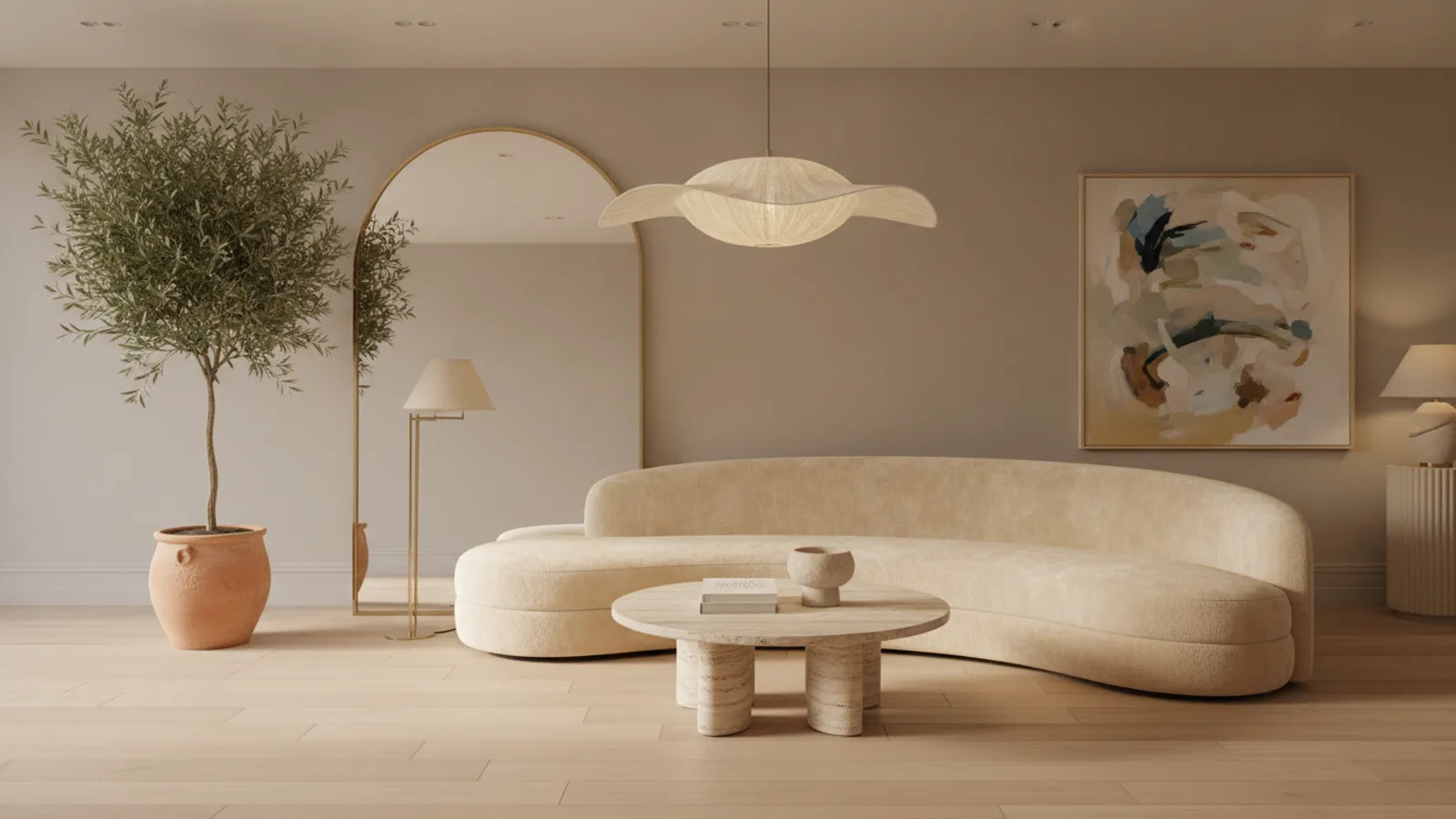
A useful test is that modern design is fixed, while contemporary design moves. A contemporary living room in 2006 and one in 2026 look quite different, though both would be called contemporary. In 2026 the trend is toward soft curves, warm neutrals, natural stone, tactile fabrics and a more relaxed attitude to symmetry and ornament.
The Principles That Stay Constant
Even though the details change, contemporary rooms share a handful of habits.
Open and flowing space
Contemporary homes favor open layouts and clear sightlines. Furniture is used to divide zones, not walls. Within a room, furniture is arranged to leave generous circulation space, and large windows or glass doors link the interior with outdoor areas where possible.
A restrained base
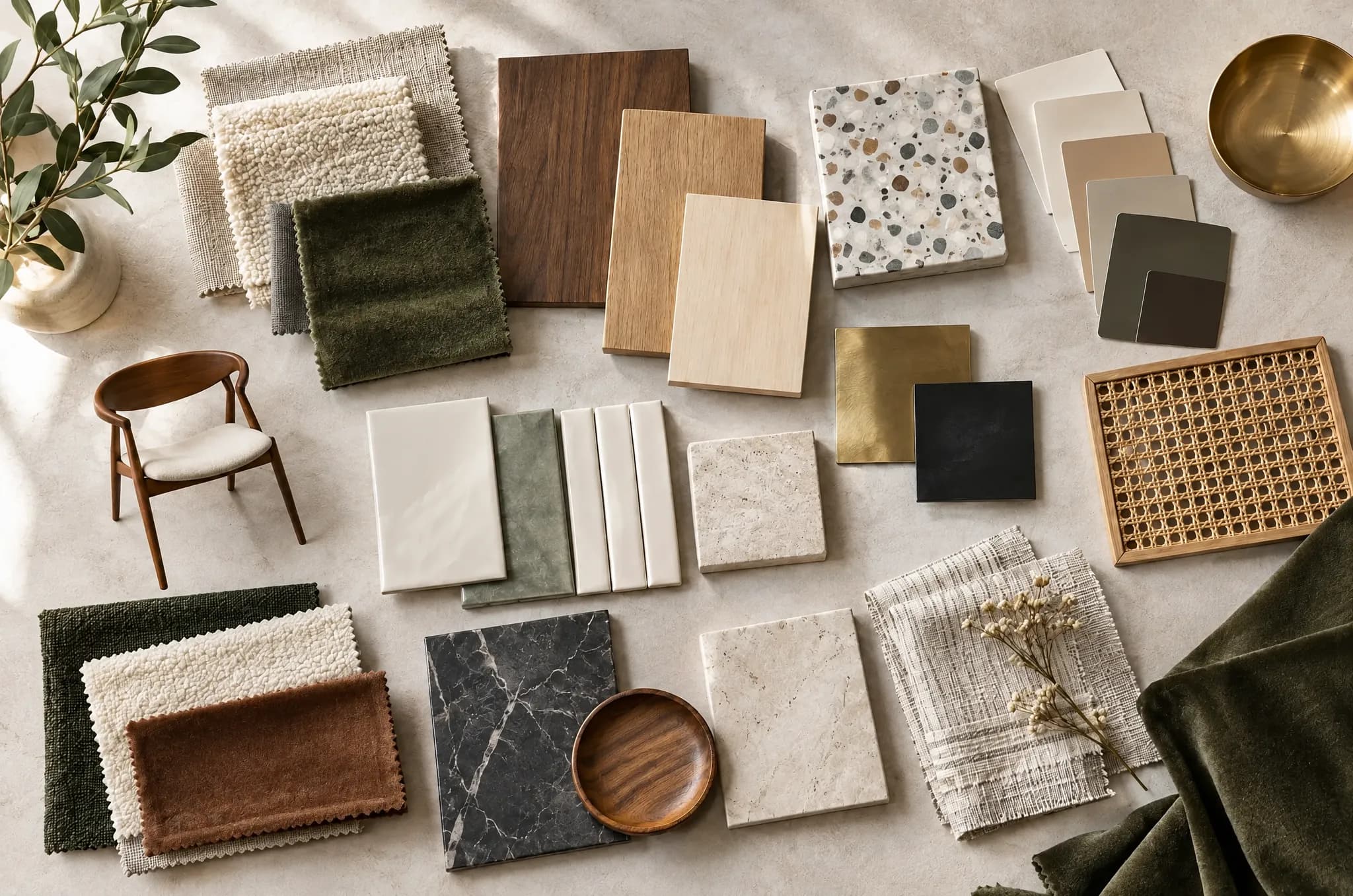
Walls, floors and large furniture are neutral, with warm white, greige, taupe and soft charcoal being typical. The calm backdrop makes the few bolder pieces stand out and makes the room easy to update.
Mixed materials
Contemporary design rarely sticks to one material. Wood meets stone, metal meets glass, and smooth surfaces sit next to textured ones. The aim is variety within a controlled palette.
One or two statement pieces
A sculptural chair, an unusual lamp or a bold piece of art acts as a focal point. The rest of the room supports it.
Layered lighting
Recessed lights, pendants, sconces and floor lamps are combined, with dimmers to control the mood. Lighting is treated as architecture rather than an afterthought.
The Current Palette
The cool greys and stark whites of the 2010s have given way to warmer, more natural tones.
- Warm neutrals: warm white, oatmeal, greige, sand and mushroom.
- Earth tones: terracotta, clay, olive, sage and deep brown.
- Deep accents: forest green, navy, burgundy and charcoal.
- Metals: brushed brass, bronze and black. Mix no more than two finishes.
Choose one dominant neutral, one supporting tone and one accent, and use them consistently throughout the home. If you want to keep the scheme flexible, paint walls neutral and bring bolder colors in through textiles, art and accessories.
Materials That Define the Look
- Natural stone such as marble, travertine and quartzite for worktops, tables and bathrooms.
- Wood in oak, walnut and ash, usually in wide planks or simple slab forms with a matte finish.
- Bouclé, velvet and linen for soft, tactile upholstery.
- Glass and mirrors to bring light into the room and extend sightlines, including arched and oversized mirrors.
- Metal in slim frames, legs and fittings.
- Plaster and limewash for textured walls that add depth without pattern.
Natural and responsibly sourced materials are becoming more important as buyers prefer pieces that last. A well-made oak table or wool rug outlives most trend-driven alternatives.
What to Buy: A Contemporary Shopping List
- A sectional or modular sofa. Choose a performance fabric in a warm neutral. Modular pieces adapt as your space and family change.
- A curved accent chair. Bouclé, velvet or leather with a rounded back gives the room softness.
- A stone or sculptural coffee table. A travertine or marble slab, a pair of nested tables or a glass-and-metal piece.
- A large rug. Wool or a wool blend in a tonal pattern or texture, sized to anchor the seating.
- Sculptural lighting. An oversized pendant, an arc floor lamp or a cluster of glass globes.
- Large-scale art. One substantial piece, such as an abstract canvas, textured relief or photograph.
- Plants. A large floor plant, such as a fiddle leaf fig or olive tree, adds scale and life.
- Storage that disappears. Flat-front sideboards and floating shelves keep clutter hidden.
Room-by-Room Guide
Living Room
Anchor the room with a large rug and a sofa or sectional, then add a curved chair and a stone coffee table. Use at least three light sources at different heights. Hang one big piece of art or a mirror rather than many small frames. Our living room ideas offer layout inspiration, and our modern minimalist guide shows how to take this look in a quieter direction.
Kitchen
Contemporary kitchens combine flat-panel cabinetry with a feature material, such as a stone island, a wood-grain run of cupboards or a statement backsplash. Integrated appliances, pendant lighting and a mix of open shelving and closed storage complete the look. See our contemporary kitchen ideas for specific layouts and finishes.
Bedroom
Use an upholstered bed, tonal bedding in linen and wool, wall-mounted lamps and a soft rug. Keep the palette calm, and add one textural feature, such as a plaster wall or paneling behind the bed.
Bathroom
A floating vanity, large-format tile, a frameless shower and warm metal fixtures create a polished, current bathroom. Add a textured element such as a stone basin or a woven basket.
Home Office
A slim desk, an ergonomic chair in a neutral color and a shelf that mixes books with objects keep the room both productive and attractive. Place the desk so that you have daylight from the side and a pleasing view.
Lighting
Lighting in contemporary homes is planned in layers.
- Ambient: recessed downlights or track fittings, on dimmers.
- Task: under-cabinet lights, desk lamps and reading lights.
- Accent: picture lights, wall washers and LED strips in niches.
- Decorative: statement pendants, sculptural lamps and wall sconces.
Aim for warm white bulbs of around 2700K to 3000K in living spaces. Choose fittings that echo the material palette, and group lights in odd numbers for a balanced arrangement.
Styling Open-Plan Spaces
Open-plan living is where contemporary design is most at home, and also where it most often goes wrong. Without walls to separate functions, the room can feel like one large, undefined space.
- Define zones with rugs. A rug under the living area and a different rug or flooring under the dining table tells the eye where one activity ends and the next begins.
- Use furniture as dividers. A sofa with its back to the dining area, a low shelf or a console table creates a boundary without blocking light.
- Repeat materials. Using the same wood, metal or color in each zone makes the space feel unified.
- Vary the lighting. Give each zone its own pendant or lamp so that you can dim the living area while the kitchen stays bright.
- Keep sightlines in mind. Anyone standing in the kitchen can see the whole room, so keep surfaces tidy, or place a sink and cooker away from the main view.
Making It Last
The danger of contemporary design is that it can date. A few habits reduce that risk.
- Invest in neutral, well-made large pieces and use accessories for trend colors.
- Choose natural materials over trendy synthetic finishes.
- Avoid copying a single image from social media. Rooms that mix several influences age better.
- Keep things simple. A room that depends on one dramatic feature loses its appeal when the feature falls out of fashion.
- Repaint and restyle rather than replace. Paint, lighting and textiles refresh a room cheaply.
Common Mistakes and How to Fix Them
- Too many statement pieces. If everything shouts, nothing stands out. Choose one hero per room.
- Cold, hard surfaces only. Glass, stone and metal need wood, textiles and warm lighting.
- Ignoring scale. Large rooms need large pieces, and a small rug floating in the middle looks lost.
- Matching everything. Contemporary rooms look best with a few different textures and shapes.
- Copying every trend. Select two or three current ideas that suit your home, rather than all of them.
- Neglecting storage. Clutter undoes the clean look. Include concealed storage in each room.
Budget Breakdown
These ranges are typical for a living room of around 200 square feet. Kitchens and bathrooms cost significantly more.
Refresh ($500 – $2,000)
New paint, lighting, textiles, art and a few updated accessories.
Mid-Range ($4,000 – $12,000)
A new sofa, accent chair, coffee table, rug, lighting and window treatments.
Full Transformation ($20,000 – $50,000+)
Custom joinery, new flooring, stone surfaces, a full lighting scheme and designer furniture.
Spend most on pieces you use every day, such as the sofa, bed and lighting, and least on trend-driven accessories.
Contemporary Compared With Similar Styles
| Feature | Contemporary | Modern Minimalist | Traditional |
|---|---|---|---|
| Approach | Current, flexible | Strict reduction | Classic, formal |
| Ornament | Selective | Almost none | Rich detail |
| Palette | Warm neutrals with accents | Neutral and restrained | Deep, layered colors |
| Longevity | Changes with trends | Very long-lasting | Very long-lasting |
If you want something with more history and detail, our traditional interior design guide explains how to bring classic elements into a modern home. For a stricter, calmer approach, see the modern minimalist guide.
Frequently Asked Questions
Is contemporary design the same as modern design?
No. Modern refers to a specific historical movement, while contemporary describes current design. The two overlap but are not identical.
Will contemporary design go out of style?
Parts of it will, because it follows current taste. You can reduce the risk by choosing neutral large pieces and well-made natural materials, and by using accessories for trendy colors.
What colors are best for a contemporary home?
Warm neutrals such as greige, oatmeal and warm white are the base. Deep green, terracotta, navy and charcoal work well as accents.
Can I mix contemporary with other styles?
Yes. It is among the most flexible styles. Mixing it with Scandinavian, mid-century or even traditional pieces works when you keep a consistent palette.
How do I make a contemporary room feel warm?
Add wood, wool and linen, use warm bulbs, layer lighting and include plants. These elements prevent glass, stone and metal from feeling cold.
Try Contemporary Design in Your Own Room
If you want to see how contemporary design would look in your space, upload a photo to our AI interior design tool and preview it in seconds, free. You can also compare different styles with our AI room design tool.