Coastal design is the one interior style that people often get wrong by trying too hard. Anchors, ship wheels, seashell garlands and "Welcome to the Beach" signs turn a home into a gift shop. The best coastal rooms are quieter. They borrow their cues from light, color and texture rather than from souvenirs, and they feel as relaxed and easy as a day by the water.
This guide explains how to create that look: the history of the style, how to build a palette, which materials to choose, what to buy, how to handle each room and the mistakes to avoid. You do not need to live by the sea. For a short overview, see our coastal interior style page.
Where the Style Comes From
Coastal design draws on several traditions. The shingled cottages of New England and the Hamptons provided white-painted beadboard, wide porches and slipcovered furniture. California beach houses added a relaxed, sun-faded, surf-influenced mood. The whitewashed villas and fishing houses of the Mediterranean contributed their crisp whites, blues and natural fibers.
Early twentieth-century coastal decor leaned on literal references: rope, anchors, striped fabrics and model ships. A more refined approach developed from the 1980s and 90s, associated with designers who mixed weathered wood, white linen and natural textures to create beach houses that felt cool and comfortable rather than themed.
The modern version is flexible. "Coastal" is an umbrella over several sub-styles, including Hamptons (crisp, tailored, navy and white), California coastal (relaxed, sun-bleached, natural) and Mediterranean-influenced coastal (whitewashed, with terracotta and deep blue). The common thread is light, airy and informal.
What Defines the Style
- Abundant light. Sheer curtains, light walls and minimal window coverings.
- A soft palette. White, sand, pale blue, seafoam and grey, inspired by sky, water and shoreline.
- Natural textures. Jute, rattan, seagrass, linen and washed cotton.
- Weathered wood. Whitewashed, pickled or driftwood-toned finishes on floors and furniture.
- Relaxed furniture. Slipcovered sofas, wicker chairs and comfortable seating that tolerates sand and sun.
- Architectural detail. Shiplap, beadboard and exposed beams.
- Subtle marine accents. Glass floats, coral, woven baskets and framed maps, used sparingly.
Choosing a Palette
A coastal palette is based on the colors you see at the beach on a bright day. Start with a base of white or warm off-white, then add two or three supporting colors.
Core combinations
- Blue and white. A crisp, classic scheme with navy, cobalt or pale blue against white. Works best in rooms with plenty of light.
- Sand and seafoam. Soft neutrals with green-blue accents for a calm, relaxed room.
- Grey and driftwood. Cool grey, silver and bleached wood for a modern, understated look.
- Warm Mediterranean. White walls with terracotta, deep blue and olive for a sun-baked feel.
Painting advice
Choose warm whites rather than stark ones, because cooler whites can look flat in coastal light. For blue-grey walls, test samples at different times of day. A color that looks pale blue in the morning can turn grey at dusk. Keep ceilings white or very pale, and consider painting beadboard or shiplap in a slightly different tone from the walls for subtle depth.
Materials That Work
- Linen and cotton for curtains, slipcovers and bedding. They wash well and soften with age.
- Rattan, wicker and cane for chairs, headboards, baskets and lighting.
- Jute and seagrass for rugs and mats. They are durable and neutral.
- Weathered or whitewashed wood for floors, coffee tables and shelves.
- Stone and shell in subtle forms, such as a pebble tray or a stone vase.
- Glass in blue, green or clear tones, such as hand-blown vases and bottles.
- Weather-resistant fabrics if you live near the water, since salt and sun are hard on delicate materials.
What to Buy: A Coastal Shopping List
- A slipcovered sofa. White, cream or soft blue linen that can be washed. Deep seating is more comfortable for lounging.
- Rattan or wicker chairs. A pair of armchairs or a statement peacock chair adds texture.
- A weathered coffee table. Whitewashed or driftwood tones, or a simple painted table.
- A large natural-fiber rug. Jute or sisal anchors the room without pattern.
- Linen curtains. Hang them high and wide to let the maximum light in.
- Pendant or table lighting. Rope, rattan or glass fixtures in neutral tones.
- Woven baskets. For blankets, toys and storage.
- Art. Seascapes, abstract blues or photographs of the coast, kept simple.
Room-by-Room Guide
Living Room
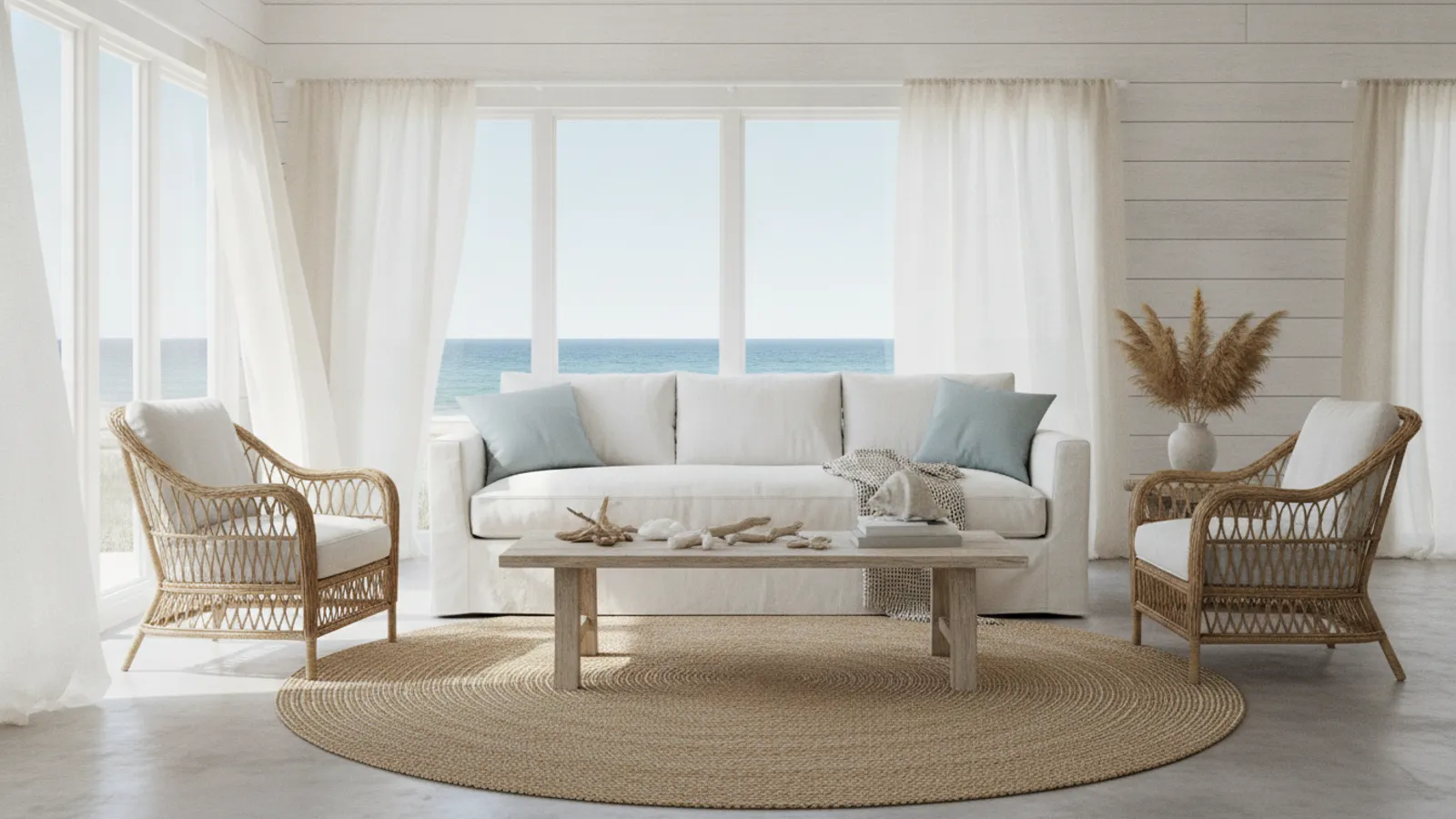
Choose seating that invites you to lounge: a slipcovered sofa, an armchair or two and a couple of ottomans. Layer a jute rug, a lightly patterned wool rug or both. Use linen curtains and an open arrangement that lets light travel. Add a few natural objects on a shelf or table. See our living room ideas for layouts.
Bedroom
White or soft blue bedding, a rattan or upholstered headboard, bedside lamps with natural shades and linen curtains create a relaxed retreat. Add a woven basket for blankets and a runner at the foot of the bed. Find more suggestions in our coastal bedroom ideas.
Bathroom
White tile, wood accents, a woven basket and soft towels in seafoam, white or grey make a spa-like bathroom. Add a framed mirror with a rattan or rope edge, and use brushed nickel or aged brass fixtures. Browse coastal bathroom ideas for tile and vanity choices.
Kitchen and Dining
White or pale blue cabinets, open shelves, a farmhouse sink and wooden stools suit the style. Choose a light countertop and woven pendant lights. For dining, use a whitewashed or oak table with mixed chairs and linen runners.
Porch and Outdoor Areas
Weather-resistant wicker, striped cushions, lanterns and potted plants carry the style outdoors. Use outdoor rugs and fabrics designed to resist sun and salt.
Coastal Sub-Styles at a Glance
| Sub-style | Palette | Mood | Typical details |
|---|---|---|---|
| Hamptons | Navy, white, grey | Crisp, tailored | Shiplap, striped fabric, classic furniture |
| California coastal | Sand, white, sage | Relaxed, sun-bleached | Rattan, linen, natural wood |
| Mediterranean coastal | White, terracotta, deep blue | Warm, sunny | Plaster walls, tile, wrought iron |
| Modern coastal | Grey, white, driftwood | Calm, understated | Clean lines, minimal accessories |
Choose one as your guide, and keep the rest of the room consistent with it.
Three Quick Room Recipes
If you are not sure where to start, these combinations are easy to follow and adapt.
- The weekend living room. White slipcovered sofa, a jute rug, two rattan chairs, linen curtains, one blue-and-white throw and a large basket for blankets. Total palette: white, natural fiber and one blue.
- The calm bedroom. Soft grey-blue walls, white linen bedding in two textures, a pale wood nightstand on each side, a woven pendant and a runner at the foot of the bed. Total palette: blue-grey, white and light wood.
- The sunny breakfast corner. A round whitewashed table, mixed wooden chairs with linen cushions, a simple glass pendant and a pitcher of garden flowers. Total palette: white, pale yellow and natural wood.
Each recipe uses three or four colors, two or three natural materials and one memorable object. That restraint is what keeps coastal rooms from feeling themed.
Lighting
Natural light is the defining feature of a coastal room, so protect and use it.
- Keep windows clear. Sheer curtains or simple blinds let daylight in.
- Use mirrors to bounce light. Place a large mirror opposite a window.
- Layer warm artificial lighting. Table lamps, rattan or rope pendants and floor lamps with warm bulbs of around 2700K.
- Avoid heavy fixtures. Light, natural-material fittings keep the room airy.
In the evening, candles and lanterns add a soft glow that suits the style.
Caring for Coastal Materials
Coastal interiors are meant to feel relaxed, but a few habits keep them looking fresh. Slipcovers should be washable in cold water and air-dried, which saves both shrinkage and the pale color you chose them for. Jute and sisal rugs are best vacuumed regularly and kept away from damp entrances, while outdoor-rated rugs are a sensible choice for sunrooms and rooms that open onto a deck.
If you live close to the water, salty air can dull metal finishes quickly. Brushed nickel, powder-coated steel and unlacquered brass that is allowed to patina hold up better than polished chrome. Wipe whitewashed wood with a barely damp cloth and re-wax or re-oil it once a year, and open windows regularly so natural fibers do not hold moisture.
Common Mistakes and How to Fix Them
- Going too literal. Anchors, ship wheels and signs make the room feel themed. Suggest, don't shout.
- Too much blue. An entire room of one blue can feel cold. Balance it with warm white, sand and wood.
- Ignoring climate. Humidity, salt and sun affect fabrics, wood and metal. Choose materials that suit your location.
- Overcrowding with shells and driftwood. A few carefully chosen natural objects have more effect than a collection on every shelf.
- Dark flooring and heavy furniture. They fight the airy mood. Choose lighter floors and furniture with visible legs.
- Forgetting texture. All-white rooms without texture feel flat. Layer wool, linen, jute and wood.
Budget Breakdown
These ranges are typical for a bedroom or living room of around 200 square feet. Waterfront locations may have higher labor and delivery costs.
Refresh ($400 – $1,500)
Paint, linen curtains, new bedding, baskets and a jute rug. This is enough to change the feel of a room quickly.
Mid-Range ($3,000 – $9,000)
A slipcovered sofa, rattan furniture, shiplap or beadboard, lighting and textiles.
Full Transformation ($12,000 – $35,000+)
Custom millwork, reclaimed or whitewashed wood floors, designer furniture and lighting, and window upgrades.
Shiplap and beadboard can be installed as a DIY project, and secondhand wicker and rattan are easy to find and refresh.
Coastal Compared With Similar Styles
| Feature | Coastal | Scandinavian | Farmhouse |
|---|---|---|---|
| Palette | White, blue, sand | White, pale wood, grey | Warm white, sage, black |
| Texture | Linen, jute, wicker | Wool, linen, sheepskin | Wood, iron, cotton |
| Mood | Breezy, relaxed | Cozy, simple | Warm, rustic |
| Source | Beach and sea | Nordic homes | Working farms |
If you like the lightness but want a more modern edge, see our Scandinavian interior design guide. If you prefer a warmer rustic look, our farmhouse interior design guide is a good next step.
Frequently Asked Questions
Can I do coastal style if I don't live near the sea?
Yes. The style is about light, color and relaxed comfort, not geography. It works particularly well in apartments and suburban homes that want an airy, vacation-like atmosphere.
What is the difference between coastal and nautical?
Nautical design uses literal references such as anchors, ropes and navy-and-white stripes. Coastal design is broader and softer, drawing on the colors and textures of the shore.
What colors go with coastal decor?
White, sand, pale blue, seafoam and grey are the foundation. Navy, coral and soft yellow work as accents.
Is coastal style good for small spaces?
Very. Light colors, natural light and simple furniture make small rooms feel open and bright.
How do I keep white slipcovers clean?
Choose washable cotton or linen slipcovers, and keep a spare set. Treat stains promptly, and consider a performance fabric if you have children or pets.
See Coastal Style in Your Own Room
Upload a photo of your room to our AI interior design tool and see how it would look in coastal style in seconds, free. You can also compare it with other looks in our AI room design tool.