
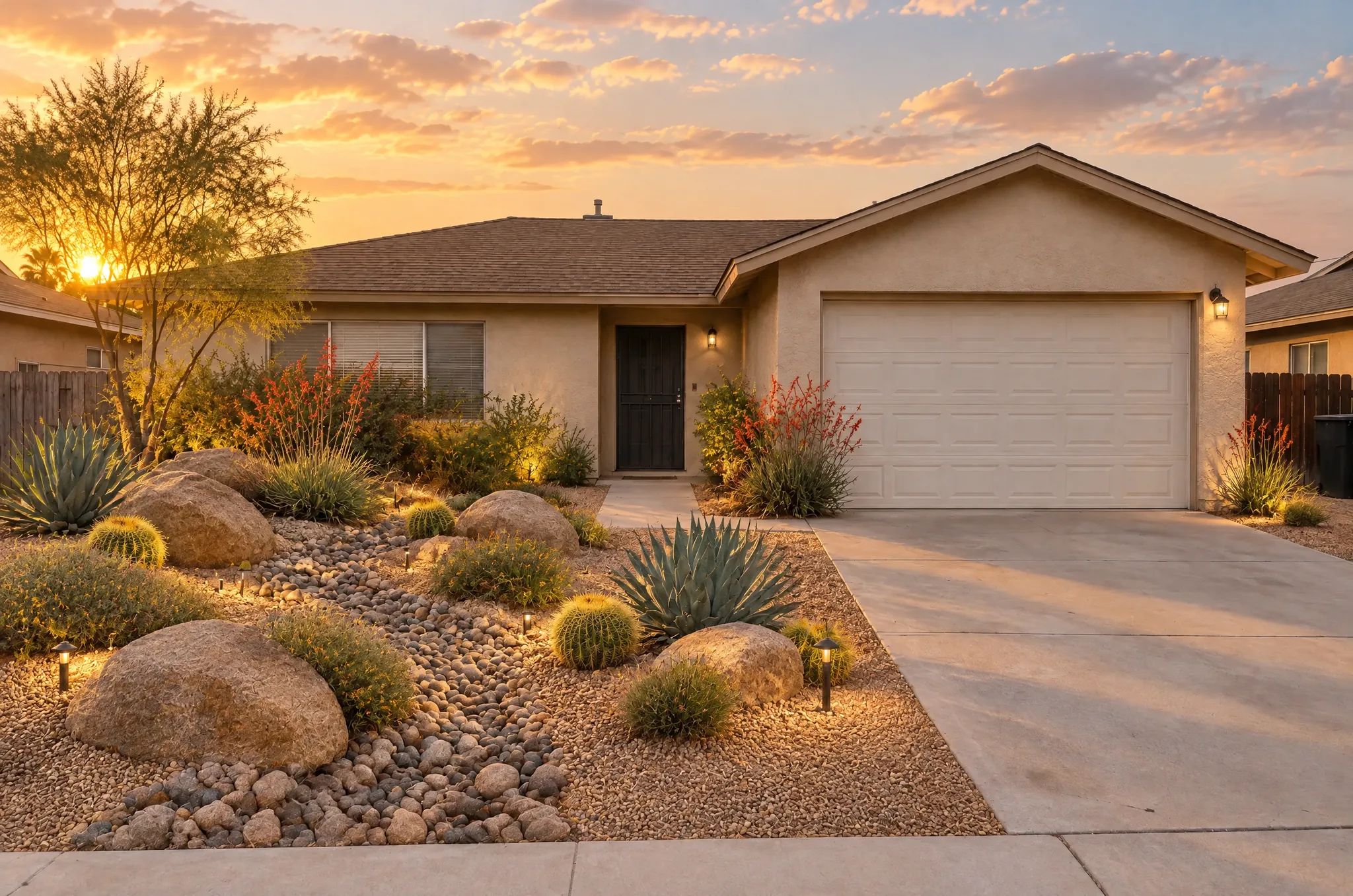
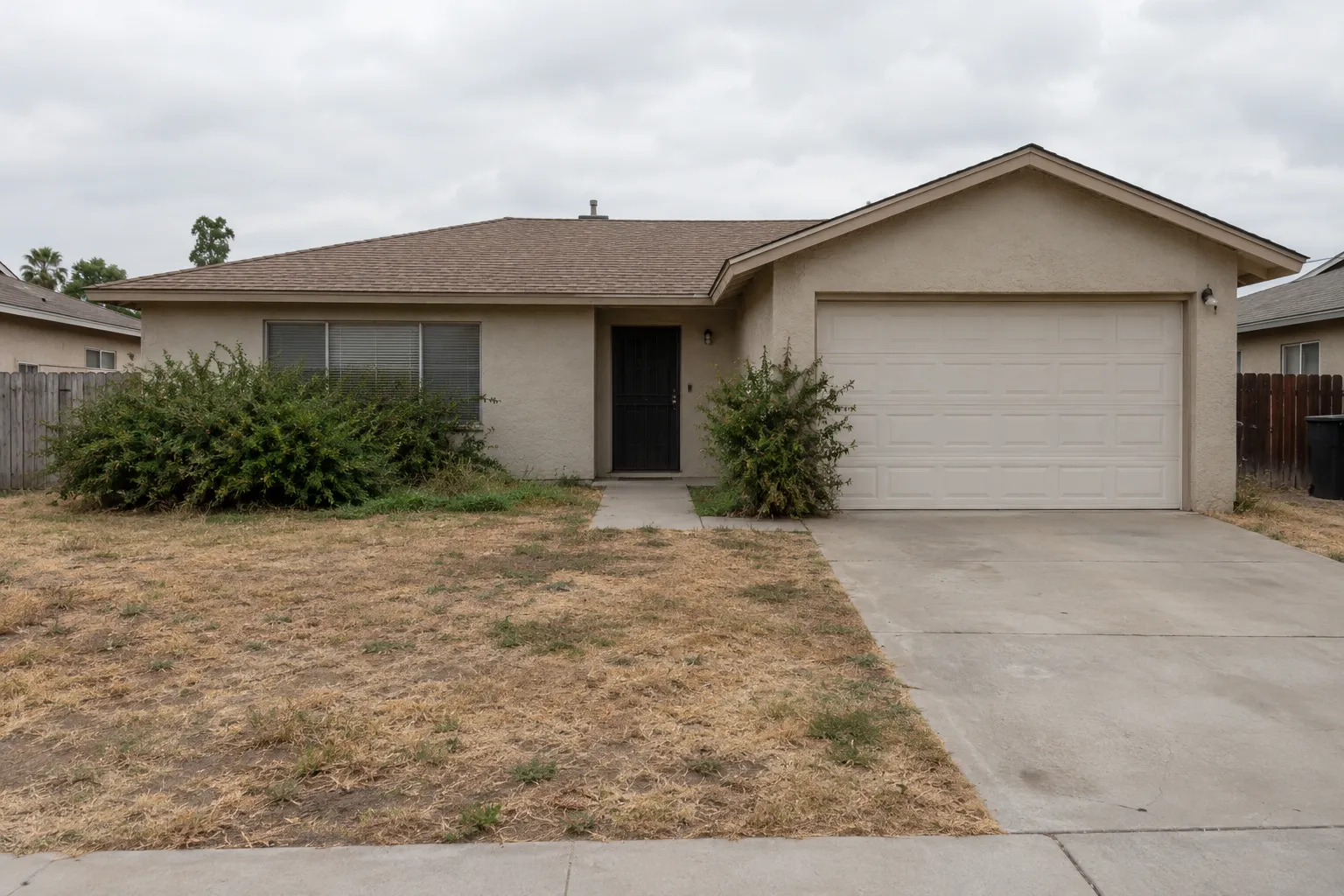
Design Philosophy
Xeriscape — from the Greek xeros meaning "dry" — is a design framework born in Denver, Colorado in 1981, when the city's water utility coined the term to describe a seven-principle approach to landscape water conservation. It is not "zero-scaping," and it is not a yard of gray gravel with two cacti stuck in it like flagpoles. A well-designed xeriscape is a rich, textured, seasonal landscape that happens to use 50–75% less water than a traditional lawn-and-shrub yard — because every plant, every surface, and every irrigation line was chosen to work with the climate rather than against it.
The philosophy rests on a simple observation: the conventional American lawn is a transplant from the cool, rainy climate of northern Europe. Maintaining it in Phoenix, Los Angeles, or San Antonio requires enormous amounts of supplemental water, fertilizer, and mowing — resources that the local climate never intended to provide. Xeriscape design asks a different question: what would a beautiful, functional outdoor space look like if it were designed for this climate from the start?
The answer turns out to be striking. Desert-adapted plants — agave, yucca, penstemon, desert willow, palo verde — possess sculptural forms, dramatic silhouettes, and seasonal bloom cycles that rival any English perennial border. Decomposed granite pathways, native boulder accents, and dry-stacked stone walls create ground planes with warmth and texture that poured concrete cannot match. The twenty-first century xeriscape is not a compromise — it is an aesthetic choice that also happens to be the most ecologically responsible way to landscape in arid and semi-arid regions.
In 2026, the urgency is unmistakable. The USDA updated its Plant Hardiness Zone Map in late 2023 using 1991–2020 data, and roughly half of the United States shifted into the next warmer half-zone. Turf-removal rebate programs — paying homeowners $0.50 to $6.00 per square foot of lawn removed — have expanded across California, Nevada, Arizona, Texas, and Colorado. Xeriscape is no longer niche; it is the new baseline for responsible residential landscape design.
Key Design Elements
- Hydrozoning — Grouping plants into three water-use zones (oasis near the house, transition in mid-yard, arid at the perimeter) so each irrigation valve serves plants with matched water needs.
- Sculptural Plant Anchors — Large agave, yucca, and cacti positioned as focal points, treated as living sculpture rather than generic greenery.
- Decomposed Granite Ground Plane — Warm-toned DG in buff, gold, or terracotta replaces turf as the dominant surface, providing permeability and a natural desert palette.
- Native Boulder Accents — One to three partially buried boulders that look like they surfaced naturally, anchoring planting clusters and adding geological texture.
- Drip Irrigation — Low-volume, pressure-compensating emitters delivering water directly to root zones, achieving 90%+ irrigation efficiency compared to 50–70% for spray heads.
- Rock Mulch — 3/4-inch or larger rock mulch over weed barrier fabric, conserving moisture, suppressing weeds, and resisting UV decomposition that destroys organic mulch in desert climates.
- Seasonal Wildflower Color — Penstemon, desert marigold, brittlebush, and globemallow providing bursts of bloom against the year-round structural backbone of succulents and shrubs.
Recommended Plants & Materials
Plants
- Structural Succulents: Agave (Agave parryi, A. americana), prickly pear (Opuntia engelmannii), barrel cactus (Ferocactus wislizeni) — sculptural anchors that define the xeriscape silhouette
- Flowering Trees: Palo verde (Parkinsonia spp.), desert willow (Chilopsis linearis), mesquite (Prosopis velutina) — filtered shade canopy with seasonal bloom
- Accent Shrubs: Texas ranger (Leucophyllum frutescens), red bird of paradise (Caesalpinia pulcherrima), yellow bells (Tecoma stans) — drought-tolerant color that blooms after summer rain
- Ornamental Grasses: Deer grass (Muhlenbergia rigens), blue grama (Bouteloua gracilis), bear grass (Nolina microcarpa) — movement, texture, and softness against rigid succulents
- Groundcover: Trailing lantana (Lantana montevidensis), damianita (Chrysactinia mexicana), blackfoot daisy (Melampodium leucanthum) — low-water ground-plane color
- Wildflower Accents: Desert marigold (Baileya multiradiata), penstemon (Penstemon spp.), globemallow (Sphaeralcea ambigua) — seasonal bursts of orange, red, purple, and yellow
Materials & Colors
- Pathways: Stabilized decomposed granite in warm buff or gold tones, natural flagstone stepping stones, dry-laid sandstone
- Mulch: 3/4-inch crushed rock in desert tan, river pebble in warm gray, or volcanic lava rock in dark brown — organic mulch decomposes in one season under desert UV
- Edging: Weathered steel (Corten), natural stone borders, partially buried boulders that double as bed edging and focal points
- Walls: Dry-stacked native stone, rammed earth, or stucco in desert sand tones
- Color Palette: Sand, terracotta, sage green, desert gold, and the occasional burst of wildflower magenta or penstemon red — with warm sunset light as the finishing filter
Best For
Xeriscape design is the natural choice for homeowners in arid and semi-arid climates who want a beautiful, low-maintenance landscape that does not fight the environment. It works especially well for:
- Desert and Southwest properties — USDA zones 7–11 in regions with less than 20 inches of annual rainfall, where traditional lawns require constant irrigation to survive
- Water-conscious homeowners — anyone motivated by rising water bills, drought restrictions, or the desire to reduce their outdoor water consumption by 50–75%
- Low-maintenance seekers — xeriscape gardens require significantly less mowing, fertilizing, and pest management than conventional landscapes once established
- Turf-removal rebate participants — homeowners converting lawn to xeriscape can recoup $500–$6,000+ through municipal rebate programs in many Western states
The style adapts to cooler, wetter climates with thoughtful plant substitution: swap agave for cold-hardy Agave parryi (zone 5a), replace palo verde with honey locust, and use sedum, Russian sage, and ornamental grasses as the drought-tolerant backbone. The spatial principles — hydrozoning, sculptural focal points, gravel ground planes, and minimal turf — hold across regions even when the specific plant palette shifts.
Budget Guide
| Level | Scope | Estimated Cost (USD) |
|---|---|---|
| DIY Starter | Turf removal + decomposed granite + 8–12 drought-tolerant plants + drip irrigation kit | $2,000 – $5,000 |
| Mid-Range | Professional grading + flagstone pathway + boulder accents + layered planting + smart irrigation controller | $8,000 – $18,000 |
| Premium | Designer xeriscape with specimen agave, custom stonework, landscape lighting, dry creek bed, and mature tree installation | $20,000 – $40,000 |
Costs typically run $5–$20 per square foot installed, with DIY mulch-and-plant schemes closer to $4–$8 per square foot. Turf-removal rebates can offset 15–40% of the conversion cost depending on your municipality. The largest cost variables are boulder sourcing and delivery ($200–$800 per ton), mature tree installation ($500–$3,000 per tree), and any custom stonework or retaining walls. The long-term payback is substantial: a xeriscape typically reduces outdoor water use by 50–75%, saving $200–$800+ annually on water bills depending on property size and local rates.
Maintenance Level
Low — This is one of the primary advantages of xeriscape design. Once plants are established (typically 1–2 growing seasons with supplemental irrigation), most require no supplemental water beyond natural rainfall. The maintenance calendar is light compared to any lawn-based landscape:
Seasonal tasks follow a minimal rhythm: late-winter pruning of ornamental grasses and removal of spent wildflower stalks, spring inspection of drip irrigation lines and emitters, summer monitoring for weeds in gravel beds (minimal with proper weed barrier), and fall planting of wildflower seed for spring bloom. Fertilization is rarely needed — most xeriscape plants are adapted to lean desert soils and actually perform worse with heavy feeding. The biggest ongoing task is keeping gravel beds clean of leaf litter and debris, which a leaf blower handles in minutes.
Try It Now
Upload your photo and see your space transformed into Desert Xeriscape style in seconds — free to try.