
Design Philosophy
Art Deco emerged in 1920s Paris and took its name from the 1925 Exposition Internationale des Arts Décoratifs et Industriels Modernes. It was a deliberate celebration of the machine age: of speed, luxury, new materials and the confidence of the Jazz Age. Ocean liners, skyscrapers and cinemas all adopted its streamlined glamour, and the Chrysler Building and Miami's Ocean Drive remain iconic examples.
The style fuses two ideas that seem opposed. On one hand, it is geometric and machine-like, with sharp angles, symmetry and repeated patterns. On the other, it is lavish, using lacquer, marble, mirrored glass, exotic woods and metallic finishes. The result is design that feels both ordered and indulgent.
Art Deco has had several revivals, and today's version is usually edited rather than literal. A modern Deco room might feature a velvet sofa in emerald, a mirrored console with brass inlay and a sunburst mirror, set against a calm backdrop. The best examples feel like a glamorous cocktail lounge rather than a museum.
If you are unsure how far to take it, treat Deco as an accent language rather than a full costume. One lacquered piece, one pair of brass sconces and one geometric rug will give a room its character, while calm walls and plenty of negative space keep the glamour from tipping into theatre. Add layers over time, and let each purchase earn its place.
Key Design Elements
- Bold geometry — Chevrons, zigzags, fans, sunbursts and stepped forms repeat across furniture and fabrics.
- Symmetry — Matching pairs and central focal points give rooms formality.
- Luxurious, glossy materials — Marble, lacquer, polished brass, mirror and velvet.
- Rich jewel colors — Emerald, sapphire, deep burgundy and black, accented with gold.
- Metallic accents — Brass, gold and chrome used in trim, lighting and furniture detail.
- Statement lighting — Tiered chandeliers, sculpted sconces and fan-shaped fixtures.
- Dramatic mirrors — Sunburst, geometric or floor-to-ceiling mirrors to amplify light.
Recommended Furniture & Decor
Furniture & Decor
- A velvet sofa or channel-tufted chair in emerald, navy or blush with brass legs.
- A mirrored or lacquered console with geometric detail.
- A round or curved coffee table in marble, glass or black lacquer.
- A bar cart with crystal glassware, a nod to Deco entertaining.
- A sunburst or fan mirror over a mantel, console or bed.
- Sculptural lamps in brass, ceramic or glass with fabric shades.
- Bold geometric rugs in black, ivory and gold.
Materials & Colors
- Walls in deep green, navy, charcoal or warm cream, sometimes with paneling or wallpaper.
- Surfaces in black or white marble, lacquer and mirrored glass.
- Metals in polished brass or gold, with chrome as a secondary option.
- Fabrics in velvet, silk and satin.
- Palette built from black, gold and ivory with one or two jewel tones.
Room-by-Room
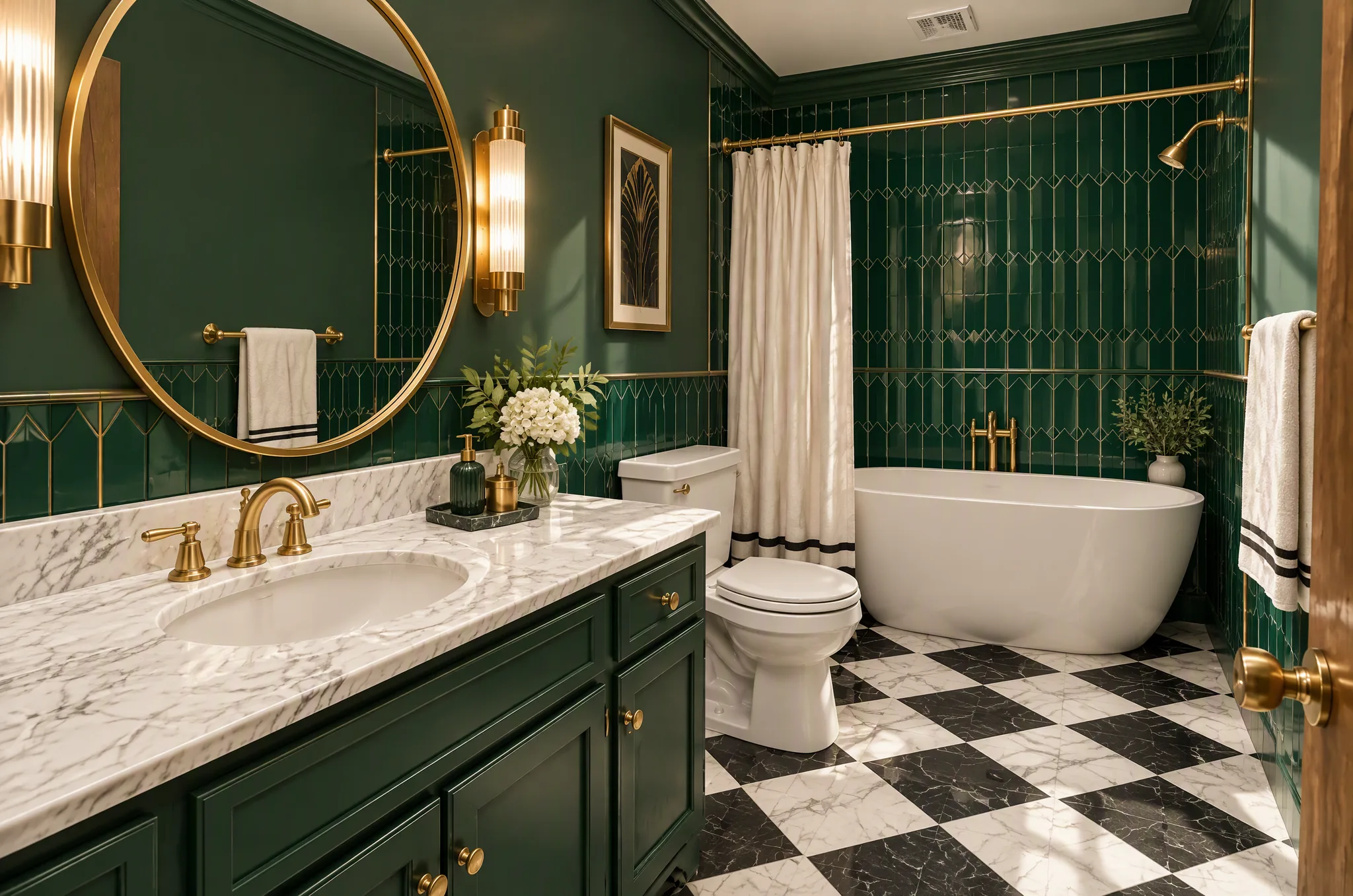
- Bathroom — Black-and-white tile, brass fixtures, a mirrored vanity and a sculptural light give a Deco bathroom its drama. See our Art Deco bathroom ideas.
- Living room — A velvet sofa, a marble table, a sunburst mirror and matching lamps make a formal, glamorous space. Browse our living room ideas for layout inspiration.
- Bedroom — A tufted headboard, mirrored nightstands, silk bedding and layered lighting.
- Dining room — A glossy table, upholstered chairs and a tiered chandelier set the scene for entertaining.
- Entry — A mirrored console, geometric floor tile and a statement fixture introduce the style immediately.
Common Mistakes
- Going full period — A room that copies the 1920s exactly feels like a set. Mix Deco details with modern furniture.
- Too much gold — Metallic accents need balance. Limit them to a few focal pieces.
- Mixing too many patterns — Choose one bold geometric pattern, such as the rug, and keep the rest solid.
- Neglecting comfort — Glamour still needs a soft, deep sofa and warm lighting.
Best For
- Entertainers who want a glamorous setting for dinner parties.
- Homes with prewar or period architecture where Deco detail already exists.
- Bathrooms, powder rooms and dining rooms, where drama has the most impact.
- People who love color and bold design and don't mind making a statement.
- Owners who like a mix of old and new, using vintage pieces with modern basics.
If you want a calmer take on elegance, traditional offers refinement with less drama, and contemporary keeps polish with fewer ornaments.
Budget Guide
Typical ranges for a single room of around 150 to 200 square feet. Materials such as marble, brass and mirrored glass can raise costs quickly.
| Level | Scope | Estimated Cost (USD) |
|---|---|---|
| DIY Refresh | Paint or wallpaper, lighting, a mirror, velvet cushions, brass accents | $500 – $2,000 |
| Mid-Range | New sofa, marble or glass table, rug, lighting and mirrors | $4,000 – $12,000 |
| Premium | Custom millwork, marble surfaces, antique or designer pieces | $15,000 – $45,000+ |
Cost-saving tips: Antique malls and online resale sites often carry brass, glass and mirrored furniture at fair prices. Paint, wallpaper and a mirror deliver the style quickly without major construction.
Maintenance Level
Medium to High — Glossy finishes and metals show fingerprints and require regular polishing.
- Weekly — Dust and wipe mirrors, glass and lacquer with a soft cloth.
- Monthly — Polish brass and clean velvet with a brush.
- Seasonal — Reseal marble and check lighting fixtures.
- Yearly — Have delicate fabrics professionally cleaned.
Try It Now
Upload a photo of your room and preview an Art Deco redesign in seconds, free. For a deeper dive into the history, palette and furniture, read our Art Deco interior design guide, or try the AI room design tool with other styles.