
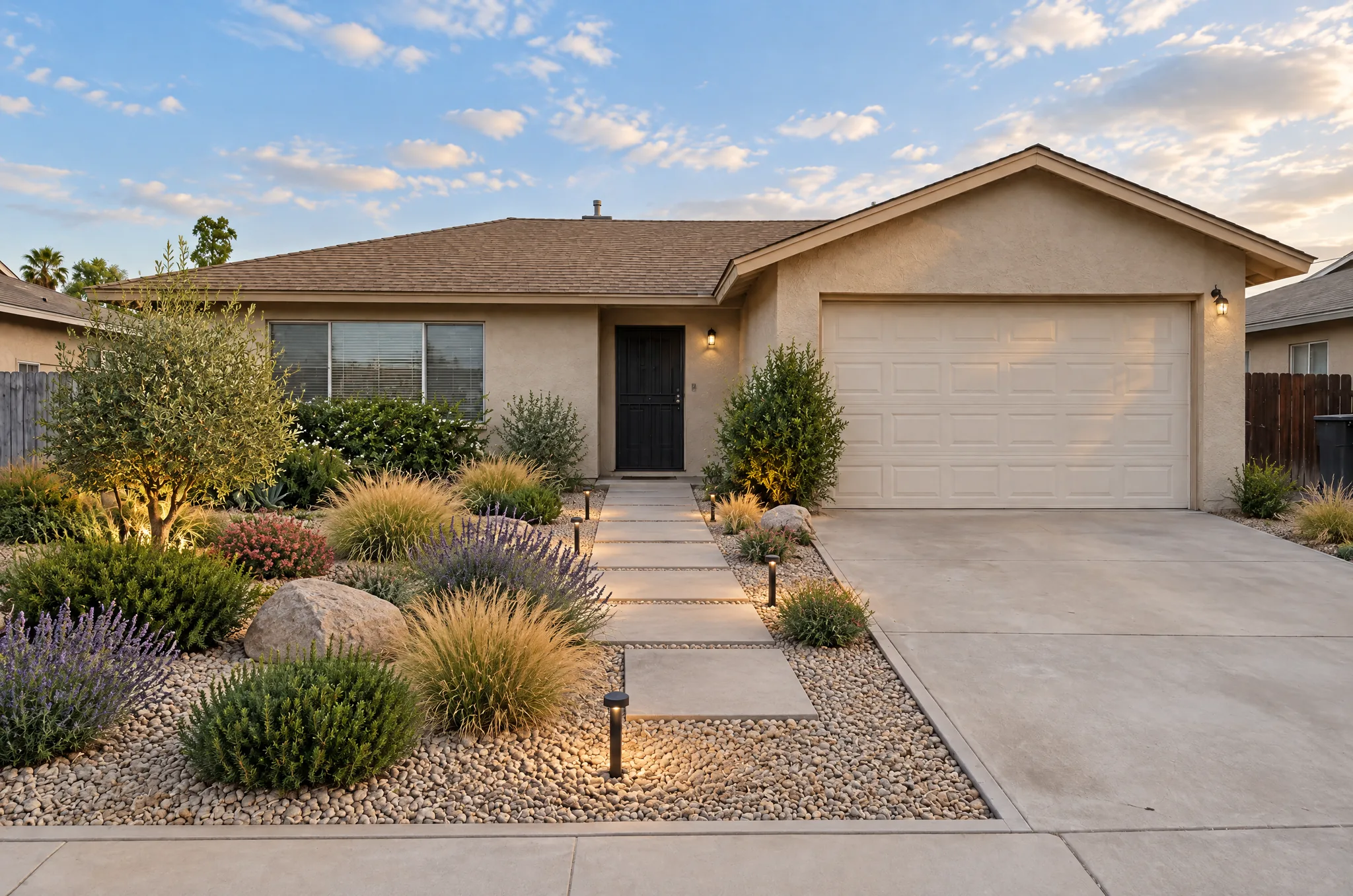
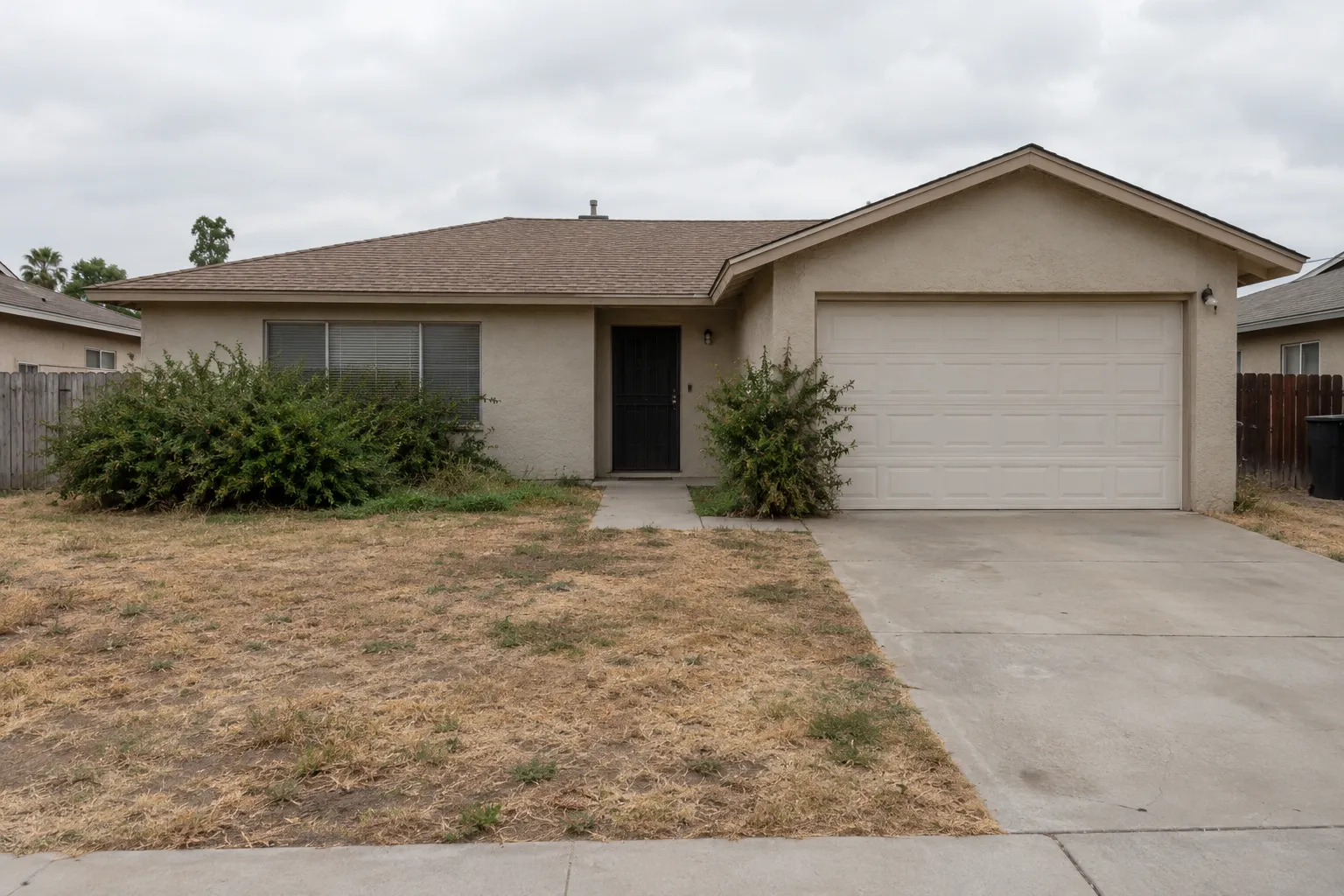
Design Philosophy
A low-maintenance front yard starts from an honest question: how much time are you actually willing to spend on it? Many homeowners inherit a lawn-and-foundation-shrub layout that demands weekly mowing, regular edging, seasonal trimming and constant watering, then feel guilty when it falls behind. This style flips the approach. Instead of asking you to keep up with the garden, it designs the garden so that it mostly looks after itself.
The idea draws on practical landscape principles rather than a single historical tradition. Use plants suited to your climate so they do not need constant watering. Plant densely enough that weeds have little room. Cover bare soil with mulch or gravel. Give the yard strong evergreen structure so it looks tidy even when the perennials have not bloomed. And replace as much lawn as you can with surfaces and plantings that need far less attention.
This does not mean a boring yard. A well-designed low-maintenance front yard can be as attractive as any high-effort garden, and it is often more consistent because it does not depend on weekly work to look good. It is the right choice for busy households, rental-property owners, anyone who travels, and anyone who would rather enjoy the yard than work on it.
Key Design Elements
- Reduced lawn — Replace most turf with planted beds, gravel or ground cover. A small, simple patch of lawn, if any, is easier to keep neat than a large one.
- Evergreen structure — Boxwood, inkberry holly, dwarf conifers and evergreen grasses give the yard form in every season.
- Drifts of tough perennials — Plant in groups of three, five or seven so that they read as bold masses instead of a scattered collection.
- Dense planting — Close spacing shades the soil and leaves weeds little room.
- Mulch or gravel cover — Two to three inches of shredded bark or crushed stone suppresses weeds and holds moisture.
- Clean, defined edges — A steel or stone edge between beds and lawn or path keeps a tidy line without constant trimming.
- Drip irrigation — A simple timer-controlled drip line waters plants at the root and reduces both labor and water use.
Recommended Plants & Materials
Plants
Choose plants that are hardy in your region, tolerate your soil and light, and do not need much deadheading:
- Dwarf boxwood or inkberry holly (Buxus, Ilex glabra) — Evergreen mounds that give year-round structure with minimal pruning.
- Feather reed grass or blue fescue (Calamagrostis, Festuca glauca) — Ornamental grasses that need a single annual cut-back.
- Catmint (Nepeta) — Long-blooming, drought-tolerant and loved by pollinators.
- Russian sage (Perovskia atriplicifolia) — Silvery foliage and lavender-blue flowers for sunny, dry positions.
- Sedum and stonecrop — Succulent ground covers and upright varieties that thrive on neglect.
- Daylilies (Hemerocallis) — Tough, reliable and available in a wide range of colors.
- Coral bells (Heuchera) — Colorful foliage for partly shaded beds.
- Creeping thyme or low juniper — Fragrant, low ground covers for paths and slopes.
Materials & Colors
- Mulch — Shredded bark or wood chips in dark brown or natural tones. Renew every year or two.
- Gravel or decomposed granite — In a sunny, dry yard, a gravel mulch is long-lasting and easy to maintain.
- Edging — Steel, stone or brick to define beds and keep gravel and lawn from mixing.
- Pavers or flagstone — A clear path from the street to the door, set on a compacted base.
- Color palette — Green, silver and gray as the base, with blue, purple, yellow and white accents that suit most house colors.
Best For
- Busy households with limited time for yard work.
- Frequent travelers who need a yard that can be left for weeks.
- Rental properties and investment homes where consistent curb appeal matters but visits are limited.
- Older homeowners who want to reduce physical work without losing curb appeal.
- Water-conscious gardeners in regions with restrictions or dry summers.
- Anyone replacing a tired lawn who wants a result that stays attractive.
The style is a good fit alongside more characterful approaches. If you want more personality, craftsman bungalow and prairie native can be adapted to low-effort planting plans.
Where to Use It
- Front yard layouts — See our low-maintenance front yard ideas for planting layouts, plant lists and cost ranges.
- Curb appeal upgrades — Explore low-maintenance curb appeal ideas for simple improvements like repainting the door, adding lighting and refreshing mulch.
- AI preview — Use our AI front yard design tool to see this look on your own house before you plant.
- Further reading — Our guides to boosting curb appeal and front yard landscaping ideas cover entryway, lighting and color tips in more depth, and the drought-tolerant landscaping guide helps with dry-climate plant choices.
Budget Guide
Typical ranges for a front yard of roughly 500 to 800 square feet. Prices vary by region, plant sizes and site conditions.
| Level | Scope | Estimated Cost (USD) |
|---|---|---|
| DIY Refresh | Remove part of the lawn, add mulch, edging and 20 to 30 small perennials and shrubs | $500 – $2,000 |
| Mid-Range | Replace most of the lawn, add drip irrigation, a flagstone path and a planted border | $4,000 – $12,000 |
| Premium | Professional design, mature shrubs, hardscape, lighting and full irrigation | $15,000 – $35,000+ |
Cost-saving tips: Buy plants in smaller sizes and let them fill in. Divide and replant perennials in year two. Buy mulch and gravel in bulk rather than by the bag, and check whether your utility or city offers rebates for lawn removal.
Maintenance Level
Low — Once plants are established, the main tasks are seasonal rather than weekly.
- Spring — Cut back grasses and perennials, top up mulch and check the irrigation system.
- Summer — Water deeply but infrequently during the first year, then only in long dry spells. Pull any stray weeds before they seed.
- Autumn — Remove fallen leaves from gravel and beds, and divide overcrowded perennials.
- Winter — Little is needed. Evergreen structure keeps the yard tidy until spring.
In the first year, expect to water and weed more as plants establish. From the second year, the work drops sharply.
Try It Now
Upload a photo of your front yard and see it as a low-maintenance design in seconds, free to try. Or compare styles with our AI front yard design tool.