
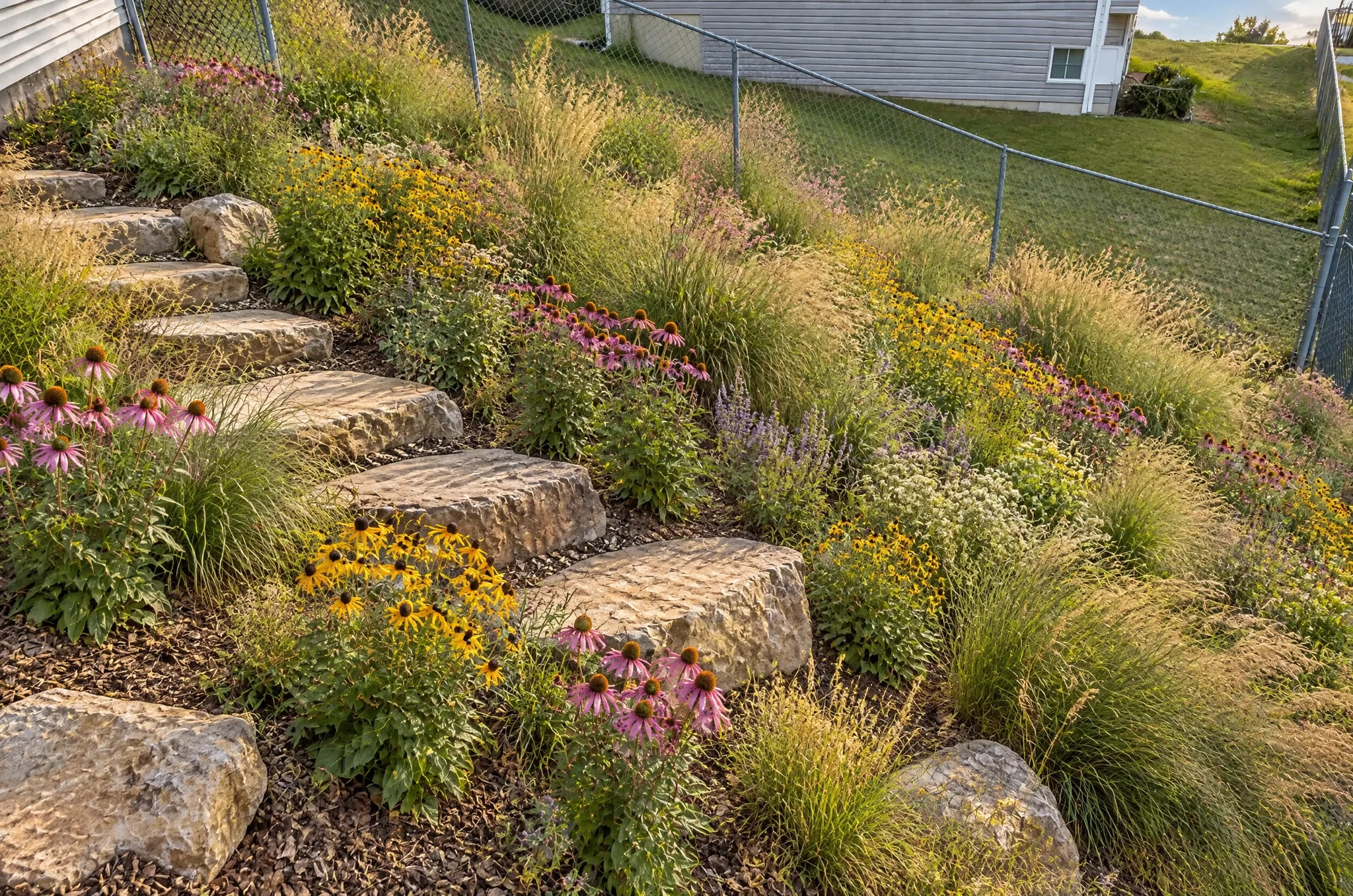
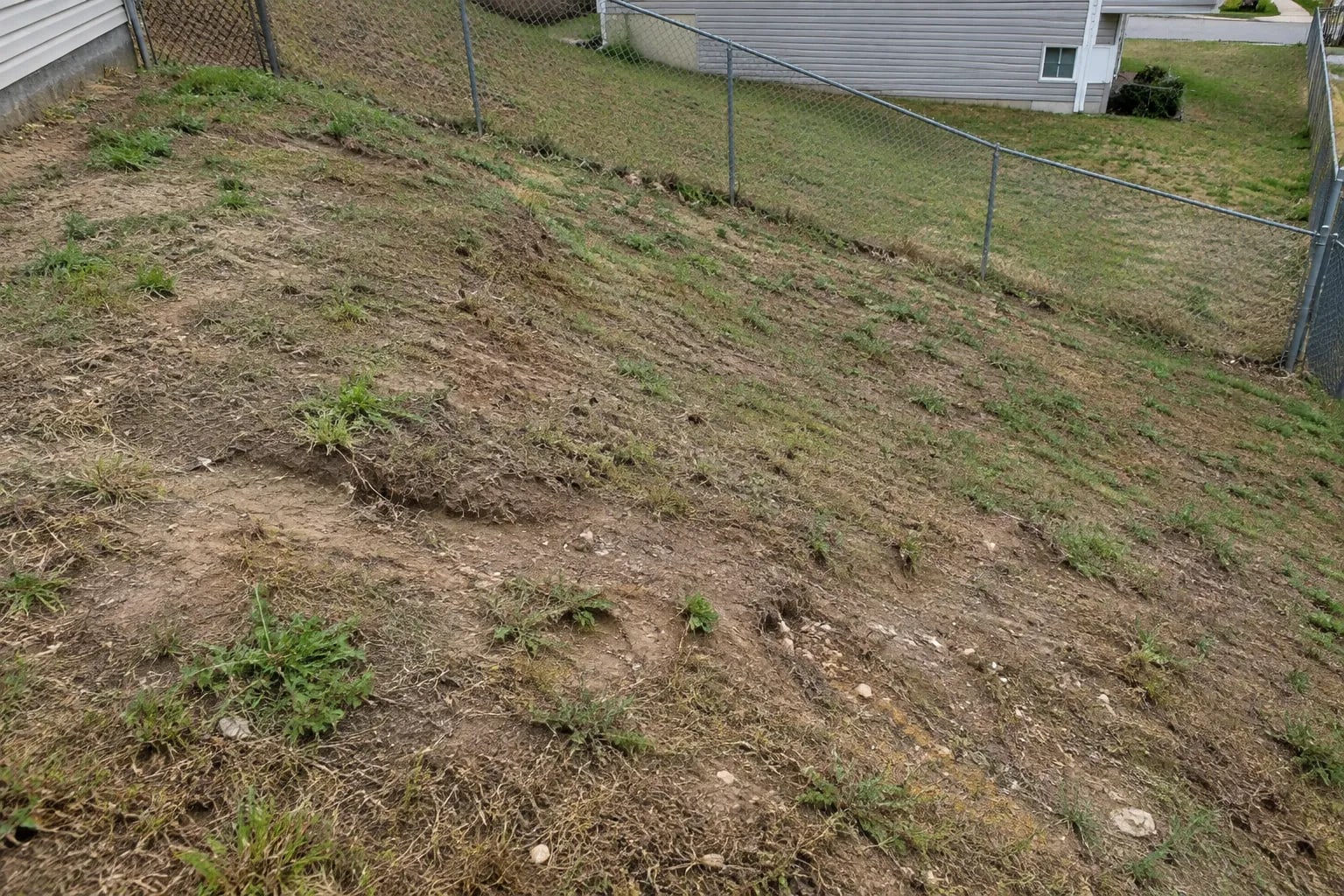
Design Philosophy
Prairie native landscape design draws its inspiration from the tallgrass prairie that once covered about 170 million acres of North America — an ecosystem that is now less than 4% intact, which is part of why gardeners who plant it feel they are restoring something rather than just decorating. Unlike garden styles that import exotic plants and impose geometric order, the prairie approach works with the ecological systems that evolved over thousands of years in the Midwest, Great Plains, and adjacent regions. The result is a landscape that looks wild but is meticulously planned, one where deep-rooted grasses and forbs form a self-sustaining plant community that out-competes weeds, filters stormwater, supports pollinators, and reduces maintenance to a fraction of what a conventional lawn demands.
The movement gained momentum in the early 2000s through the work of designers like Piet Oudolf, whose naturalistic plantings at places like Lurie Garden in Chicago proved that prairie-inspired design could be breathtakingly beautiful in a residential and urban context. Today prairie native landscaping is an increasingly popular residential approach in the United States, driven by three converging forces: water restrictions making thirsty lawns impractical, mounting evidence of pollinator decline creating urgency around native habitat, and a generation of homeowners who find the untamed beauty of grasses and wildflowers more compelling than a manicured emerald carpet.
The core principle is ecological mimicry. A well-designed prairie garden replicates the structure of a natural grassland — a dense matrix of grasses forming the backbone, with forbs (wildflowers) woven through at varying heights and bloom times. Every plant earns its place not just for visual appeal but for its role in the community: deep taproots that break up compacted soil, fibrous root systems that hold topsoil during downpours, and flowers that feed specific native bees and butterflies. The beauty of this approach is that the garden becomes more stable and more beautiful with each passing year, the opposite trajectory of conventional landscapes that peak at installation and decline from there.
Key Design Elements
- Matrix Planting Structure — A dense base layer of native grasses and sedges (approximately 50% of the planting area) interspersed with native forbs and wildflowers (50%), arranged in naturalistic drifts rather than rows or geometric blocks.
- Layered Heights — Plant selection across three vertical tiers: low groundcovers and sedges (6–12 inches), mid-height forbs and grasses (18–36 inches), and tall accent grasses and architectural perennials (4–6 feet), creating depth and movement.
- Four-Season Progression — Bloom sequencing from early spring pasque flowers and shooting stars through midsummer coneflowers and blazing star, into fall asters and goldenrod, and finishing with the tawny winter silhouettes of standing grasses and seed heads.
- Informal Edge Transitions — Softened boundaries between the prairie planting and adjacent lawn, patio, or woodland, using transitional species that create a gradual shift rather than an abrupt line.
- Minimal Hardscape — Mown paths, simple stepping stones, or narrow gravel trails through the planting — just enough structure for human access without fragmenting the visual sweep of the meadow.
- Deep Root Ecology — Warm-season prairie grasses such as big bluestem root 5–9 feet deep, and taprooted forbs like compass plant reach 10–15 feet. Most grass roots are concentrated in the top foot of soil, but the deep ones let the planting tap subsoil moisture, improve soil structure, and ride out droughts once established.
- Wildlife Integration — Intentional habitat features including standing dead seed heads left through winter for songbirds, host plants for specific butterfly species (milkweed for monarchs, wild indigo for skippers), and undisturbed ground-nesting areas for native bees.
- Naturalistic Repetition — Key species repeated in irregular clusters throughout the planting to create rhythm and cohesion, preventing the "wildflower seed packet" look where random single plants dot the space without visual structure.
Recommended Plants & Materials
Plants
- Foundation Grasses: Little bluestem (Schizachyrium scoparium) — the quintessential prairie grass, turning copper-bronze in fall with fluffy white seed heads that catch winter light; prairie dropseed (Sporobolus heterolepis) — an elegant fine-textured mounding grass with a fragrance often compared to buttered popcorn when in bloom; sideoats grama (Bouteloua curtipendula) — a compact, drought-tough grass with distinctive one-sided seed heads
- Tall Accent Grasses: Big bluestem (Andropogon gerardii) — the "monarch of the prairie" reaching 5–7 feet with turkey-foot seed heads and brilliant red-bronze fall color; Indian grass (Sorghastrum nutans) — upright golden plumes in autumn that glow when backlit; switchgrass (Panicum virgatum) — airy seed clouds on 4–5-foot stems, excellent for screening and movement
- Summer Forbs: Purple coneflower (Echinacea purpurea) — the workhorse prairie perennial with pink-purple daisy flowers beloved by butterflies; black-eyed Susan (Rudbeckia hirta) — golden-yellow blooms from June through September; blazing star (Liatris spicata) — dramatic purple spikes that bloom from top to bottom, a monarch butterfly magnet
- Fall Forbs: New England aster (Symphyotrichum novae-angliae) — rich purple-violet daisies that close the season with a burst of color; goldenrod (Solidago spp.) — arching golden plumes (not an allergen — ragweed is the real culprit); aromatic aster (Symphyotrichum oblongifolium) — low-mounding blue-violet flowers that persist into November
- Spring Forbs: Pasque flower (Pulsatilla patens) — the first prairie wildflower to bloom, with furry purple cups emerging before the grasses wake; golden alexanders (Zizia aurea) — bright yellow umbels supporting early-season pollinators; shooting star (Dodecatheon meadia) — delicate pink nodding flowers that go dormant by midsummer
- Ecological Specialists: Common milkweed (Asclepias syriaca) and butterfly milkweed (Asclepias tuberosa) — essential monarch butterfly host plants; wild bergamot (Monarda fistulosa) — lavender-pink flowers beloved by native bees; wild indigo (Baptisia australis) — blue spikes on structural mounding plants that fix nitrogen in the soil
- Groundcover Matrix: Pennsylvania sedge (Carex pensylvanica) — a low, fine-textured native sedge for shaded edges; wild strawberry (Fragaria virginiana) — spreading groundcover with white flowers and tiny red fruit; prairie violet (Viola pedatifida) — delicate purple flowers on a tough, spreading plant
Materials & Colors
- Mown Path Borders: The most authentic prairie garden feature — 3-foot-wide mown strips through the planting that define circulation, provide visual structure, and signal intentional design rather than neglect
- Native Stone: Locally sourced limestone, sandstone, or fieldstone for seating boulders, informal step treads, and low boundary walls that reference the geological substrate of the prairie region
- Gravel Paths: Crushed local limestone or decomposed granite for secondary paths through the meadow — permeable, low-cost, and visually compatible with the naturalistic planting
- Weathered Wood: Cedar or black locust split-rail fencing, rustic benches, and timber boardwalk sections for crossing wet areas — materials that age gracefully alongside the prairie planting
- Color Palette: Tawny gold, copper-bronze, warm amber, prairie-sky blue, deep purple, and fresh green — colors drawn directly from the grassland across its seasonal arc, from the green flush of spring through the burnt-sienna drifts of winter
Best For
Prairie native landscape design is ideal for homeowners who find wildness more beautiful than neatness and want a landscape that gives back more than it takes. It suits:
- Midwest and Great Plains properties — where prairie species are literally in their home range, establishing quickly in familiar soil and climate conditions without irrigation, soil amendment, or coddling
- Large lots and acreage — where the sweeping scale of a prairie planting creates the kind of landscape drama that lawns and foundation plantings cannot deliver
- Environmentally conscious homeowners — those who want to sequester carbon, recharge groundwater, support declining pollinator populations, and eliminate fertilizer, herbicide, and irrigation from their landscape
- Low-maintenance seekers — after 2–3 years of establishment (which does require active weeding), a mature prairie garden needs only an annual mowing or controlled burn and occasional invasive species management
- Suburban lawn replacements — converting 500–2,000 square feet of front or back lawn into a designed prairie meadow reduces mowing, eliminates chemical inputs, and creates a distinctive property that stands out on the block
- Properties with poor or clay soil — prairie plants evolved in heavy Midwest clay and thrive in soil that would stress most ornamental species, making them the ideal solution for "nothing grows here" problem areas
Budget Guide
- DIY / Budget ($500–$2,500): Start with a 200–500-square-foot area. Kill existing turf in fall (solarization or repeated mowing and overseeding), seed with a pre-mixed prairie blend from a regional native nursery (roughly $35–$115 per 1,000 sq ft for seed in 2026 price lists), and commit to first-year mowing for weed control. Supplement with nursery-grown plugs of showier species (coneflower, blazing star) for faster visual impact; plugs typically run about $2–$5 each, so budget them for focal areas rather than the whole planting. The main investment is patience — seed-grown prairies take about three to four years to fully develop.
- Mid-Range ($3,000–$12,000): Professional design for a 500–2,000-square-foot prairie garden using a combination of seed and nursery-grown plugs for immediate impact. Includes site preparation (soil testing, weed bank reduction), a designed plant palette with specific placement of focal species, gravel or mown paths, a few seating boulders, and a two-year maintenance plan. Covers most suburban front or back yard conversions.
- Professional ($15,000–$50,000+): Full landscape architecture for properties over half an acre — comprehensive prairie reconstruction with 40+ native species, graded landforms for visual interest, an integrated stormwater management system, custom path and seating areas, native tree and shrub plantings at the prairie edge, low-voltage lighting along paths, and professional establishment maintenance through year three. Properties with significant acreage or requiring extensive turf removal will be at the higher end.
Maintenance Level
Low after establishment. The first two years are the investment period: mow the entire prairie area to 6–8 inches whenever weeds reach about 12 inches (roughly three times in year one, once or twice in year two) to suppress annual weeds while the slow-growing native seedlings develop their deep root systems below ground. By year three, the prairie plants take control.
Once established, maintenance drops to a late-winter or early-spring mowing or controlled burn before new growth starts (extension guidance is every 3–5 years for a burn, or one-third of the site each year — check local burn permits) to remove the previous year's dead growth and stimulate vigorous new shoots. Leave one-third of the prairie uncut each year to preserve overwintering habitat for beneficial insects and songbirds. Beyond occasional watering during the first year, extension programs advise no fertilizer, since it only feeds weeds, and little or no herbicide beyond spot-treating persistent perennial weeds. The only ongoing vigilance is monitoring for aggressive invasive species (Canada thistle, crown vetch, reed canary grass) and removing them before they establish.
FAQ
Do I have to worry about weed ordinances or an HOA?
Check before you plant. Many cities exempt a maintained prairie or meadow from tall-grass rules if you apply for a natural landscape permit and keep it weeded: Austin, Minnesota, for example, requires a permit for native grasses over 8 inches and an annual cut to 10 inches or less between April 15 and July 15, and Rochester, Minnesota, requires one above 12 inches. Some states also limit HOA bans. Illinois' Homeowner's Native Landscaping Act, for example, stops an association from prohibiting Illinois native plantings that are kept predominantly free of weeds and invasives. Keep a planting plan and photos handy, and mow a neat edge or path to show the planting is intentional.
Why does my prairie look weedy in year one?
That is normal. Most growth in the first two years happens underground as the roots develop, and the above-ground planting can honestly look poor. Annual weeds grow faster than the seedlings, so mow them to 6–8 inches when they reach about 12 inches and never below 6 inches, which can damage seedlings. Avoid pulling weeds by hand in year one because it disturbs the seedlings. By year three, grasses and wildflowers should start to win out.
Should I plant from seed or buy plugs?
Seed is far cheaper and gives more species, but it takes longer to look finished. The seed for a 1,000-square-foot area is commonly priced at about $35–$115, depending on how diverse the mix is, while plugs run roughly $2–$5 each. A practical compromise is to seed the whole area and add plugs of showy species such as coneflower and blazing star near paths and seating, where you will see them most.
Sources
Facts and prices were checked against these references (October 2026). Seed and plug prices are 2026 list prices from regional suppliers and vary by region and mix.
- National Park Service — Tallgrass Prairie National Preserve (170 million acres originally, less than 4% intact)
- UMN Extension — Planting and maintaining a prairie garden
- University of Wisconsin Extension — Five steps to successful prairie establishment
- Minnesota DNR — Establishing prairie grasses and wildflowers
- Illinois Extension — Going underground: the hidden benefits of grasses (root depth)
- Missouri Department of Conservation — Compass plant
- USDA NRCS — Big bluestem (OZ-70 germplasm) plant material description
- Native Connections — 2026 standard seed mix pricing
- Olmsted County, MN — 2026 plant and seed sale (plug pricing)
- City of Austin, MN — Grass and weeds on private property (natural landscape permit)
- Illinois General Assembly — Homeowner's Native Landscaping Act
Try It Now
Upload your photo and see your space transformed into Prairie Native style in seconds — free to try. Our AI tool renders the wildflower drifts, grasses, and naturalistic meadow planting directly onto your existing yard.