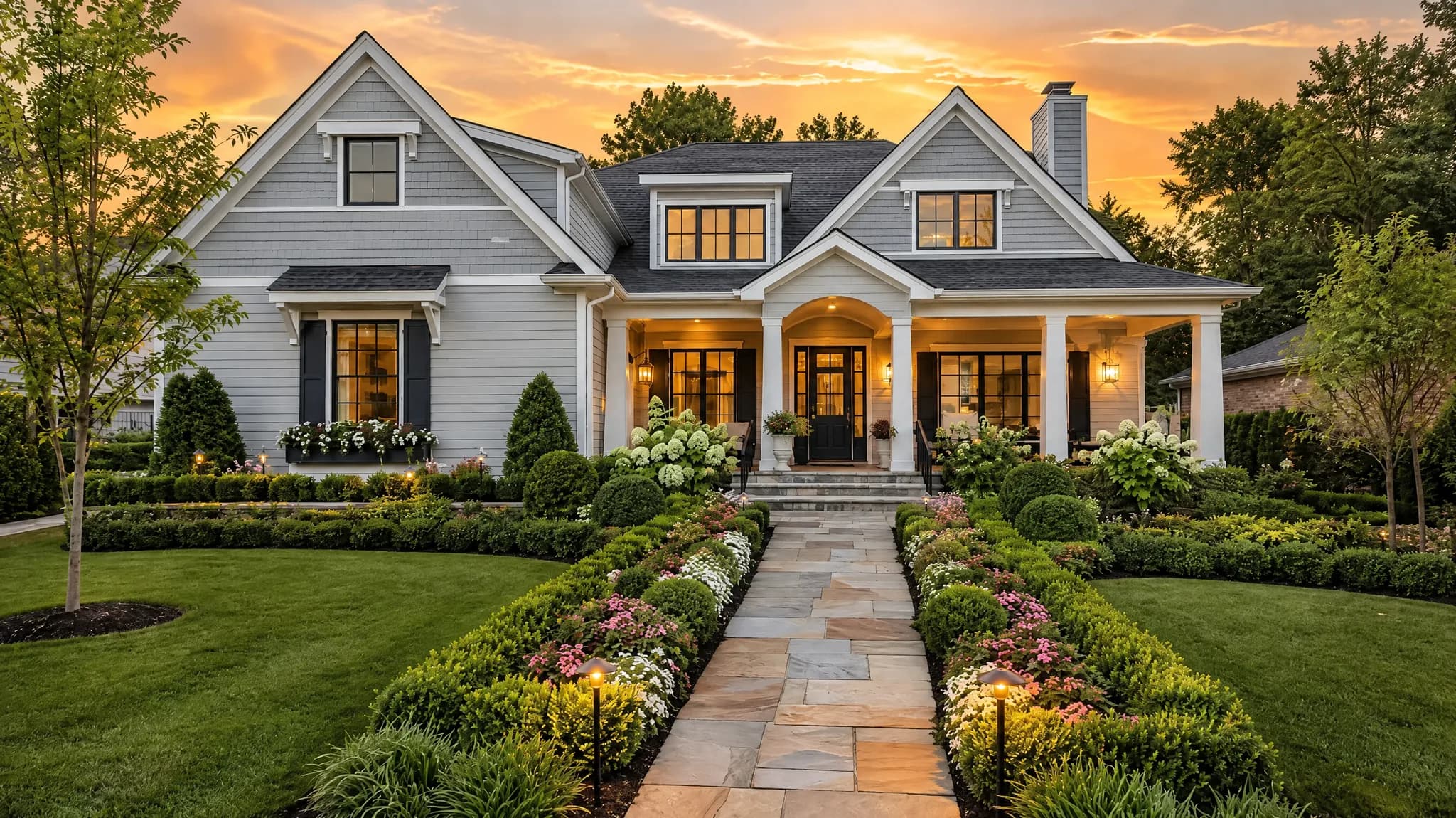
The front yard is the first thing a buyer sees — and the last thing they remember. According to the National Association of REALTORS, 97% of real estate professionals say curb appeal matters when selling a home, and research from the University of Alabama and Texas A&M shows that homes with excellent exterior presentation sell for 5–11% more than comparable properties with average landscaping. That is not a cosmetic detail. On a $400,000 house, it is $20,000 to $44,000 in real money.
But here is what most homeowners get wrong: they think curb appeal means expensive. It does not. The highest-ROI front yard improvements are maintenance basics — clean edges, healthy plants, a clear walkway, and intentional design that signals care without screaming effort. NAR data confirms standard lawn care delivers a 217% return on investment, the highest of any outdoor project.
These 12 front yard landscaping ideas are organized from quick weekend wins to larger investments. Every one of them has been chosen because it directly influences a buyer's perception of value.
1. Edge Every Bed and Define Your Borders
Nothing separates a maintained front yard from a neglected one faster than edge definition. A clean, cut line between lawn and planting bed communicates intentionality — even if the plants inside are ordinary. Use a half-moon edger to cut a 3-inch vertical trench along every bed, walkway, and tree ring. Refresh it twice a year.
Pair those crisp edges with 2–3 inches of natural brown hardwood mulch. Skip dyed black or red mulch — it fades within weeks and photographs poorly in listing photos. Natural brown looks better in every season and under every lighting condition.
Cost: $50–$200. Time: One weekend. ROI: Immediate visual impact.
2. Repair and Widen the Front Walkway
A cracked, narrow, or overgrown walkway is the single biggest curb appeal killer. It makes the entire property feel neglected before a buyer reaches the front door. A functional front walkway should be at least 4 feet wide — wide enough for two people to walk side by side.
If your existing concrete path is sound but stained, a professional power wash ($100–$300) can make it look new. If it is cracked or too narrow, consider replacing it with flagstone, pavers, or poured concrete with an exposed aggregate finish. The investment pays for itself: walkway condition is one of the first items on a home inspector's checklist, and a clean path eliminates the "deferred maintenance" fear before a buyer even steps inside.
Cost: $200 for repairs, $2,000–$8,000 for full replacement. Time: 1–3 weekends or hire a pro.
3. Foundation Planting That Frames the House
Foundation planting is the layer of shrubs and perennials along the base of the house. Done right, it softens the transition between building and ground, frames the entrance, and makes the house look rooted in its landscape. Done wrong — overgrown arborvitae blocking windows, bare mulch beds, or a single lonely bush next to the meter box — it signals years of neglect.
The formula is simple: use three types of plants in repeating groups.
- Evergreen anchors (boxwood, holly, or dwarf yew) for year-round structure
- Flowering shrubs (hydrangea, spirea, or rose of Sharon) for seasonal color
- Groundcover or low perennials (liriope, daylilies, or creeping phlox) to fill the front edge
Keep all plantings below window sills. Buyers need to see into the house from the street — blocked windows make a property feel dark and closed off. Trim anything that obscures the front door, house numbers, or porch railing.
Cost: $300–$2,000 depending on plant size. Time: One weekend to plant, one hour monthly to maintain.
4. Front Door Upgrade and Entry Focus
The front door is the focal point of every front yard. Data from NAR shows a steel front door replacement returns 188% on investment — one of the highest ROI projects in all of home improvement. Even without replacing the door, a fresh coat of paint in a bold, neutral tone (black, deep navy, or forest green) creates a visual anchor that pulls the eye up the walkway.
Frame the entry with symmetrical planters — two matching pots with seasonal flowers or small evergreen topiaries. Add a new house number set in a clean, modern font. These are $50–$150 details that create a high-end first impression.
Cost: $50–$300 for paint and accessories, $1,500–$4,000 for a new door. Time: One afternoon for paint.
5. Native Plant Beds for Low-Maintenance Color
The 2026 landscaping trend is clear: native plants are replacing high-maintenance ornamentals in front yards across the country. Native species evolved in your region's soil and climate, which means they need less water, no fertilizer, and minimal pest management once established. They also support local pollinators — a feature that adds vitality and charm to listing photos.
The key to making a native front yard look intentional rather than wild is structure. Follow the one-third rule: at least one-third of your plants should be evergreens or ornamental grasses that hold their form through winter. Group plants in odd numbers (3, 5, 7) and tier by height — tall in the back, medium in the middle, low along the walkway edge.
Consider plants like prairie-native species for Midwest properties, or drought-tolerant varieties for western climates. A front yard native bed can reduce your water bill by 50–70% compared to maintaining turf grass.
Cost: $200–$1,500 for a 100–300 square foot bed. Time: One weekend to install, minimal ongoing care.
6. Strategic Landscape Lighting
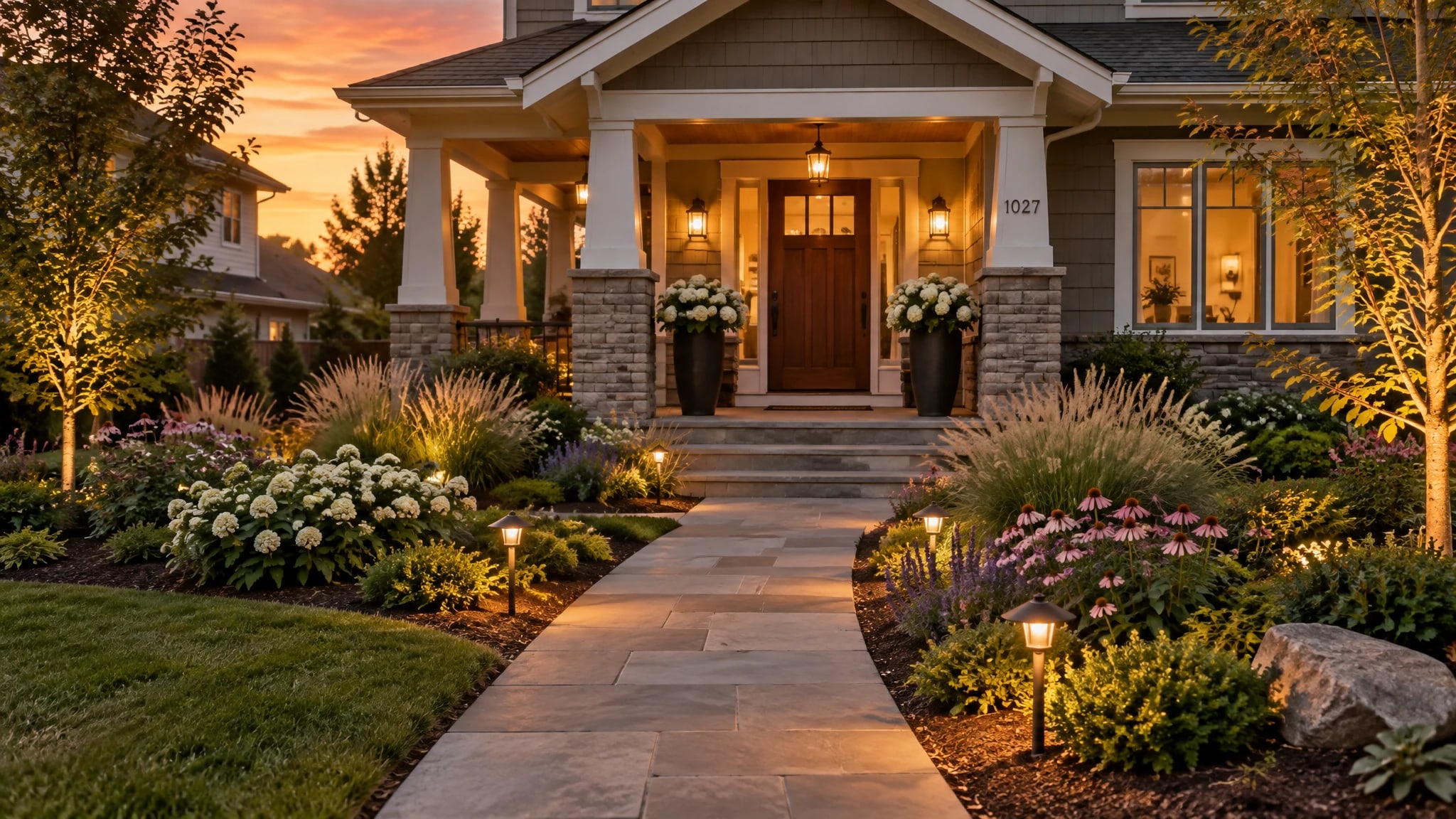
Front yard lighting does two things: it makes the property look stunning after dark, and it makes walkways, steps, and the entrance safe and visible. Homes with good exterior lighting show better in evening drive-bys and online listing photos.
Focus lighting on three zones:
- Walkway: Low path lights every 6–8 feet along the primary route to the front door
- Entry: Uplights on the front door, house number, and any architectural features
- Feature: One or two uplights on a specimen tree or attractive shrub grouping
Use warm 2700K LED fixtures in brass, copper, or black finishes. Avoid overlighting — too many fixtures create glare and a commercial look. The goal is soft pools of light that guide the eye, not a stadium. Low-voltage systems are safe to DIY and cost a fraction of line-voltage installations.
Cost: $300–$3,000 depending on system size. Time: One weekend for a basic system.
7. Healthy Lawn or Smart Lawn Alternative
A green, edged, weed-free lawn remains the single most visible curb appeal signal in buyer surveys. You do not need a golf-course-grade lawn — you need a healthy one. That means regular mowing at the right height (3–3.5 inches for most cool-season grasses), consistent edging, and spot-treating bare patches with seed and topsoil.
If maintaining turf grass is not realistic — whether due to drought restrictions, shade, or time — replace all or part of the lawn with a deliberate alternative. Clover blends stay green without irrigation, microclover creates a dense mat that rarely needs mowing, and small urban patio designs eliminate lawn entirely in favor of gravel, pavers, and planting beds. The key word is "deliberate." A lawn full of weeds looks neglected; a lawn intentionally replaced with clover or groundcover looks designed.
Cost: $100–$500 for lawn repair, $1,000–$5,000 for a lawn alternative. Time: Varies by approach.
8. Seasonal Color Near the Entrance
A flat of seasonal annuals costs $20–$40 and creates color that draws the eye straight to the front door. Plant them in the two to three spots with the highest visual impact: flanking the entrance in matching containers, along the front edge of the walkway, or as a ribbon through the foundation planting.
Stick to one or two colors — a mass of white petunias or a block of red geraniums reads as intentional. A rainbow of seven different flowers reads as chaotic. In fall, swap annuals for mums, ornamental cabbage, or pansies. In spring, go with tulips, daffodils, or pansies. Year-round seasonal color tells buyers the home is actively cared for.
Cost: $20–$100 per season. Time: One hour to plant.
9. Tree Placement and Canopy Management
A well-placed shade tree is one of the few landscaping investments that increases in value every year. The American Society of Landscape Architects reports that mature trees can add $1,000–$10,000 to a property's value depending on size, species, and placement. A single specimen tree in the front yard — a Japanese maple, red oak, or ornamental pear — creates a focal point that anchors the entire landscape.
If you already have trees, invest in professional pruning. Remove dead branches, thin the canopy to allow dappled light through, and raise the crown height so it does not obscure the house. Overgrown trees that swallow the facade make a property look smaller and darker.
Cost: $100–$500 for a new tree, $200–$800 for professional pruning. Time: One afternoon to plant.
10. Mailbox and Street-Side Refresh
The area between the sidewalk and the street — the curb strip — is often the most neglected part of the front yard. A leaning mailbox, bare soil, and weeds next to the street undermine everything you have done closer to the house.
Replace or repaint the mailbox post, add a small planting bed around its base with low, tough perennials (daylilies, catmint, or sedum), and address any bare or muddy patches in the curb strip with seed, sod, or a gravel treatment. These micro-improvements cost almost nothing but extend your curb appeal all the way to the street, which is exactly where a buyer's impression begins.
Cost: $50–$300. Time: One afternoon.
11. Driveway Refresh and Edge Treatment
A stained, cracked driveway drags down the entire front yard. Power washing alone ($100–$300) can remove years of grime and make concrete look nearly new. For asphalt driveways, sealcoating every 2–3 years maintains a dark, uniform surface.
Line the driveway edges with low plantings, decorative stone, or steel edging to create a clean transition between hardscape and landscape. This simple border prevents the "driveway blob" effect where asphalt bleeds into lawn without any definition.
Cost: $100–$500 for cleaning and edging. Time: One weekend.
12. AI-Powered Design Visualization
Not sure which of these ideas will look best on your specific property? Before spending a dollar, upload a photo of your front yard to our free AI front yard design tool and see multiple style options rendered on your actual house. You can try everything from a modern minimalist approach to a lush cottage-garden look — all in seconds.
The advantage of visualizing before you buy is obvious: you avoid the most expensive landscaping mistake of all, which is installing something you end up replacing. See the transformation, confirm the direction, then execute with confidence.
Try Your Front Yard Design Now →
The Quick-Win Checklist
If you are listing your home soon and need the fastest possible curb appeal upgrade, here is the priority order based on ROI data:
- Mow, edge, and weed the lawn — the single highest-return activity
- Mulch all beds with 2–3 inches of natural brown hardwood mulch
- Prune any overgrown shrubs, especially those blocking windows or the front door
- Repair the walkway — fix cracks, trim encroaching plants, power wash
- Add seasonal color in matching containers flanking the entrance
- Install pathway lighting — 4–6 low-voltage lights along the front walk
These six steps can be completed in a single weekend for under $500, and real estate professionals consistently report they are the most impactful changes a seller can make before listing photos.
Your front yard does not need to be a botanical garden. It needs to look cared for, intentional, and welcoming. Start with the idea that addresses your biggest weakness, do it well, and the rest will follow.