Pollinator populations are declining worldwide, and residential gardens play a crucial role in reversing this trend. The good news is that pollinator-friendly design is not a compromise. Gardens built to support bees, butterflies, and hummingbirds are among the most vibrant and visually dynamic landscapes you can create.
This guide shows you how to design a pollinator garden that serves both ecological function and aesthetic beauty.
Why Pollinators Matter
Pollinators are responsible for one in every three bites of food we eat. Bees, butterflies, moths, hummingbirds, and beetles pollinate fruits, vegetables, nuts, and flowers that sustain ecosystems and agriculture.
Key pollinators and what they need:
- Honeybees and native bees: Nectar and pollen from diverse flowering plants, nesting sites in bare soil or hollow stems
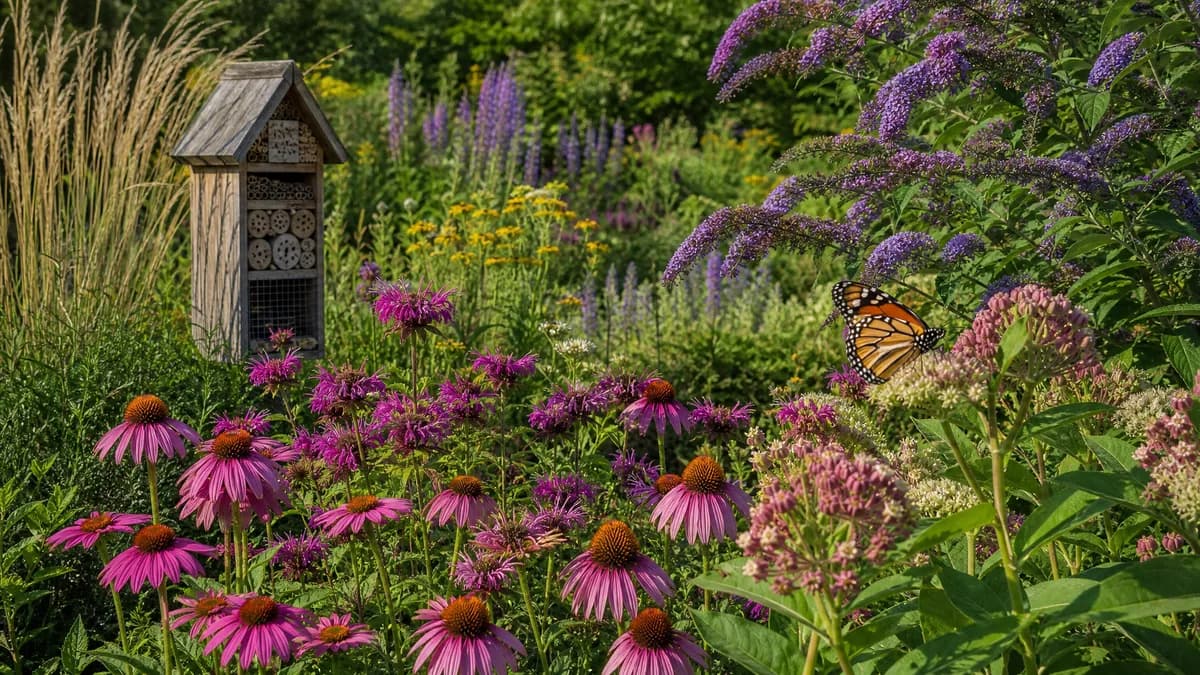
- Butterflies: Nectar plants for adults, specific host plants for caterpillars (monarchs need milkweed)
- Hummingbirds: Tubular flowers rich in nectar, especially red, orange, and pink varieties
- Moths: Night-blooming, fragrant white flowers
Design Principles for Pollinator Gardens
Principle 1: Plant in Masses
Pollinators are more attracted to large drifts of a single species than scattered individual plants. Aim for groups of at least 3 to 5 plants of each species, creating visible blocks of color that pollinators can find efficiently.
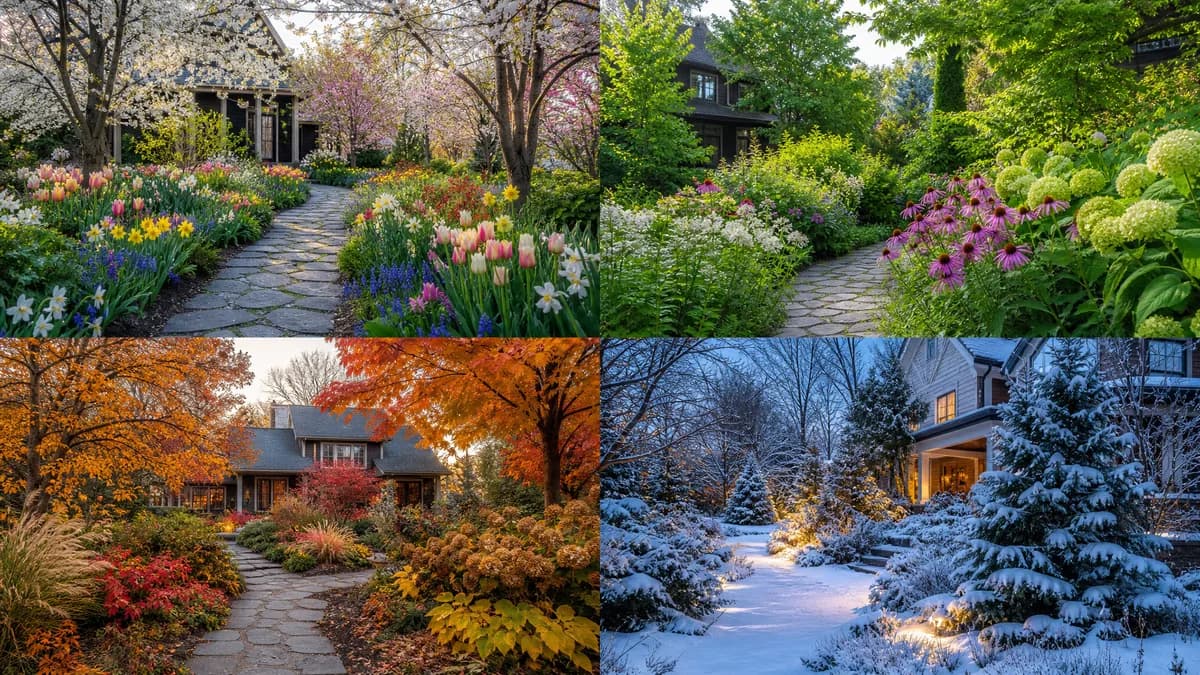
Principle 2: Plan for Continuous Bloom
Pollinators need food from early spring through late fall. Design your garden so something is always flowering:
| Season | Key Plants |
|---|---|
| Early Spring | Crocus, pussy willow, hellebore, lungwort |
| Late Spring | Columbine, penstemon, salvia, native geranium |
| Early Summer | Bee balm, lavender, catmint, foxglove |
| Mid Summer | Coneflower, black-eyed Susan, milkweed, Joe Pye weed |
| Late Summer | Goldenrod, aster, sedum, sunflower |
| Fall | Aster, chrysanthemum, witch hazel, late-blooming salvia |
Principle 3: Include Host Plants
Butterflies need specific plants for their caterpillars:
- Monarch: Milkweed (Asclepias species)
- Swallowtail: Parsley, dill, fennel, rue
- Painted lady: Thistle, hollyhock, mallow
- Fritillary: Violets
Accept some caterpillar damage as a sign of success rather than a problem to solve.
Principle 4: Provide Water and Shelter
- Shallow water sources: A birdbath with pebbles for landing spots, or a shallow dish with wet sand
- Bare soil patches: Many native bees nest in the ground
- Brush piles or rock walls: Overwintering habitat for beneficial insects
- Bee hotels: Hollow stem bundles or drilled wood blocks for solitary bees
Principle 5: Eliminate or Reduce Pesticides
Even organic pesticides can harm pollinators. The best approach:
- Accept some pest damage as part of a living garden
- Attract beneficial predators (ladybugs, lacewings) to control pests naturally
- If intervention is necessary, apply targeted treatments in the evening when pollinators are less active
- Never spray open flowers
Top Pollinator Plants by Region
Eastern North America
- Purple coneflower (Echinacea purpurea)
- Bee balm (Monarda)
- Wild bergamot (Monarda fistulosa)
- New England aster (Symphyotrichum novae-angliae)
- Black-eyed Susan (Rudbeckia)
Western North America
- California poppy (Eschscholzia californica)
- Penstemon species
- Native buckwheat (Eriogonum)
- Manzanita (Arctostaphylos)
- Sage (Salvia species)
Universal Performers
- Lavender (all climates where hardy)
- Sunflower (annual, all zones)
- Zinnia (annual, all zones)
- Catmint (Nepeta)
- Sedum (Hylotelephium)
Garden Layout Ideas
A pollinator garden does not need to look wild or unkempt. Structure your pollinator plantings with:
- Defined borders using low stone edging or steel edging
- Focal points such as a birdbath, bee hotel, or specimen shrub
- Pathways through the planting for close-up observation
- Mixed heights from low groundcovers to tall perennials for visual layering
- Evergreen backbone to maintain winter structure
For design inspiration, explore our prairie native style, which features the kind of wildflower-rich planting that pollinators love. The English cottage garden also creates excellent pollinator habitat with its layered, flower-rich approach.
Upload a photo of your yard to our AI design tool to see how a pollinator-friendly style would transform your space.
Frequently Asked Questions
Will a pollinator garden attract more wasps and stinging insects? Most pollinator plants attract solitary bees and gentle species that rarely sting. Aggressive social wasps are attracted to food and trash, not flower gardens.
Can I have a pollinator garden in a small space? A window box, balcony container, or a single 4-by-4-foot bed can support meaningful pollinator activity. Even a few pots of lavender and salvia make a difference.
How long before I see pollinators in my garden? Native bees and butterflies can find new plantings within days of the first flowers opening. Allow one to two growing seasons for a robust, diverse pollinator community to establish.