
Design Philosophy
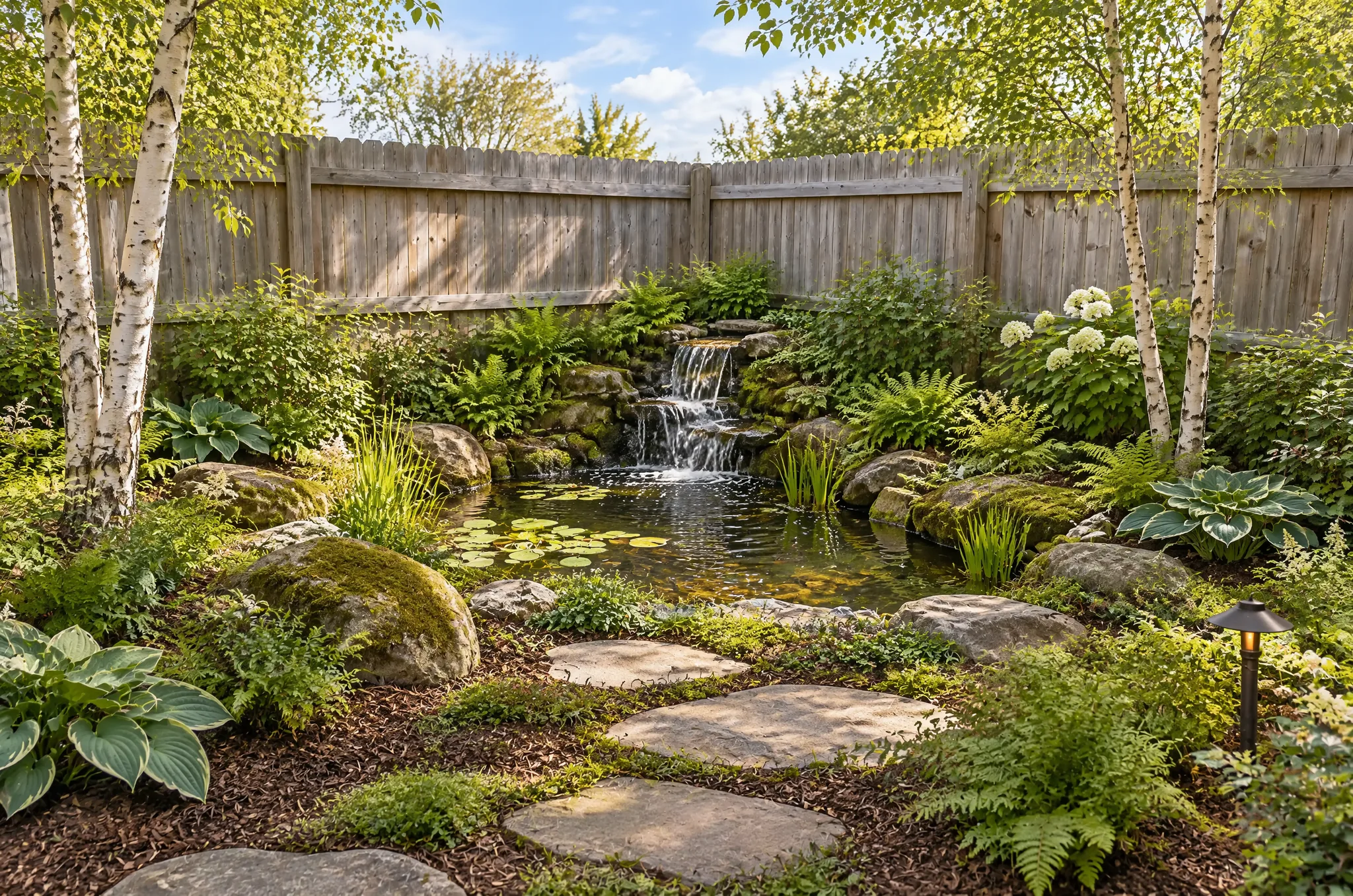
Woodland naturalistic landscape design recreates the quiet magic of a forest clearing — dappled light filtering through a leafy canopy, ferns unfurling beside a moss-covered stone, and meandering paths that reward slow exploration. Unlike formal garden styles that impose geometric order on nature, the woodland approach works with natural processes: layered planting, seasonal rhythms, and the gentle accumulation of leaf litter and organic matter that builds soil health year after year.
The style traces its modern roots to the English woodland garden tradition of the early 20th century, when designers like Gertrude Jekyll began planting shade-tolerant perennials beneath established trees. But the contemporary woodland naturalistic movement goes further, drawing on ecological science to create landscapes that function as genuine habitat — supporting birds, pollinators, and soil organisms while delivering the kind of immersive beauty that no amount of hardscape or annual bedding can replicate.
What makes this style increasingly relevant in 2026 is its relationship with existing conditions. Many suburban and rural properties already have mature trees, partial shade, and the beginnings of a woodland environment. Rather than fighting these conditions with sun-loving plants and constant intervention, the woodland naturalistic approach embraces them — turning the shady corner that "nothing grows in" into the most captivating part of the property.
Key Design Elements
- Four-Layer Structure — The defining framework of any woodland garden: a canopy of tall trees filtering light, an understory of smaller ornamental trees, a shrub layer providing mid-height structure, and a groundcover layer of perennials, ferns, and bulbs weaving across the forest floor.
- Meandering Paths — Curved, informal pathways made from natural materials (bark chip, crushed gravel, or stepping stones) that invite exploration and create the sense of discovering hidden garden rooms around every bend.
- Dappled Shade Management — Working with existing shade patterns rather than fighting them, selecting plants specifically adapted to partial or full shade conditions and positioning them where light levels match their needs.
- Naturalistic Drift Planting — Plants arranged in flowing, overlapping groups that mimic how species colonize a forest floor naturally, rather than rigid rows or geometric beds.
- Organic Mulch and Leaf Litter — Using fallen leaves, wood chips, and composted bark as a continuous living mulch that suppresses weeds, retains moisture, and feeds the soil ecosystem — exactly as a real forest floor operates.
- Natural Focal Points — Moss-covered boulders, weathered logs, a rustic bench, or a simple birdbath placed where paths converge, creating moments of pause without introducing artificial materials.
- Seasonal Succession — A carefully planned bloom sequence from early spring bulbs and ephemeral wildflowers through summer ferns and shade perennials to autumn berries and winter bark interest, ensuring the garden offers something in every season.
- Soft Boundaries — Edges that dissolve gradually into surrounding lawn or wilder areas rather than hard lines, using transitional species to blur the border between cultivated garden and natural landscape.
Recommended Plants & Materials
Plants
- Canopy Trees: Red oak (Quercus rubra) — stately native with brilliant fall color and excellent wildlife value; sugar maple (Acer saccharum) — the classic woodland canopy tree with unmatched autumn gold and orange; American beech (Fagus grandifolia) — smooth silver bark and copper fall leaves that persist through winter, adding structure to the bare-season garden
- Understory Trees: Dogwood (Cornus florida) — horizontal branching habit with white or pink spring flowers and red fall berries; serviceberry (Amelanchier canadensis) — delicate white spring blooms, edible berries, and fiery autumn foliage; redbud (Cercis canadensis) — magenta spring flowers emerging directly on bare branches before leaves appear
- Shrub Layer: Oakleaf hydrangea (Hydrangea quercifolia) — large white panicles aging to pink, with dramatic burgundy fall foliage and exfoliating bark; witch hazel (Hamamelis virginiana) — fragrant yellow fall flowers on arching branches; mountain laurel (Kalmia latifolia) — evergreen with intricate pink-white spring blooms; viburnum (Viburnum dentatum) — white flower clusters followed by blue-black berries adored by birds
- Ferns: Christmas fern (Polystichum acrostichoides) — evergreen, arching fronds that hold through winter; lady fern (Athyrium filix-femina) — lacy, light-textured deciduous fronds; maidenhair fern (Adiantum pedatum) — delicate fan-shaped fronds on wiry black stems, one of the most elegant native ferns
- Shade Perennials: Hostas — bold textured foliage in blue, gold, and variegated forms; astilbe — feathery plumes in pink, red, and white above ferny foliage; bleeding heart (Dicentra spectabilis) — arching stems hung with heart-shaped pink or white flowers in spring; Solomon's seal (Polygonatum biflorum) — graceful arching stems with dangling white bells
- Woodland Wildflowers: Trillium (Trillium grandiflorum) — the iconic three-petaled white woodland flower; Virginia bluebells (Mertensia virginica) — sky-blue spring bells that go dormant by midsummer; wild ginger (Asarum canadense) — heart-shaped leaves spreading as a dense groundcover; Jack-in-the-pulpit (Arisaema triphyllum) — sculptural hooded flowers followed by red berry clusters in fall
- Groundcovers: Wild strawberry (Fragaria virginiana) — spreading mat with white flowers and tiny red fruit; creeping phlox (Phlox stolonifera) — a carpet of blue, pink, or white spring flowers; Pennsylvania sedge (Carex pensylvanica) — fine-textured native grass alternative for deep shade; pachysandra (Pachysandra procumbens) — Allegheny spurge, a native evergreen groundcover far superior to its invasive Japanese cousin
Materials & Colors
- Path Materials: Bark chip or shredded hardwood mulch for primary paths — soft underfoot, blending naturally with the woodland floor; stepping stones of local fieldstone or bluestone set into groundcover for secondary routes; crushed gravel for areas needing better drainage
- Natural Stone: Locally sourced boulders and rock groupings placed as if they emerged from the ground naturally — never perched on the surface; moss-covered stones are the ultimate woodland accent
- Wood Elements: Cedar or black locust benches weathering to silver-grey; rustic log edging for path borders; fallen logs left in place as habitat for insects and fungi, and as natural sculpture
- Water Features: A simple recirculating stream, a shallow bird bath nestled among ferns, or a small reflecting pool — woodland water features should whisper, not roar
- Color Palette: Forest green, fern emerald, cool blue-grey, soft lavender, warm bark brown, silver-grey stone, and the quiet whites of woodland wildflowers — a predominantly green palette punctuated by delicate seasonal color rather than bold masses of bloom
Best For
The woodland naturalistic style is perfect for homeowners who want a landscape that feels like an escape rather than a showpiece. It suits:
- Properties with existing mature trees — any yard with established shade trees already has the framework for a woodland garden; this style works with what you have rather than requiring a blank canvas
- Shaded lots and north-facing yards — conditions that frustrate most garden styles are exactly what woodland planting thrives in
- Nature-loving homeowners — those who find more beauty in a patch of ferns and wildflowers than in a perfectly striped lawn, and who enjoy watching birds, butterflies, and seasonal changes up close
- Suburban lots seeking privacy — the layered structure of canopy, understory, and shrub plantings creates natural screening without the sterility of a solid fence or hedge
- Low-intervention gardeners — once established, a woodland garden largely manages itself through natural leaf cycling and self-seeding, requiring far less input than traditional perennial borders or annual beds
- Wildlife habitat enthusiasts — this style creates genuine ecosystem value with nesting sites, food sources, and shelter for native birds, pollinators, and beneficial insects
Budget Guide
- DIY / Budget ($500–$2,500): Work with existing trees and shade conditions. Clear invasive species (English ivy, bush honeysuckle), add a bark chip path, plant 50–100 native fern and wildflower plugs from a regional nursery, and let fallen leaves remain as natural mulch. The biggest investment is patience — woodland gardens fill in beautifully over 2–3 seasons as plants spread and self-seed.
- Mid-Range ($3,000–$15,000): Professional planting design for a 500–2,000 square foot woodland area. Includes 1–2 new understory trees, a curated shrub layer, 200+ perennial and groundcover plugs installed in naturalistic drifts, a crushed stone or stepping-stone path system, 2–3 boulders for natural focal points, and a simple recirculating water feature. This level delivers immediate visual impact while leaving room for the garden to mature.
- Professional ($15,000–$50,000+): Full landscape architecture for larger properties — comprehensive woodland restoration including canopy tree assessment and selective pruning, grading for path drainage, an extensive native understory and groundcover installation across 2,000+ square feet, a natural stream or water feature, rustic stone steps and seating areas, and low-voltage path lighting. Properties requiring significant invasive species removal or new tree installation will be at the higher end.
Maintenance Level
Low once established. The woodland garden is one of the lowest-maintenance landscape styles because it works with natural processes rather than fighting them. Allow fallen leaves to remain on planting beds as natural mulch — they suppress weeds, retain moisture, and feed the soil as they decompose, exactly as they do in a real forest. Remove leaves only from paths and lawn areas.
The primary maintenance tasks are:
- Spring cleanup — cut back any standing perennial stems, remove winter-damaged branches, and refresh bark chip paths
- Invasive species patrol — monitor for aggressive non-natives (garlic mustard, Japanese stiltgrass, English ivy) and remove them before they establish
- Selective pruning — thin understory branches as needed to maintain dappled light, and remove dead or crossing limbs from canopy trees every 2–3 years
- Path maintenance — top up bark chip paths annually, reset any shifted stepping stones
- Division and editing — every 3–4 years, divide overly vigorous perennials and transplant self-seeded plants to maintain the intended design structure
No irrigation is needed once plants are established (typically after the first growing season). No fertilizer — the natural leaf-cycling system provides all the nutrients woodland plants require. No herbicides — the dense layered planting structure suppresses weeds far more effectively than chemicals.
Try It Now
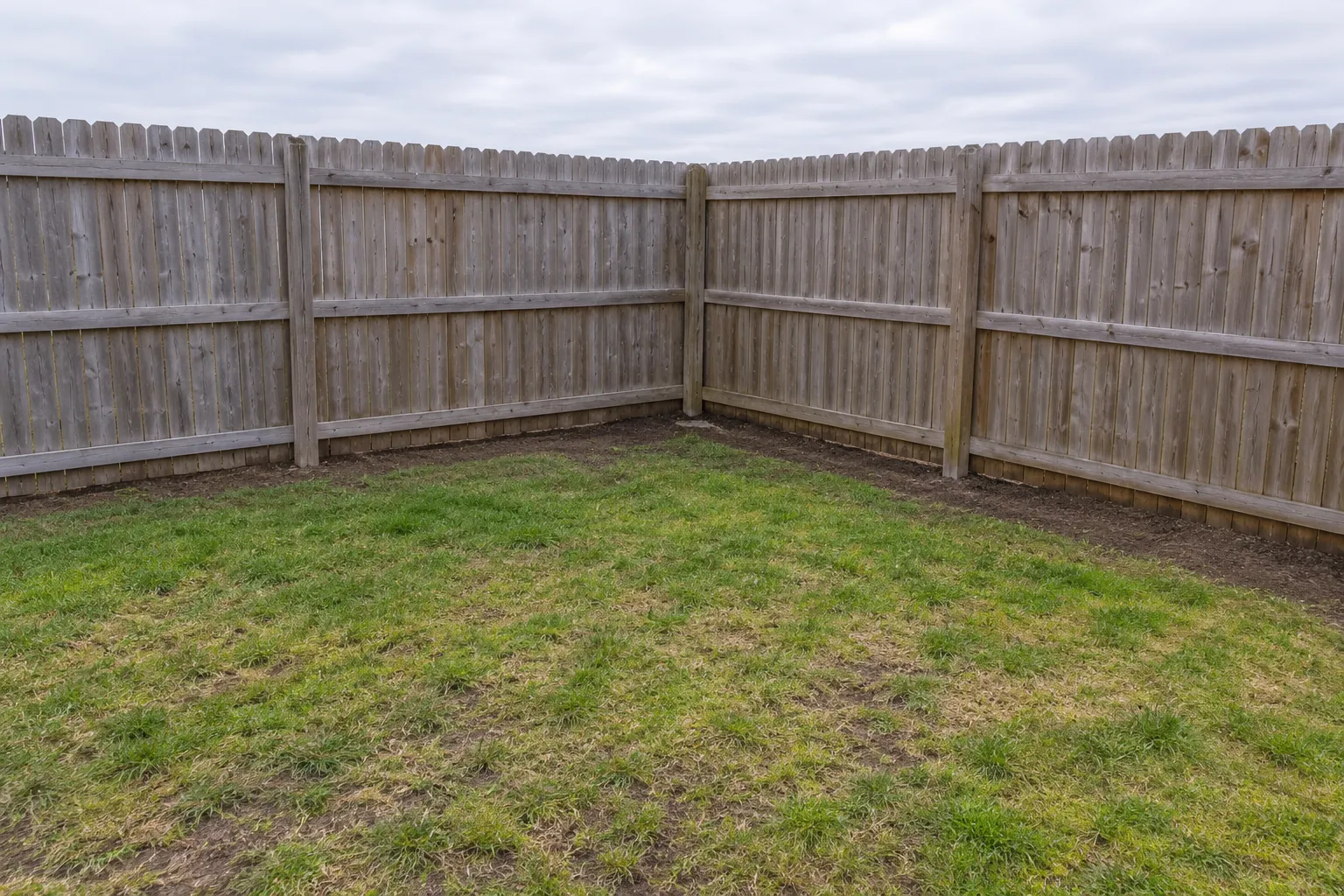
Upload your photo and see your space transformed into Woodland Naturalistic style in seconds — free to try. Our AI tool renders the layered canopy, fern-carpeted floor, and meandering paths directly onto your existing yard.