Low-maintenance landscaping does not mean a yard with nothing in it. It means a yard where the recurring jobs, mostly mowing, watering, and weeding, have been designed down to a few predictable hours a season. The lawn is usually the biggest source of those jobs, and it is also the easiest thing to shrink.
HomeGuide puts lawn mowing at $30–$85 per visit for an eighth- to quarter-acre yard, or $900–$2,000 a year for a typical 25–35 visit season, and full-service lawn care at $200–$400 a month for a quarter acre. The EPA's WaterSense program adds that outdoor use is about 30% of a household's water on average, with more than half of that going to lawns and gardens. These 10 low-maintenance landscaping ideas target those costs directly. Prices are 2026 national averages, so treat them as planning ranges.
Cut the Lawn Back First
1. Keep turf only where people actually use it
Colorado State University's xeriscape guidance lists "limit turfgrass" as one of its core principles for a reason: grass is the highest-input plant in most yards. Walk your yard and mark where the family really plays, the dog runs, or you need a soft path. Keep a lawn there. Everything else, the strip along the fence, the side yard nobody enters, the corner under the tree, is a candidate for something that does not need a mower.
A smaller lawn also makes the rest of the work cheaper. Mowing, edging, fertilizing, and irrigation scale with square footage, so a smaller lawn means proportionally less of each of those recurring jobs.
2. Replace low-traffic grass with groundcover
For sun, creeping thyme and white clover are the two most useful lawn substitutes. University of Wisconsin Extension rates creeping thyme for zone 4 and up, dry well-drained soil, and light foot traffic, and lists Dutch white clover as a zone 3 mat-former that takes foot traffic. UNH Extension adds that clover makes its own nitrogen and stays greener than most grasses in drought, and that raising the mower to 3 inches or more keeps it from taking over a lawn. For dry shade, Pennsylvania sedge (Carex pensylvanica, zone 3) gives a grass-like look, though extension sources suggest stepping stones where you walk regularly.
Be honest about the trade-off. Wisconsin Extension notes groundcovers are not maintenance-free: they need irrigation, mulching, and weed control until they fill in, and some spread aggressively enough to need edging. Plan on a full season of attention in exchange for years of less work. If you want a visual of the result before you pull any sod, upload a yard photo to the landscape design tool and compare groundcover layouts.
Make Beds That Weed and Water Themselves (Mostly)
3. Mulch 2–4 inches deep, and skip the fabric
A proper mulch layer is the cheapest weed control there is. Cornell's turf and landscape weed guide recommends a 2–4 inch layer, reapplied every 2–3 years as organic mulch breaks down. Iowa State Extension puts wood chips or shredded bark at 3–4 inches on well-drained soil and 2–3 inches on heavy soil, and both Iowa State and UC IPM say to keep it at least 6 inches from tree trunks. Piled against the bark, mulch encourages decay, cankers, and rodents.
Landscape fabric under mulch sounds like a shortcut and usually is not. Colorado State, Penn State, and Cornell all describe weeds rooting into or through the fabric, which makes hand-weeding harder, and Colorado State notes it can restrict water and air exchange in the soil. For permanent plantings, deeper organic mulch does the job better.
4. Put a drip line under the mulch
The EPA says microirrigation uses 20–50% less water than conventional sprinkler systems because it delivers water slowly at the root zone, and that switching can save a typical home more than 25,000 gallons a year. The same agency notes that as much as 50% of the water from inefficient irrigation is lost to evaporation, wind, or runoff.
If you already have sprinklers, a WaterSense-labeled weather-based controller is the lowest-effort upgrade. EPA estimates the average family can save nearly 9,000 gallons a year by replacing a basic clock timer with one. Check your heads each season too: EPA says a single broken sprinkler head can waste as much as 25,000 gallons over a six-month irrigation season.
5. Group plants by how much water they need
Colorado State's xeriscape guidance and the EPA both recommend "hydrozones": plants with similar water needs share an irrigation zone. A bed that mixes a thirsty hydrangea with a drought-tolerant sedum forces you to either overwater one or underwater the other. Plan the bed by water need first and color second, and the drip schedule gets simple.
Choose Plants That Need Less From You
6. Build beds around tough perennials
A short list of reliable perennials covers most of a low-maintenance bed:
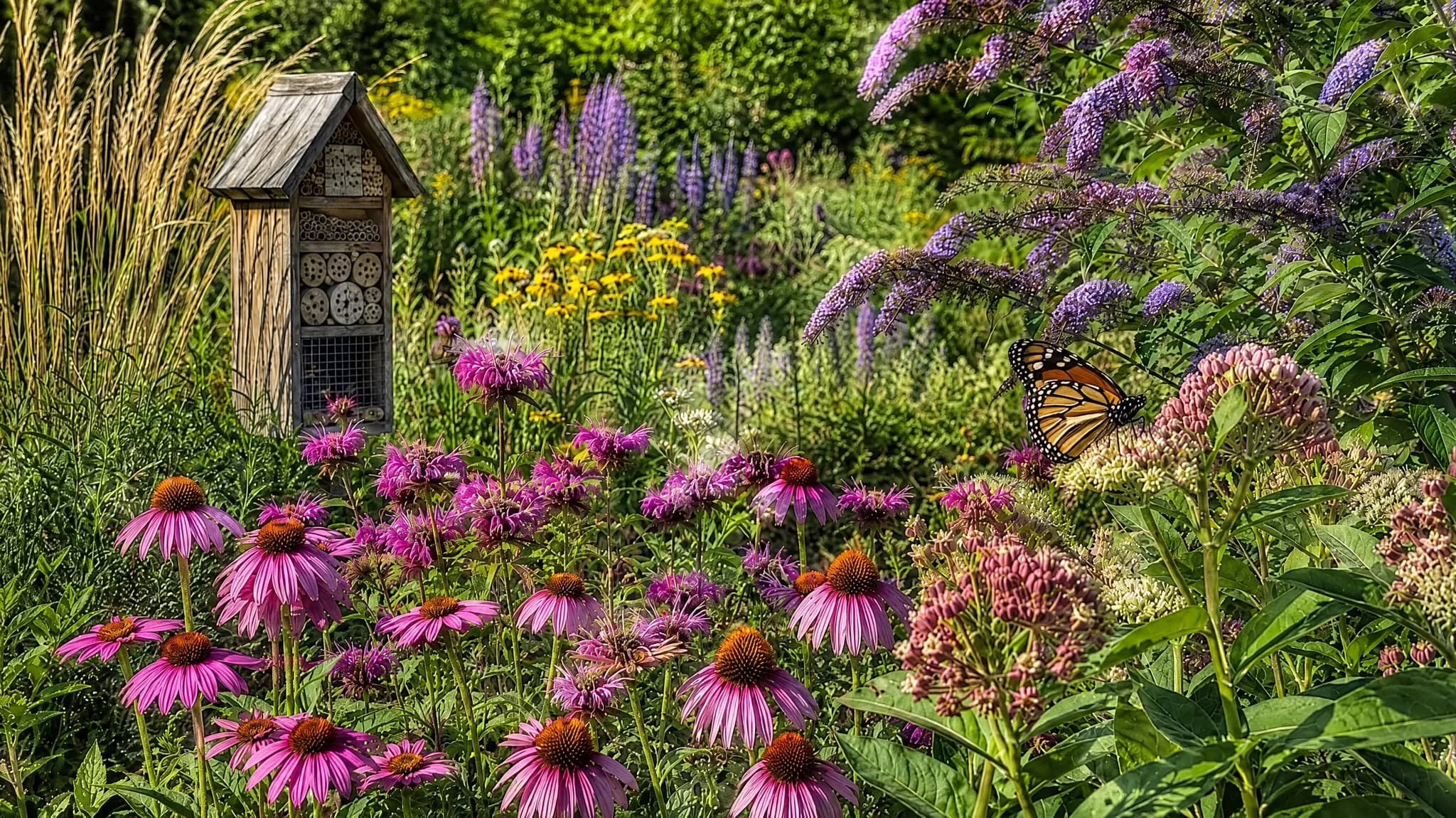
- Purple coneflower (Echinacea purpurea) — hardy in zones 3–8, drought-tolerant once established, with sturdy stems that need no staking. Clemson Extension notes it is deer-resistant and that leaving the seed heads up feeds goldfinches. Iowa State says it reseeds freely, which you can limit by deadheading before seed set.
- 'Autumn Joy' sedum — zones 3–8, drought-tolerant, and happiest in lean, well-drained soil. NC State says to cut or pinch it back in early spring, and that rich or overly moist soil causes problems.
- Daylily (Hemerocallis) — drought-, heat-, and salt-tolerant and easy to transplant. NC State lists it for zones 3–9. Divide clumps when they crowd.
Plant in drifts of three or five of the same variety rather than one of everything. Repetition reads as intentional, and it makes weeding easier because you can recognize a weed in a block of identical foliage.
7. Use ornamental grasses with one annual haircut
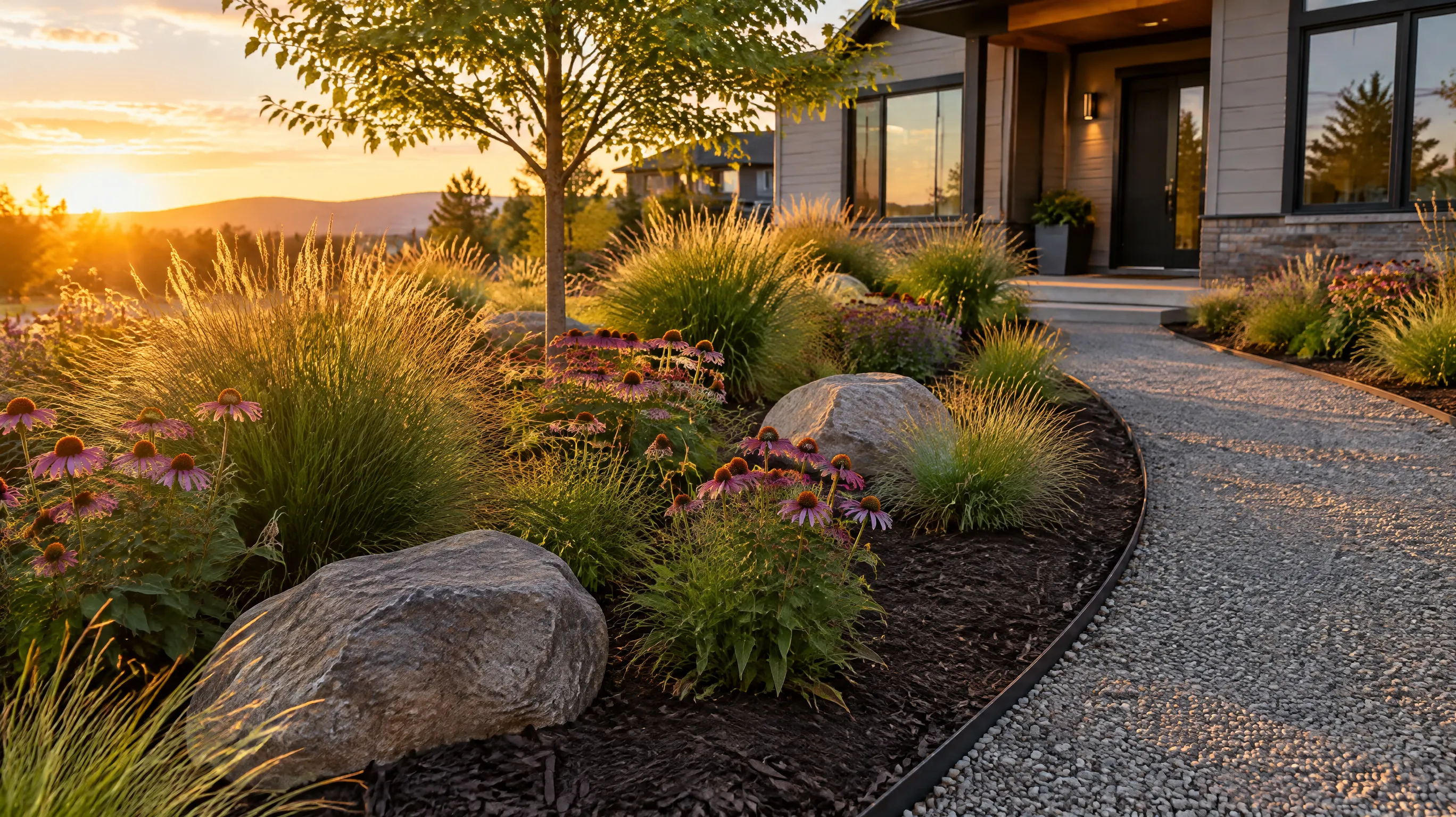
Many grasses give a full season of movement for a single cutback. 'Karl Foerster' feather reed grass is a good example: Missouri Botanical Garden lists it for zones 5–9 (some extension sources go to zone 3 or 4) and says to cut clumps to the ground in late winter just before new shoots appear. Leave the plumes standing through winter for structure and cut them in one pass. NC State adds that it is highly resistant to deer and rabbits and tolerates drought, wet soil, and clay, but can suffer rust in hot, humid, wet summers, so give it space for airflow.
8. Choose native and regionally adapted plants
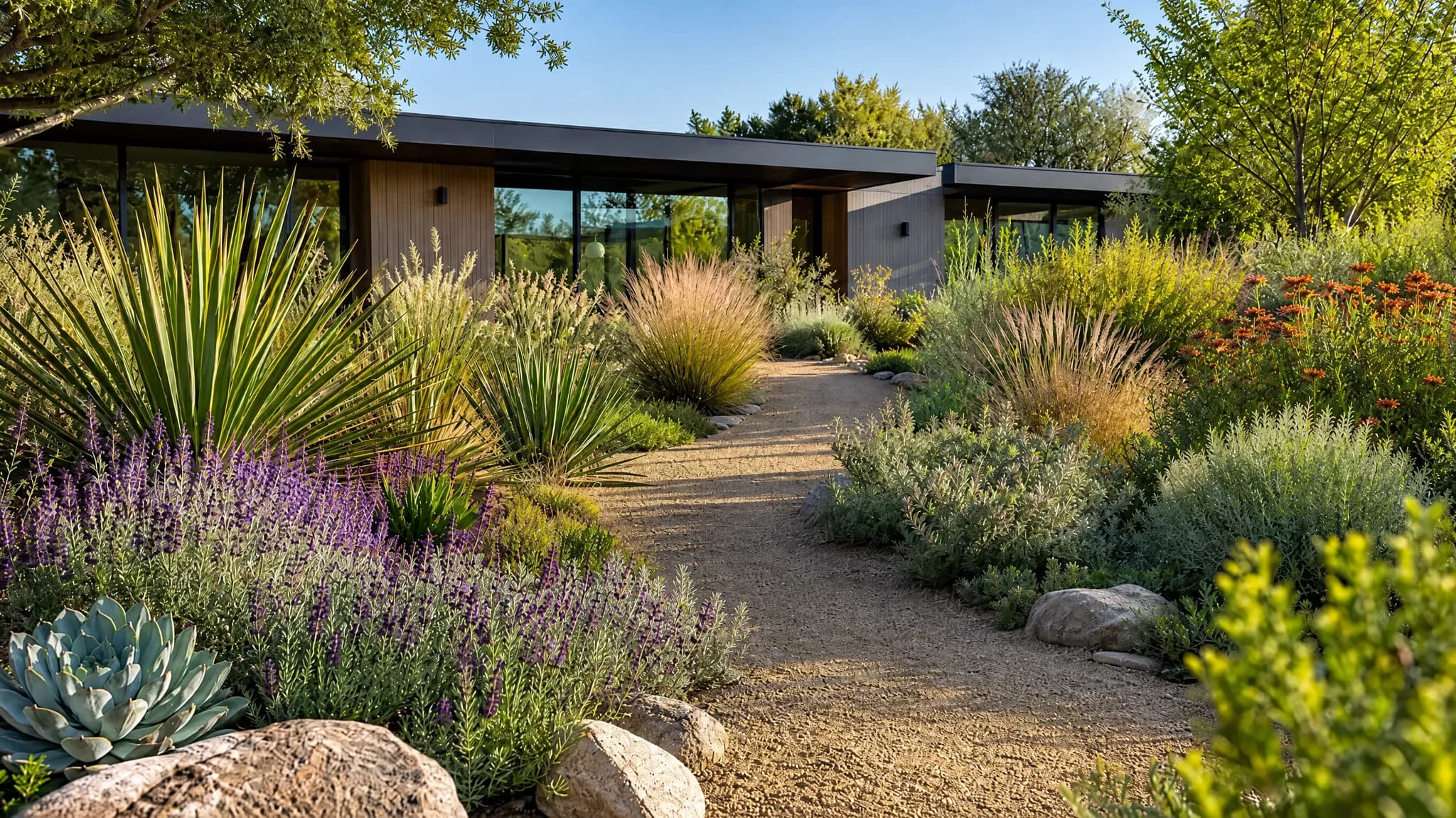
The EPA says that once established, native plants need little water beyond normal rainfall, and Colorado State notes that native plants often top its xeric plant lists. A native planting suited to your climate is one of the lowest-input options, because it is already adapted to your rainfall and soil. Browse the prairie native style for a design reference, or the desert xeriscape style if you garden in a dry climate. Your state extension service publishes regional native plant lists, which is a better starting point than a national plant tag.
Let Hardscape Do Some of the Work
9. Use gravel for paths and patios, but pick the right gravel
Gravel is one of the cheapest hard surfaces to install. HomeGuide lists pea gravel at $0.85–$2.80 per square foot installed, so a 4-by-50-foot path (200 square feet) runs about $115–$380, and a 20-by-20-foot patio about $500–$1,250. Add edging so the stones stay in the path.
Match the stone to the job. HomeGuide says pea gravel suits walkways and landscaping but shifts under tires, so use angular crushed stone over a crusher-run base for a driveway. A gravel path also needs a little upkeep: UC IPM advises landscape fabric beneath rock mulch to keep soil and stone from mixing, and you will still pull the occasional weed seedling. That is light, occasional upkeep rather than a weekly mowing schedule.
10. Add a patio instead of more lawn
A gathering space on a hard surface replaces turf you would otherwise mow and gives the yard a clear center. Gravel, pavers, or a simple flagstone patio all work. The backyard ideas collection shows how this reads in different styles, from modern minimalist to Mediterranean. In a front yard, the same idea works as a wide entry path with planting beds on both sides, which is the logic behind the low-maintenance front yard design.
What the Savings Look Like
| Change | Typical figure (2026, national) | Source |
|---|---|---|
| Lawn mowing service, ⅛–¼ acre | $900–$2,000 per year | HomeGuide |
| Pea gravel path, 4 × 50 ft | $115–$380 installed | HomeGuide |
| Drip instead of sprinklers | 20–50% less water | EPA WaterSense |
| Weather-based irrigation controller | About 9,000 gallons saved per year | EPA WaterSense |
| Xeriscape conversion (Colorado) | 18–63% water savings across demonstration sites | Colorado WaterWise YARDX study |
Colorado's YARDX study measured actual homeowner yards and found savings ranging from 18% to over 50%, with some sites reaching 63% and retrofit sites in the 23–28% range. The takeaway is that results depend on how many of the xeriscape principles you follow, not just whether you removed grass. Swapping turf for plants and leaving the old sprinkler schedule untouched saves far less than doing both.
Do It in the Right Order
A low-maintenance conversion goes smoothly when you work in sequence:
- Decide what stays as lawn. Mark the areas people actually use.
- Prepare the soil. Most drought-tolerant plants do best in lean soil; Colorado State suggests a soil test and notes that most drought-tolerant plants do not need amendments.
- Lay out irrigation by hydrozone before planting, and run drip lines under where the mulch will go.
- Plant in drifts, then mulch 2–4 inches, pulled back from stems and trunks.
- Water on schedule through the first season. Established plants are low-maintenance; new ones are not.
If you want to test layouts before you buy plants, the Landscape Design tool generates a redesign from your own photo in about 30 seconds. Try one version with a smaller lawn, one with a gravel patio, and one with a full groundcover meadow, and see which one you would actually enjoy maintaining.
Frequently Asked Questions
Is gravel really lower maintenance than mulch?
For paths and patios, yes: it does not decompose and does not need annual replacement. In planting beds, gravel mulch suits drought-tolerant plants that want quick drainage, as Colorado State notes, but organic mulch is better for most perennials because it improves soil as it breaks down. Either way, plan for occasional weed removal.
How long until a new low-maintenance yard stops needing extra care?
Plan on the first full growing season. Wisconsin Extension says groundcovers need irrigation, fertilization, mulching, and weed control until fully established, and Colorado State gives the same advice for xeric plantings. After that, the recurring jobs drop to seasonal cutbacks, mulch top-ups, and checking irrigation.
What is the lowest-maintenance replacement for a front lawn?
It depends on climate and traffic. In sun with little foot traffic, creeping thyme or white clover work; in dry shade, a sedge; in a dry region, a xeriscape of drought-tolerant shrubs and perennials over gravel or wood mulch. Pair any of them with a clear entry path so the yard still looks cared for.
Sources
Costs, water figures, and plant hardiness zones were checked in October 2026. Prices are national averages and vary by region.
- HomeGuide — Lawn mowing cost (2026)
- HomeGuide — Lawn care cost (2026)
- HomeGuide — Pea gravel cost (2026)
- HomeGuide — Gravel driveway cost (2026), pea gravel versus crushed stone
- U.S. EPA WaterSense — US outdoor water use
- U.S. EPA WaterSense — Microirrigation
- U.S. EPA WaterSense — Labeled outdoor products facts and tips
- Colorado State University — The benefits of xeriscaping
- CSU Extension — Xeriscaping: retrofit your yard
- CSU Extension — Mulches for home grounds
- Colorado WaterWise — YARDX xeriscape study
- Cornell — Weed barriers (mulch depth, landscape fabric)
- Iowa State Extension — How deep should the mulch layer be?
- Penn State Extension — Putting an end to my landscape fabric nightmare
- UC IPM — Mulches
- University of Wisconsin Extension — Alternatives to lawn: groundcovers
- UNH Extension — Pollinator-friendly lawn alternatives
- Iowa State Extension — Growing coneflowers in Iowa
- Clemson HGIC — Echinacea
- NC State Extension — Hylotelephium spectabile 'Autumn Joy'
- NC State Extension — Hemerocallis hybrida (daylily)
- Missouri Botanical Garden — Calamagrostis × acutiflora 'Karl Foerster'
- NC State Extension — Calamagrostis × acutiflora 'Karl Foerster'