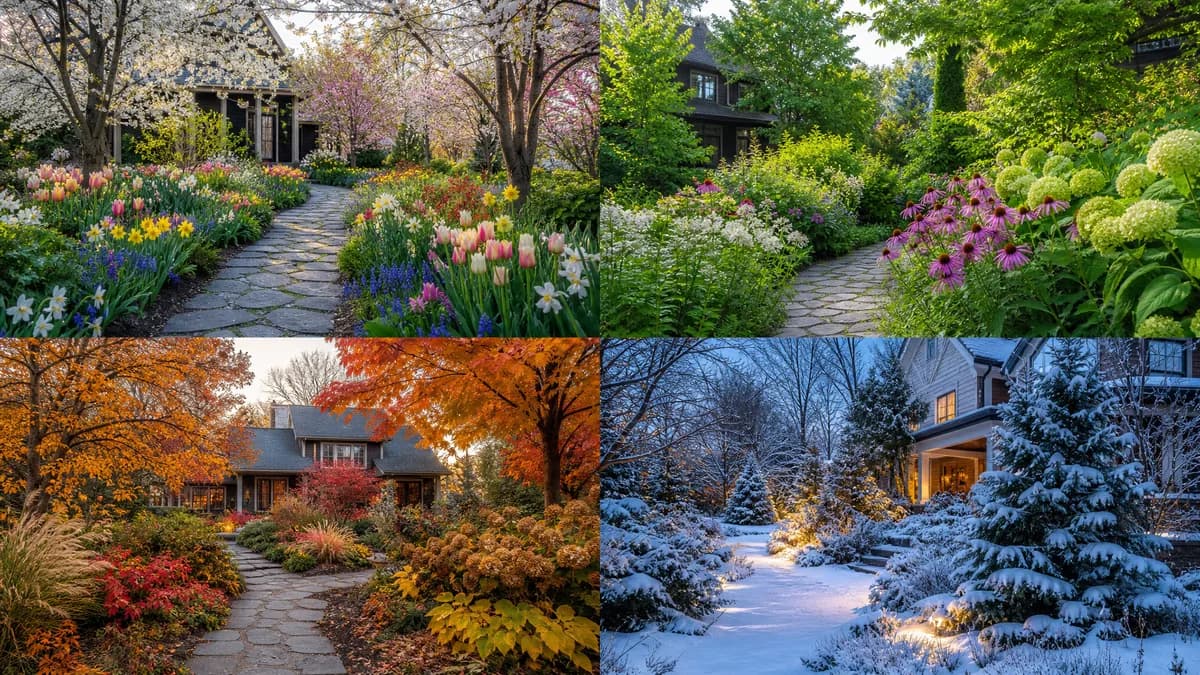
The mark of a well-designed landscape is beauty that persists across all four seasons. While peak bloom in summer gets the most attention, a truly exceptional garden offers compelling visual interest in spring, fall, and winter as well.
This guide shows you how to plan for year-round appeal by selecting the right plants and structural elements for each season.
The Framework: Structure First, Color Second
Before choosing a single flowering plant, establish the permanent structure of your garden:
- Evergreen trees and shrubs provide year-round form and screening
- Hardscape elements (paths, walls, patios) anchor the design in winter when most plants are dormant
- Deciduous trees with interesting bark or branching patterns contribute winter interest
- Garden structures (arbors, fences, raised beds) add architectural presence
This structural framework ensures your garden looks intentional even in the depths of winter. With structure in place, layer in seasonal color and interest.
Spring: Emergence and Renewal
Spring is the season of anticipation. Design for:
Early bulbs (February to March):
- Snowdrops, crocuses, and winter aconite emerge through snow
- Plant in natural-looking drifts, not rigid rows
Spring flowering trees (March to April):
- Magnolias, cherry blossoms, and crabapples deliver show-stopping bloom
- Position where they are visible from interior windows
Perennial emergence (April to May):
- Hostas unfurling, ferns uncurling, and ornamental grasses sending up fresh shoots
- Early perennials like bleeding heart, hellebore, and pulmonaria bridge the gap before summer
Spring-flowering shrubs:
- Forsythia, lilac, viburnum, and azalea provide weeks of bloom
Summer: Peak Performance
Summer is the easiest season to plan for, with abundant options:
Perennial borders: Layer heights from front to back with continuous succession of bloom. Key summer performers include:
- Low: Catmint, salvia, geranium, sedum
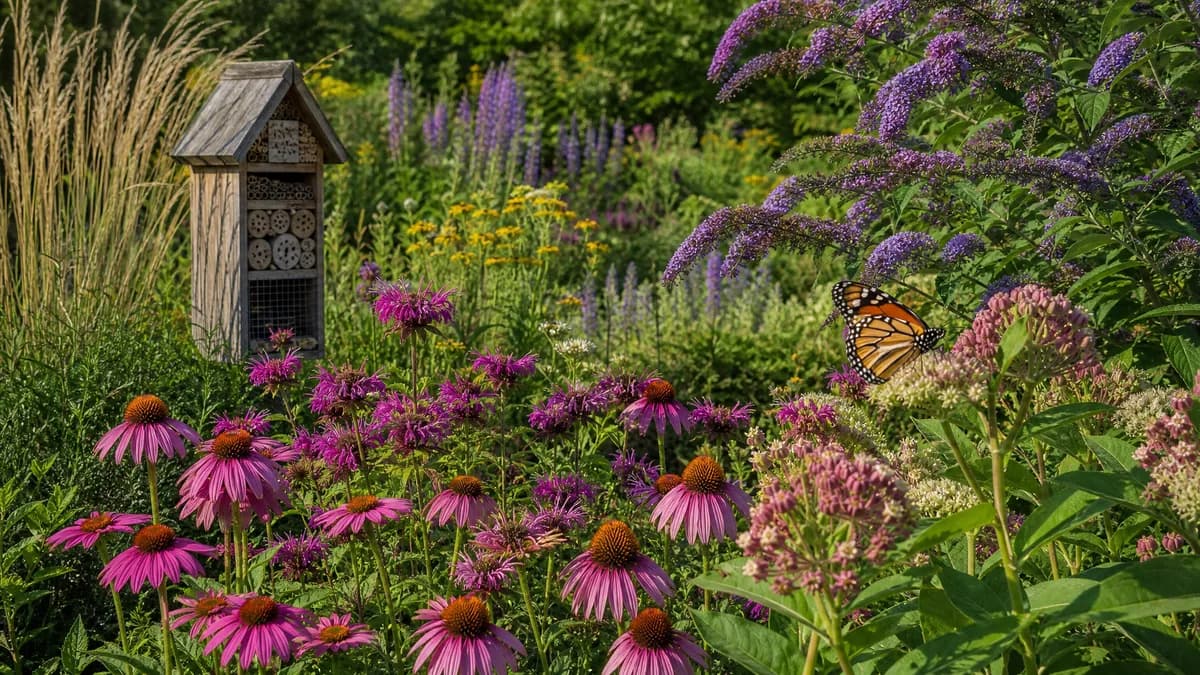
- Medium: Echinacea, rudbeckia, daylily, phlox
- Tall: Hollyhock, delphinium, Joe Pye weed, ornamental grasses
Annuals for continuous color: Petunias, zinnias, cosmos, and marigolds provide non-stop bloom from planting to frost.
Container displays: Refresh containers with tropical plants (cannas, elephant ears, coleus) for dramatic summer impact.
Roses: Modern disease-resistant varieties like Knock Out and David Austin English roses provide months of bloom with moderate care.
Fall: Rich Transformation
Fall is often underappreciated in garden design, but it offers some of the most dramatic visual moments:
Fall foliage trees:
- Japanese maple: brilliant crimson and orange
- Sugar maple: classic red and gold
- Ginkgo: luminous yellow
- Oak varieties: deep burgundy and russet
Late-blooming perennials:
- Asters, chrysanthemums, and goldenrod carry color into November
- Ornamental grasses reach peak beauty with plumes and seed heads
- Sedum (stonecrop) transitions from green to russet
Berries and fruit:
- Winterberry holly, beautyberry, and firethorn provide vivid berry color
- Crabapples retain fruit well into winter
Fall garden tasks: This is the ideal time for planting trees, dividing perennials, and planting spring bulbs.
Winter: Architectural Beauty
A garden that looks good in winter is the ultimate test of design skill:
Evergreen structure:
- Mix broadleaf evergreens (boxwood, holly, rhododendron) with needled evergreens (pine, spruce, juniper)
- Shaped hedges and topiary add formal interest
Bark and stem interest:
- River birch: peeling cinnamon bark
- Red-twig dogwood: brilliant scarlet stems
- Paperbark maple: cinnamon-colored peeling bark
- Coral bark Japanese maple: bright coral-red twigs
Winter-blooming plants:
- Witch hazel blooms in January with fragrant, spidery flowers
- Hellebore (Lenten rose) blooms through late winter
- Winter jasmine produces yellow flowers on green stems
Garden structures in snow:
- Arbors, trellises, and stone walls become sculptural features
- Bird feeders attract winter wildlife and add movement
Building Your Seasonal Calendar
Create a simple spreadsheet listing every plant in your garden (or planned garden) with columns for each season. For each entry, note what it contributes:
| Plant | Spring | Summer | Fall | Winter |
|---|---|---|---|---|
| Japanese maple | Fresh red foliage | Deep purple canopy | Brilliant crimson | Branching structure |
| Echinacea | Emerging foliage | Purple flowers | Seed heads | Dried stems |
| Boxwood | Fresh growth | Dense green | Green structure | Evergreen anchor |
| Ornamental grass | Fresh shoots | Green fountain | Gold plumes | Dried stalks |
If any season column is mostly empty, add plants that contribute during that gap.
Visualizing Seasonal Interest
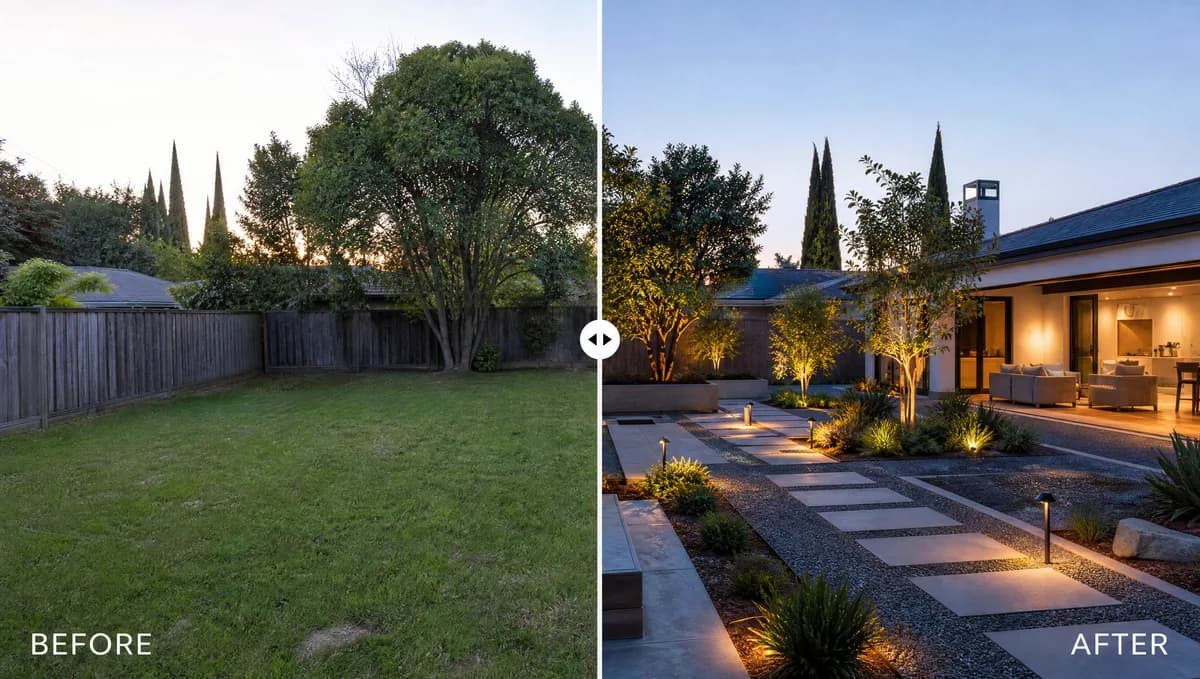
Our AI design tool can help you visualize how different styles look across seasons. Try uploading your yard photo and experimenting with:
- English Cottage for peak seasonal flower color
- Prairie Native for year-round grassland beauty
- Woodland Naturalistic for shade-garden seasonal interest
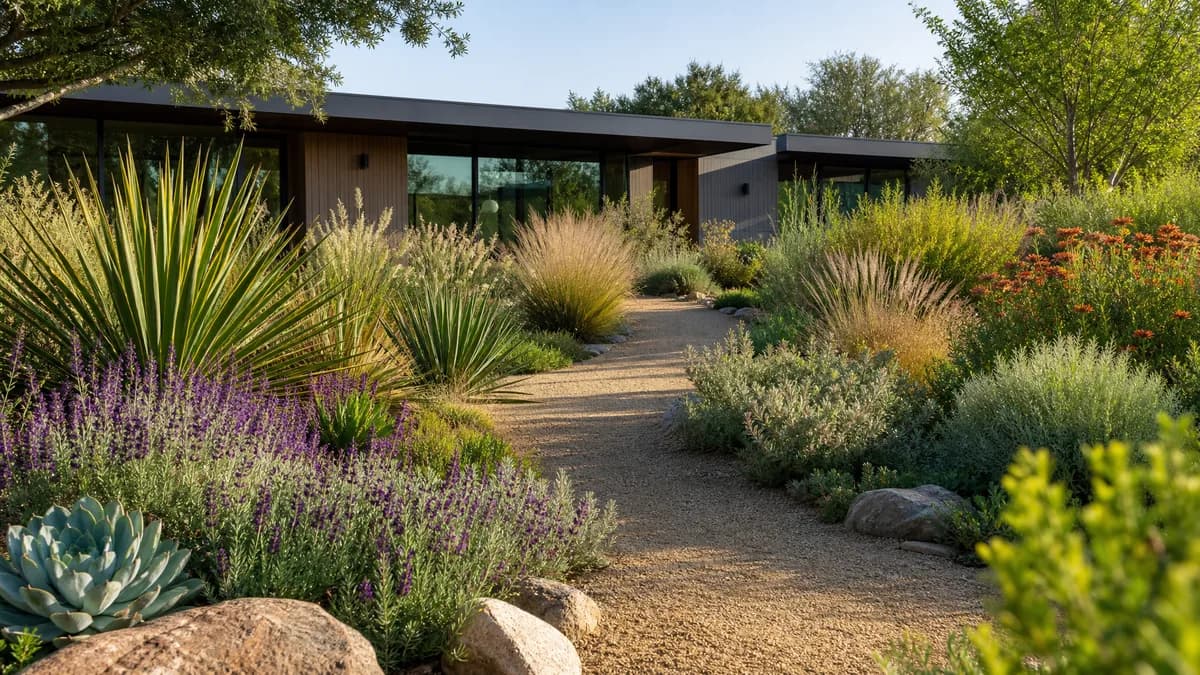
- Modern Minimalist for strong structural interest in all seasons
Frequently Asked Questions
What is the lowest-maintenance approach to four-season interest? Focus on evergreen structure, ornamental grasses (which look good three seasons and have winter interest), and a few well-chosen deciduous trees with fall color and interesting bark.
How many plants do I need for year-round interest? A garden with 12 to 15 well-chosen species can provide compelling interest in all four seasons. Quality and variety matter more than quantity.
Can container gardens provide four-season interest? Yes, with seasonal replanting. Spring bulbs, summer annuals, fall mums, and winter evergreen branches with berries keep containers relevant year-round.