Limited outdoor space does not mean limited design potential. Some of the most captivating gardens in the world occupy less than 100 square feet. The key is thoughtful planning that treats every inch as an opportunity.
Whether you have a tiny balcony, a narrow side yard, or a compact city patio, these 15 ideas will help you create an outdoor space that feels significantly larger and more inviting than its physical footprint suggests.
1. Build a Vertical Garden Wall
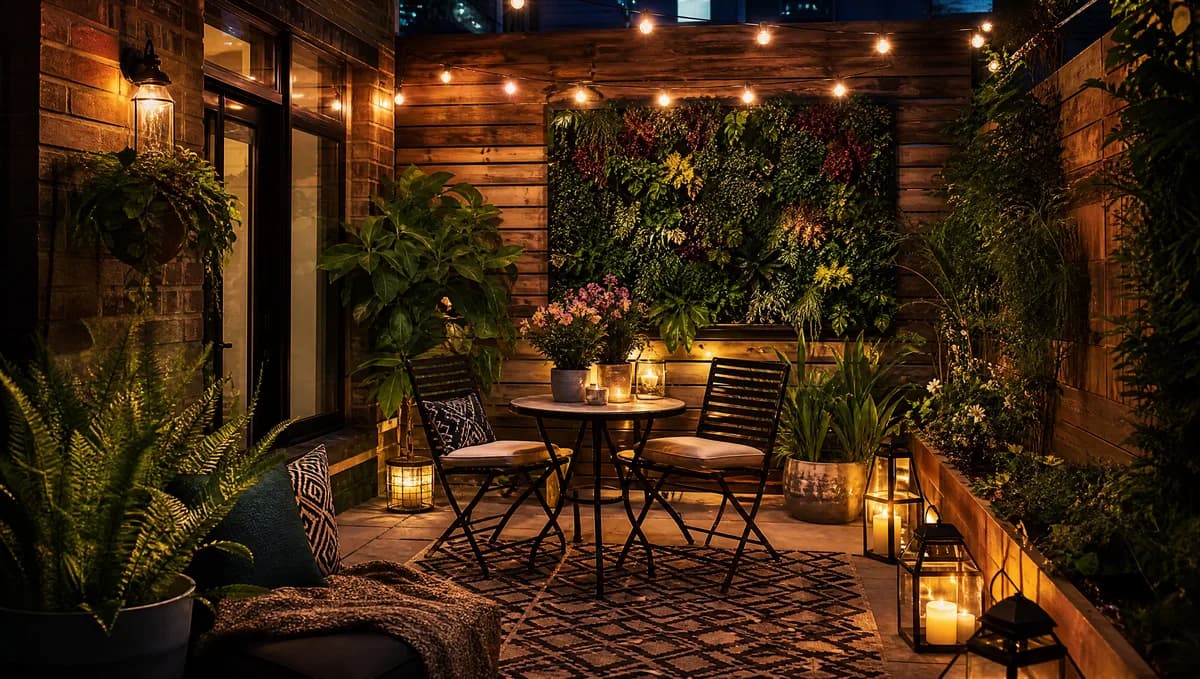
When you cannot expand outward, grow upward. A vertical garden wall transforms a blank fence or wall into a living tapestry of foliage:
- Pocket planters mounted in a grid pattern hold herbs, trailing plants, and compact flowers
- Trellis systems support climbing plants like jasmine, clematis, or passionflower
- Modular green wall panels provide professional-grade living walls at consumer prices
Vertical gardens add visual depth while occupying zero floor space, making them the single most effective strategy for small patios.
2. Use Mirrors to Double the Visual Space
Outdoor-rated mirrors mounted on fences or walls create an illusion of depth that can make a 10-by-10-foot patio feel twice as large. Position mirrors to reflect greenery, sky, or architectural details rather than direct sunlight or seating areas.
3. Choose Multifunctional Furniture
Every piece in a small patio should serve at least two purposes:
- Storage benches provide seating and hide cushions, tools, or planters
- Folding bistro sets collapse flat against a wall when not in use
- Planter tables combine a side table with a built-in planter box
- Ottoman coolers function as extra seating and beverage storage
4. Create Layers with Container Plants
Containers let you garden without ground planting. Arrange them at varying heights using:
- Plant stands at different levels
- Wall-mounted pots at eye level
- Floor pots in graduating sizes from front to back
- Hanging baskets from overhead structures
This layered approach creates a lush, garden-like atmosphere entirely from movable containers.
5. Install String Lights for Evening Ambiance
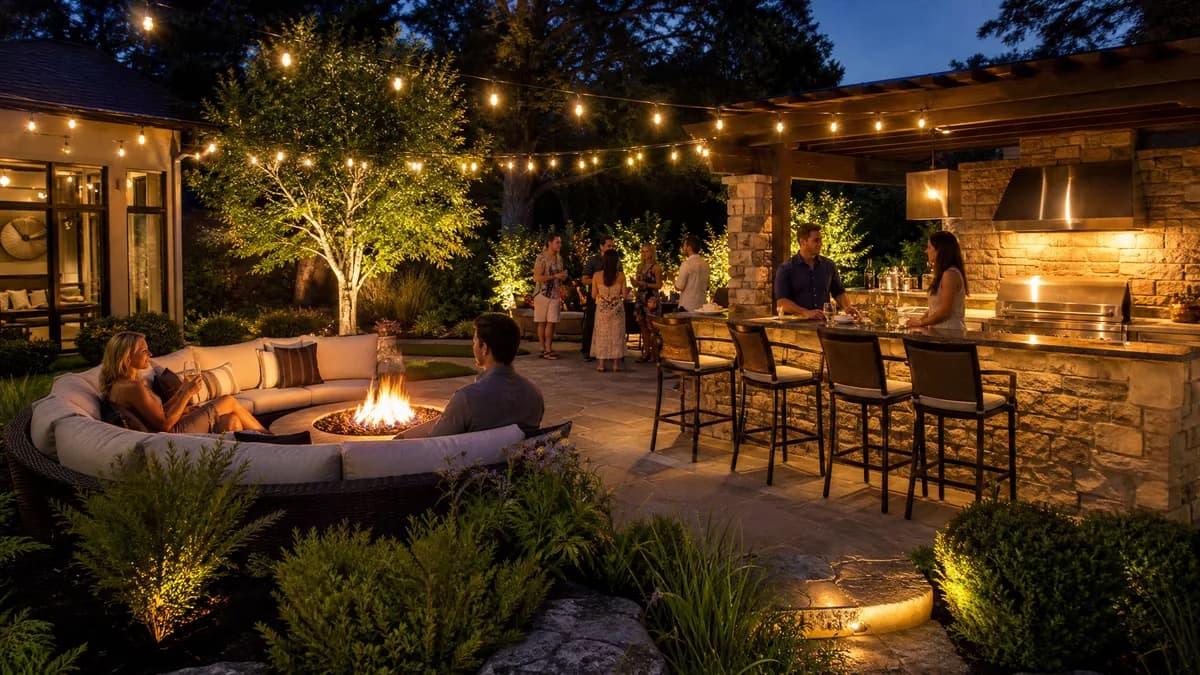
Overhead string lights accomplish two things: they draw the eye upward (expanding the perceived space) and they extend usable hours into the evening. Drape them in a zigzag pattern across the space, anchored to walls, poles, or a simple pergola frame.
6. Add a Small Water Feature
The sound of running water masks city noise and creates a meditative atmosphere. Space-efficient options include:
- Wall-mounted fountains that take no floor space
- Tabletop bubblers that double as centerpieces
- Self-contained bowl fountains with recirculating pumps
7. Define Zones Even in Tiny Spaces
Even a small patio benefits from distinct zones. Use different flooring materials, slight level changes, or area rugs to create:
- A dining zone with a compact table
- A lounge zone with a single chair and side table
- A garden zone with grouped planters
This zoning trick makes the space feel more complex and intentional than a single undifferentiated area.
8. Use a Color Palette to Unify the Space
Restrict your color palette to three or four harmonious colors. This creates visual coherence that makes small spaces feel designed rather than cluttered. Choose:
- One dominant color (white, sage green, or warm gray work well)
- One accent color (terracotta, navy, or gold for warmth)
- One foliage tone (silver-green, dark green, or chartreuse)
9. Incorporate Edible Plants
Herbs and compact vegetables do double duty as both ornamental plants and kitchen ingredients:
- Basil, rosemary, and thyme thrive in containers and smell wonderful
- Cherry tomatoes grow well in large pots with cages
- Strawberries trail beautifully from hanging baskets
- Lettuce and microgreens grow fast in shallow containers
10. Build a Corner Seating Nook
An L-shaped bench built into a corner maximizes seating while minimizing floor area consumed. Add waterproof cushions, a few throw pillows, and a narrow shelf for drinks to create a conversation corner that feels luxurious.
11. Choose the Right Flooring
Flooring sets the tone for the entire space:
- Porcelain pavers in light colors make spaces feel larger
- Composite deck tiles install over existing concrete without construction
- Outdoor rugs define zones and add warmth
- Pea gravel with stepping stones creates a garden path feel
12. Add Privacy Without Blocking Light
Privacy screening is essential in urban settings, but solid walls can make small spaces feel claustrophobic:
- Bamboo screens provide privacy while allowing air circulation
- Slatted wood panels filter light and create interesting shadow patterns
- Tall ornamental grasses in planters offer a living privacy screen
- Outdoor curtains on a tension rod give flexible privacy control
13. Create a Focal Point
Every small garden needs one element that draws the eye and organizes the composition:
- A specimen plant like a Japanese maple in a beautiful pot
- A piece of outdoor art or a sculptural planter
- A striking chair in a bold color
- A small fire pit or lantern arrangement
14. Think About Scent
In a small space, fragrant plants make a significant impact. Position them near seating areas:
- Jasmine near the entrance for evening fragrance
- Lavender along pathways for touch-activated scent
- Gardenia in a container near the lounge chair
- Herbs on a dining table for ambient aroma
15. Visualize Before You Commit
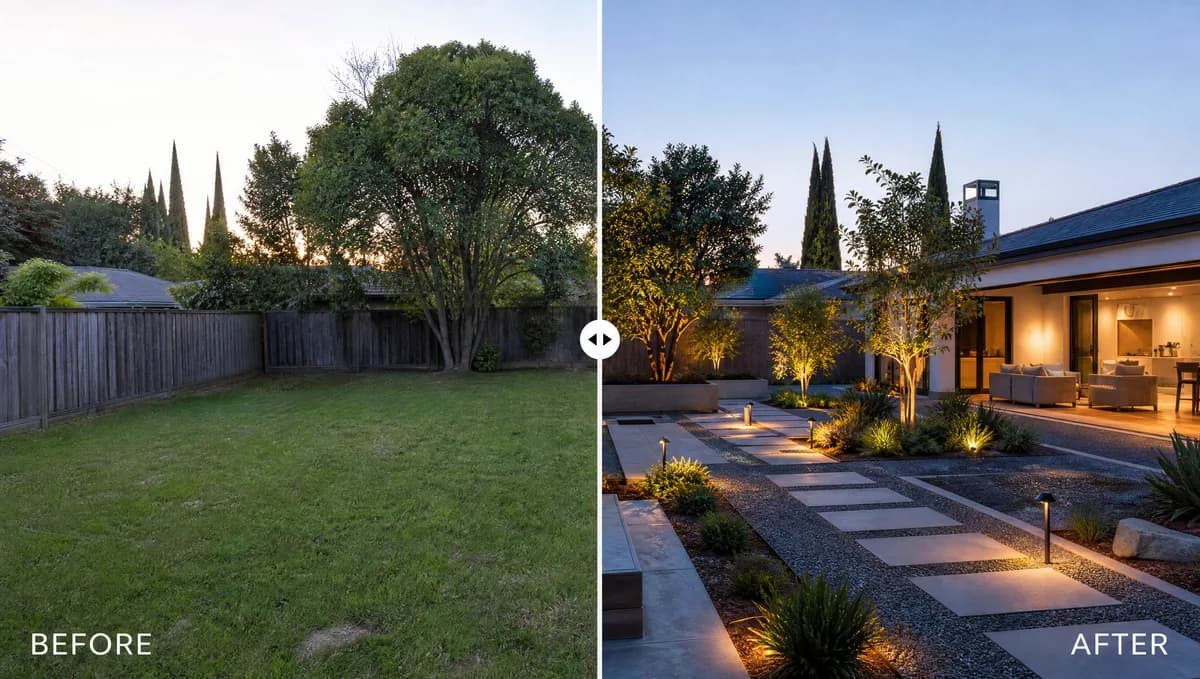
Before purchasing a single planter, use an AI design tool to visualize different arrangements for your patio. Try our small urban patio style to see how professional designers would approach your specific space, or explore Scandinavian and Japanese Zen styles that excel in compact settings.
Upload a photo of your patio, select a style, and get a photorealistic rendering in seconds. This eliminates the trial-and-error of purchasing plants and furniture that may not work in your space.
Frequently Asked Questions
What is the minimum patio size for a functional garden? Even a 4-by-6-foot space can support a small bistro set, several container plants, and a wall-mounted garden. Focus on vertical elements and multifunctional furniture.
How much does a small patio makeover cost? A budget transformation with container plants, string lights, and basic furniture can cost $200 to $500. A more complete redesign with quality furniture, planters, and a water feature typically runs $1,000 to $3,000.
Which plants are best for shaded patios? Ferns, hostas, heuchera, begonias, and impatiens thrive in shade. For foliage interest in low light, try coleus, caladium, or Japanese forest grass.