
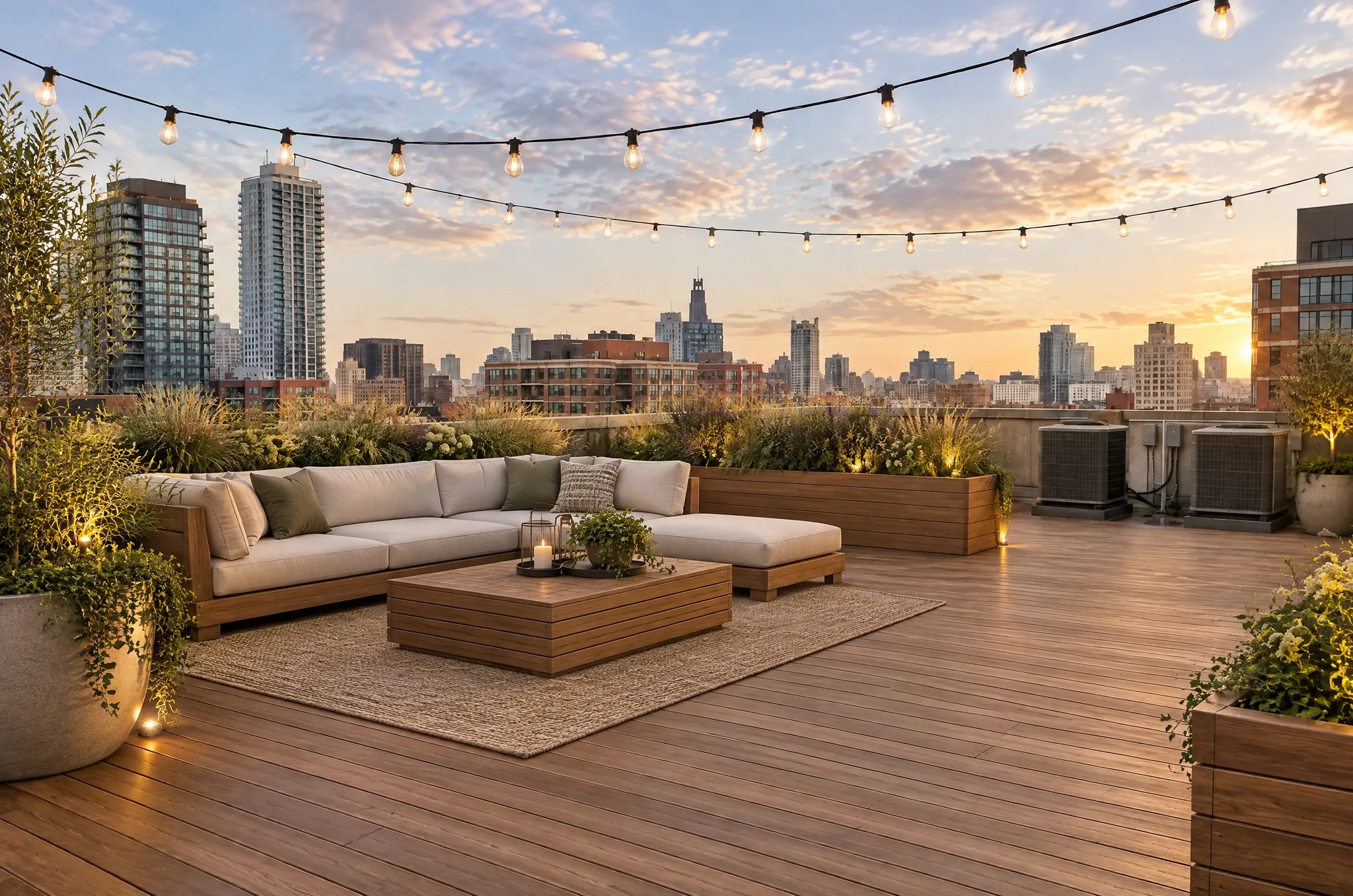
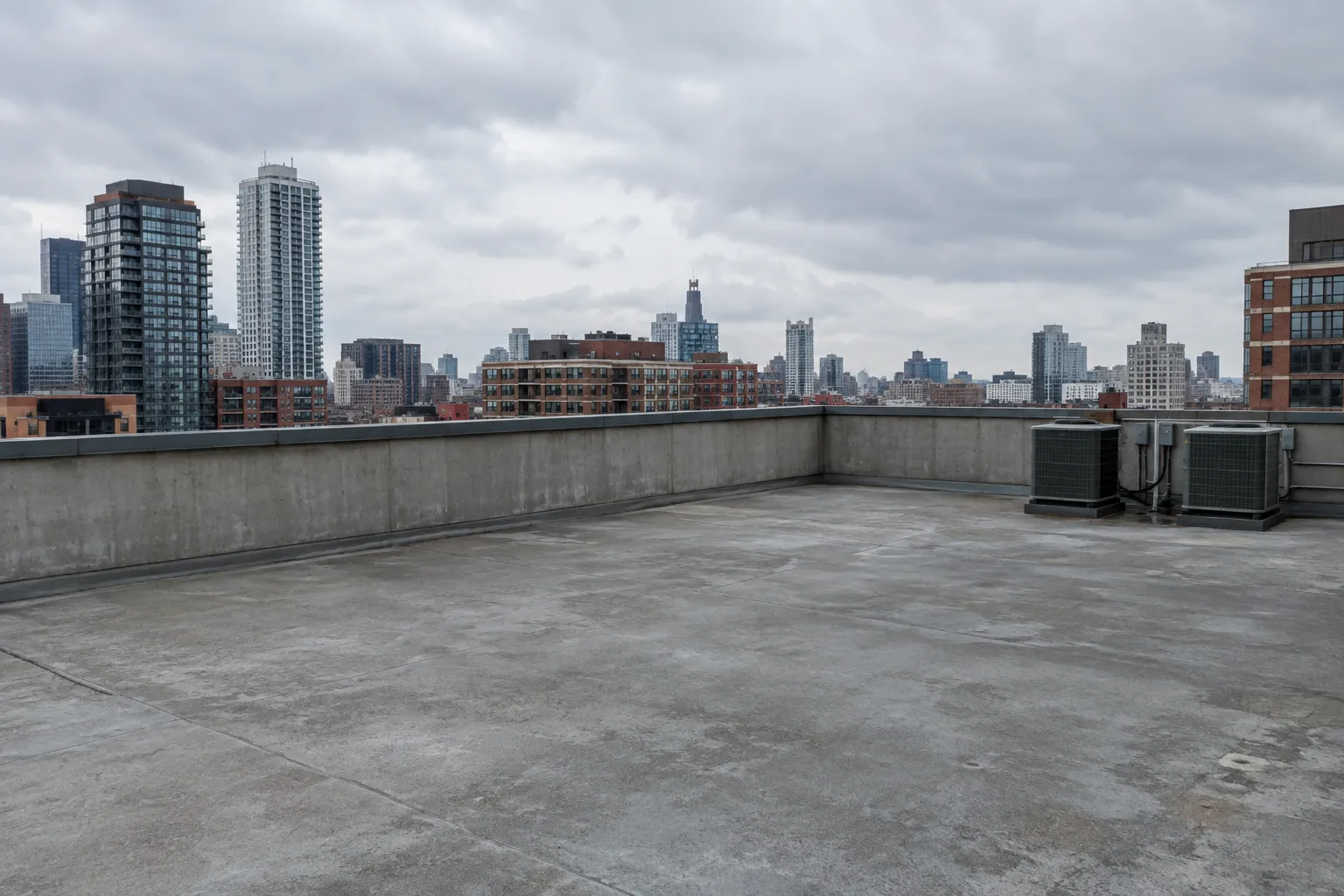
Design Philosophy
Small urban patio design was born from necessity — and from a refusal to accept that limited square footage means limited beauty. Across cities from Tokyo to Paris to Brooklyn, millions of people inhabit outdoor spaces measuring 50 to 200 square feet: a balcony, a fire escape landing, a postage-stamp backyard wedged between row houses, a rooftop terrace with skyline views but no ground contact. For decades, these spaces were treated as afterthoughts — a folding chair and a potted geranium. The small urban patio movement argues that constraint is not a limitation but a design discipline that rewards creativity, precision, and every decision carrying weight.
The style draws from two deep traditions. Japanese tsuboniwa — courtyard gardens measured in tatami mats rather than acres — demonstrate that a space the size of a parking spot can contain a complete landscape experience: a single maple, a stone basin, moss, and the sound of water. European balcony culture, particularly in Mediterranean cities where apartment living is the norm, shows how vertical surfaces, container plantings, and outdoor dining furniture can transform a narrow ledge into a cherished room. Modern small patio design synthesizes these influences with contemporary materials — large-format porcelain pavers, powder-coated steel planters, composite furniture — and a pragmatic understanding that every element must serve at least two purposes.
The central insight of small urban patio design is that a well-designed small space routinely outperforms a neglected large yard. A 100-square-foot patio with thoughtful vertical planting, dual-purpose furniture, layered lighting, and a cohesive material palette feels more luxurious than a half-acre of patchy lawn and overgrown foundation shrubs. The style has gained tremendous momentum as urban populations grow, remote work makes outdoor home offices desirable, and social media demonstrates that small-space design is not a consolation prize but a legitimate creative frontier. In 2026, some of the most innovative landscape design anywhere is happening on patios, not estates.
Key Design Elements
- Vertical Garden Surfaces — Walls, railings, and fences become planting planes through wall-mounted planters, espalier, and trailing vines.
- Dual-Purpose Furnishings — Benches with storage, fold-down tables, and nesting seating that adapt the space from morning coffee to evening dinner.
- Large-Format Paving — Oversized porcelain or concrete pavers that minimize grout lines and visually expand the floor plane.
- Layered Lighting — String lights, recessed step lighting, and planter uplights that extend usable hours and create ambiance after dark.
- Container Garden System — Coordinated planters in consistent materials (galvanized zinc, powder-coated steel, ceramic) arranged at varying heights for depth.
- Defined Zones — Even in 80 square feet, distinct areas for dining, lounging, and gardening prevent the space from feeling like a cluttered storage area.
- Reflective & Light Colors — White, pale gray, and natural wood tones that bounce available light and prevent the space from feeling enclosed.
- Privacy Screening — Bamboo panels, climbing jasmine, or frosted glass partitions that create seclusion without blocking light or air circulation.
Recommended Plants & Materials
Plants
- Vertical & Trailing: Trailing ivy (Hedera helix 'Glacier'), climbing jasmine (Jasminum officinale) — green walls and soft privacy screens on railings and trellis
- Compact Edibles: Meyer lemon (Citrus × meyeri), rosemary (Salvia rosmarinus), thyme (Thymus vulgaris), basil (Ocimum basilicum) — fragrance, flavor, and form in container scale
- Shade & Texture: Boston fern (Nephrolepis exaltata), snake plant (Sansevieria trifasciata) — reliable performers in the low-light conditions common on enclosed patios
- Seasonal Color: Japanese anemone (Anemone × hybrida), compact hydrangea (Hydrangea macrophylla 'Pia') — controlled bloom in pots without overwhelming small proportions
- Structural Evergreen: Dwarf boxwood (Buxus sempervirens 'Suffruticosa') in containers — year-round form that anchors the planting arrangement
- Aromatic Accents: Lavender (Lavandula stoechas), scented geranium (Pelargonium 'Citronella') — sensory richness when brushed past on narrow paths
- Low-Maintenance Foliage: Hosta (Hosta 'Mini Skirt'), heuchera (Heuchera 'Obsidian') — foliage interest in shaded patio corners without demanding sun
- Pollinator Pots: Calibrachoa (Calibrachoa spp.), trailing lobelia (Lobelia erinus) — seasonal color in hanging baskets that add height without floor footprint
Materials & Colors
- Paving: Large-format porcelain pavers (24x24 inches or larger) in light gray or warm beige, installed over pedestal systems on rooftops or directly on compacted base
- Planters: Galvanized zinc troughs, powder-coated steel cubes, and lightweight composite containers in coordinated sizes
- Furniture: Powder-coated aluminum or composite dining sets, foldable bistro tables, and weather-resistant cushions in neutral tones
- Screening & Structure: Powder-coated steel trellis panels, bamboo roll fencing, and frosted acrylic privacy screens
- Color Palette: Charcoal, white, green pops from planting, and metallic accents in zinc, brass, or matte black — restrained enough to keep small spaces feeling open
Best For
Small urban patio design suits anyone who has an outdoor space too modest for traditional landscape approaches but too valuable to ignore. It works especially well for:
- Apartment and condo dwellers — balconies, rooftop terraces, and shared courtyard spaces where container culture and vertical planting are the only options
- Urban homeowners with tiny backyards — row house gardens, narrow side returns, and postage-stamp yards in Brooklyn, Chicago, London, and Tokyo
- Remote workers seeking outdoor office space — a well-designed patio with shade, Wi-Fi, and comfortable seating extends the home office into fresh air
- Entertainers working with tight dimensions — modular furniture and defined zones make 100 square feet feel like a complete outdoor room for four to six guests
- First-time gardeners — the contained scale makes experimentation low-risk; a failed container is easily replaced without landscape-scale consequences
The style adapts to virtually any climate because container plantings can be swapped seasonally and frost-sensitive specimens moved indoors. The design principles — vertical emphasis, dual-purpose elements, cohesive materials, layered lighting — apply whether the "patio" is a ground-floor courtyard in Phoenix or a wind-exposed rooftop in Chicago.
Budget Guide
| Level | Scope | Estimated Cost (USD) |
|---|---|---|
| DIY | Porcelain pavers + galvanized planters + herb and trailing plant collection + string lights + bistro set | $500 – $1,500 |
| Mid-Range | Professional paver installation + powder-coated steel planters + dwarf citrus + trellis screening + integrated lighting | $3,000 – $6,000 |
| Premium | Designer small-space plan with custom steel planters, built-in bench seating, irrigation system, premium furniture, and layered lighting design | $8,000 – $15,000 |
Because the total area is small, material costs per square foot are higher than large-scale projects — but the absolute budget remains accessible. Planters and furniture typically account for 40–50% of the budget, paving at 25–35%, and plants and lighting at 15–25%. The most impactful investment in a small patio is usually coordinated planters and quality furniture rather than expensive paving — a cohesive container system and comfortable seating transform the space more dramatically than premium tile alone.
Maintenance Level
Low — The small urban patio's total area keeps absolute maintenance time minimal, typically under thirty minutes per week once established. Container plants require more frequent watering than in-ground plantings — often daily in summer heat — but the total number of containers is manageable. A drip irrigation system with a timer on a balcony or patio eliminates even this daily task.
Seasonal tasks are quick and contained: spring container refresh and fertilizer application, summer daily or automated watering and deadheading, fall transition to cold-hardy or indoor plants, and winter protection or indoor relocation of frost-sensitive specimens like Meyer lemon. There is no lawn to mow, no large border to weed, and no extensive hardscape to pressure-wash. The small scale is the maintenance advantage — every task is measured in minutes, not hours.
Try It Now
Upload your photo and see your space transformed into Small Urban Patio style in seconds — free to try.