
Design Philosophy
Farmhouse modern landscape design evolved alongside the architectural movement that bears its name — a style that swept American suburban and rural markets in the 2010s and 2020s by bridging two worlds that had long been kept separate. Traditional farmhouse gardens were practical and unpretentious: vegetable beds near the kitchen door, a row of hydrangeas by the porch, a gravel drive leading to a barn. Modernist landscapes were abstract and material-driven: concrete planes, steel edges, and planting reduced to geometric masses. Farmhouse modern asks a different question: can rural warmth and contemporary polish coexist in the same outdoor space?
The answer, increasingly, is yes. The style's defining aesthetic is high-contrast simplicity — white surfaces against matte black metal, natural wood grain against board-formed concrete, structured boxwood globes against loose ornamental grass plumes. It draws from the American vernacular without becoming nostalgic. There are no wagon wheels or faux-rustic signs. Instead, the reference points are material and proportional: horizontal wood slats echo barn siding, black steel frames recall agricultural gate hardware, and white Iceberg roses nod to the cottage gardens that surrounded farmhouses for generations.
By 2026, farmhouse modern has become the most requested residential landscape style in US suburban markets — outpacing purely contemporary and traditional approaches alike. Its popularity rests on a practical foundation: the style is family-friendly by design. Pathways are wide enough for strollers and wheelbarrows. Planting is structured enough to look intentional but forgiving enough to survive a season of neglect. Materials are durable and honest. It is a style that works as hard as the families who live in it.
Key Design Elements
- High-Contrast Palette — White, matte black, and warm natural wood form the primary triad. Green planting provides the balancing softness between hard surfaces.
- Horizontal Wood Slats — Natural timber or composite horizontal siding on fences, planters, and privacy screens references barn architecture without literal imitation.
- Structured Evergreen Forms — Boxwood globes, clipped hedges, and rounded shrub masses provide year-round geometry that anchors the looser ornamental grasses and flowering perennials.
- Board-Formed Concrete — Retaining walls, planter edges, and step risers cast with wood-grain texture add tactile warmth to an otherwise crisp material palette.
- Matte Black Metalwork — Steel pergola frames, planter boxes, lighting fixtures, and gate hardware in matte black provide consistent accent lines throughout the design.
- Loose Grass Contrast — Ornamental grasses with airy plumes — Karl Foerster feather reed grass, miscanthus, or pennisetum — soften the rigid geometry of evergreens and hardscape.
- Generous Pathways — Wide, straight paths in gravel, concrete, or stepping-stone format connect front entry, side yard, and rear entertaining areas with clear, practical circulation.
Recommended Plants & Materials
Plants
- Ornamental Grasses: Karl Foerster feather reed grass (Calamagrostis × acutiflora 'Karl Foerster'), miscanthus (Miscanthus sinensis), fountain grass (Pennisetum alopecuroides)
- Roses: White Iceberg rose (Rosa 'KORbin' Iceberg), Knock Out rose (Rosa 'Radrazz'), climbing New Dawn (Rosa 'New Dawn')
- Evergreen Structure: Boxwood globes (Buxus sempervirens), Japanese holly (Ilex crenata), dwarf arborvitae (Thuja occidentalis 'Smaragd')
- Flowering Perennials: Meadow sage (Salvia nemorosa), English lavender (Lavandula angustifolia), catmint (Nepeta × faassenii)
- Climbing Accent: American wisteria (Wisteria frutescens 'Amethyst Falls') on a timber pergola — a hardy zone 5–9 native that blooms within two to three years and is far less aggressive than Chinese or Japanese wisteria
- Specimen & Accent: Crepe myrtle (Lagerstroemia indica), serviceberry (Amelanchier spp.), dwarf Japanese maple (Acer palmatum)
Materials & Colors
- Concrete: Board-formed retaining walls and planter edges, smooth white concrete pads for seating areas
- Metalwork: Matte black steel for pergolas, planters, gate frames, and landscape lighting
- Timber: Natural wood horizontal slat fencing and privacy screens — cedar or composite in warm honey tones
- Fencing: White-painted three-rail board fencing along the drive and property line, with a matching gate — the most direct nod to working farm fences
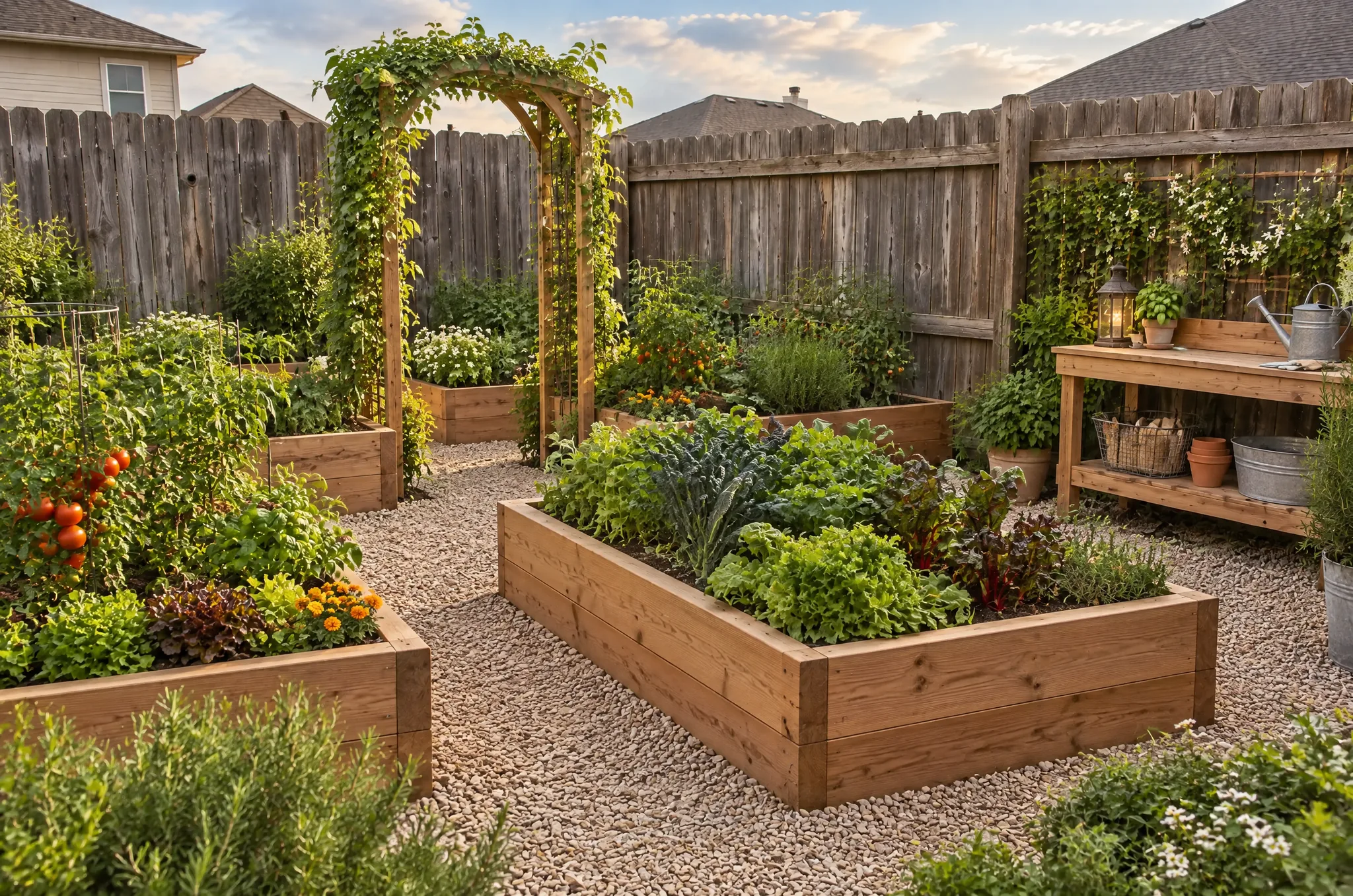
- Raised Planters: Cedar or heat-treated pine raised beds, 12–18 inches tall, for herbs, lettuces, and cutting flowers near the kitchen door
- Ground Plane: Compacted crushed-stone or pea-gravel drive (3/4-inch minus locks together best), decomposed granite in gray or buff, concrete pavers, and bluestone stepping stones
- Color Palette: White, matte black, warm natural wood, fresh green, and stone gray — with seasonal color from white roses and purple salvia spikes
Best For
Farmhouse modern landscape design suits homeowners who want a polished outdoor space that still feels approachable and livable. It works especially well for:
- Suburban single-family homes — the style's popularity means it pairs naturally with the modern farmhouse, craftsman, and transitional architecture dominating current residential construction
- Families with children and pets — durable materials, wide paths, and forgiving plant selections tolerate daily use without constant repair
- First-time landscape renovators — the clear material palette and structured planting plan make the style easy to execute in phases without losing coherence
- Properties with front-yard visibility — the high-contrast aesthetic creates strong curb appeal that reads well from the street
The style performs well across USDA zones 5–9, with plant substitutions available for colder and warmer extremes. In southern climates, crepe myrtle and lavender thrive; in northern regions, swap crepe myrtle for serviceberry and add cold-hardy boxwood varieties. The underlying formula — contrast, structure, warmth — adapts cleanly to any site.
Budget Guide
| Level | Scope | Estimated Cost (USD) |
|---|---|---|
| DIY Weekend | Gravel paths + boxwood globes + ornamental grass mass + white Iceberg roses + black steel planter | $2,000 – $5,000 |
| Mid-Range | Board-formed concrete wall + horizontal slat fence + professional planting + drip irrigation + lighting | $8,000 – $15,000 |
| Premium | Designer plan with custom steel pergola, built-in seating, mature boxwood specimens, and full landscape lighting | $18,000 – $35,000 |
Material costs typically account for 35–50% of the budget, with labor at 50–65%. Board-formed concrete and matte black steel carry moderate premiums over standard materials but define the style's identity — they are worth prioritizing over plant quantity. Boxwood globes can be purchased at mature sizes for instant impact or started smaller and shaped over two to three seasons for significant savings.
Maintenance Level
Low — Farmhouse modern gardens are designed for manageable upkeep. Self-cleaning rose varieties like Iceberg drop spent blooms without deadheading. Ornamental grasses need a single annual cutback in late winter. Boxwood globes require shaping twice a year — once in late spring and once in midsummer — to maintain their rounded forms.
Seasonal tasks are predictable and brief: spring grass cutback and boxwood shaping, summer occasional rose feeding and salvia deadheading for extended bloom, fall leaf cleanup from pathways and gravel surfaces, and winter structural enjoyment when evergreens and grass silhouettes provide the primary garden interest.
FAQ
How do I keep a gravel drive from washing out or migrating onto the lawn?
Install the drive over a compacted base of 4–6 inches of crushed stone, top it with 2 inches of 3/4-inch minus gravel, and add steel or stone edging along the lawn line. Raking the surface once each spring and topping up thin spots keeps the drive crisp for many years.
Can I grow wisteria on a farmhouse modern pergola without it taking over?
Choose American wisteria (Wisteria frutescens 'Amethyst Falls') rather than Chinese or Japanese wisteria. It flowers younger, stays more compact, and is not considered invasive. Build the pergola with 6x6 posts and prune twice a year, once after bloom and once in late winter.
What size raised beds work best near a farmhouse modern home?
Beds about 4 feet wide let you reach the center from either side, and 12–18 inches of height is comfortable for herbs and vegetables. Cedar beds typically cost $150–$400 each in DIY kits, and a lavender or salvia border along the base ties them to the rest of the planting.
Try It Now
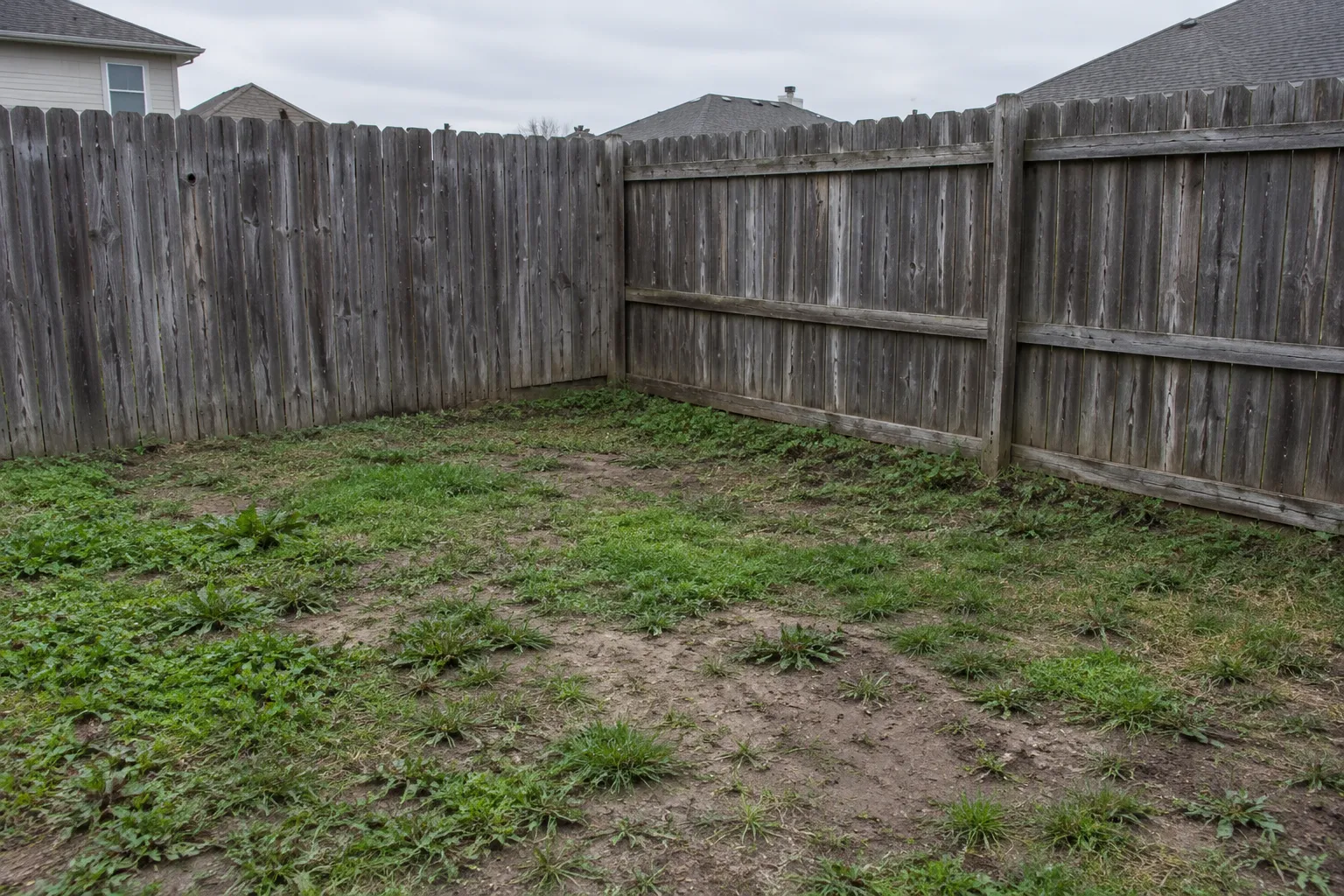
Upload your photo and see your space transformed into Farmhouse Modern style in seconds — free to try.