
Design Philosophy
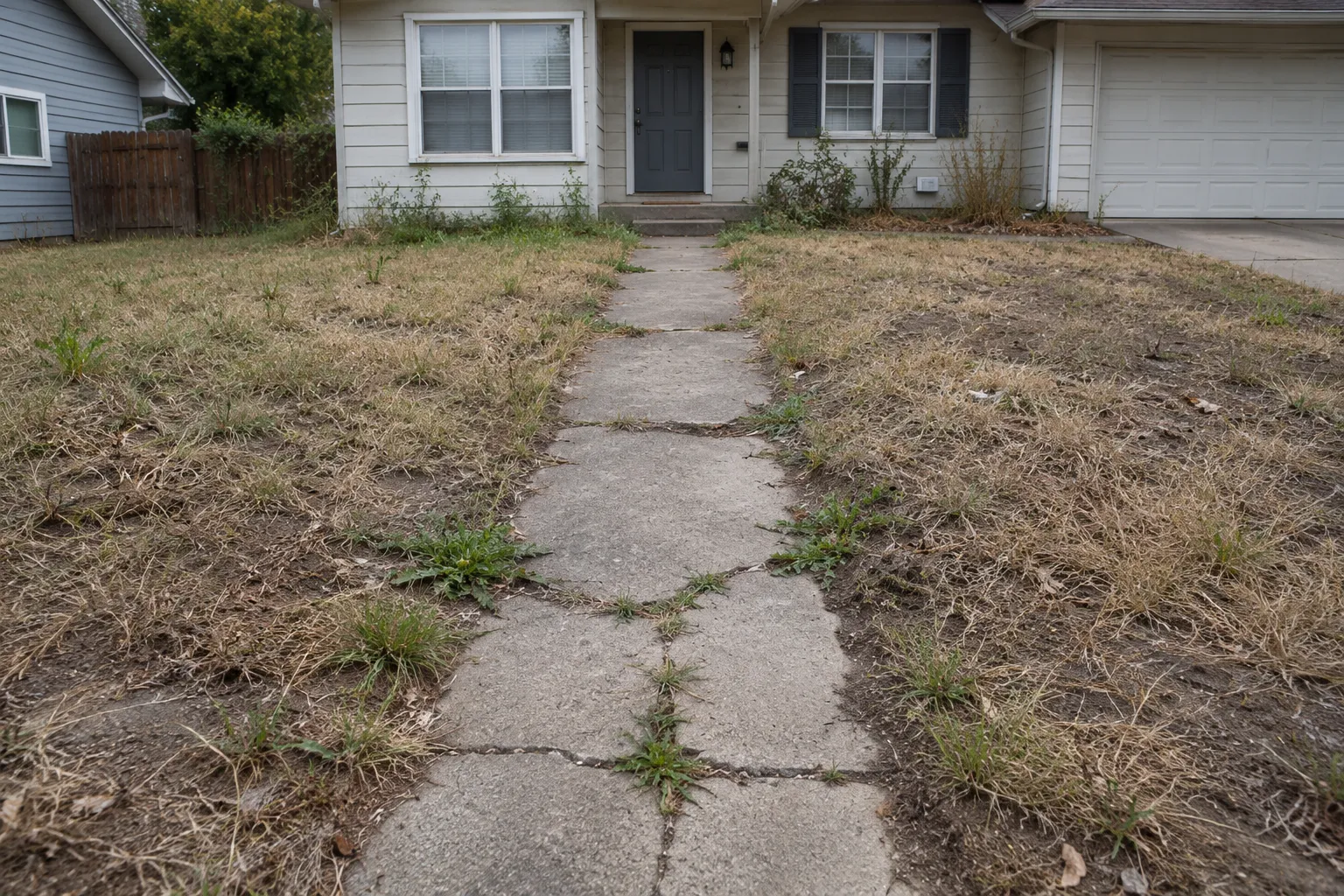
California drought-tolerant design is landscape architecture shaped by the state's defining reality: a Mediterranean climate with long, dry summers, unpredictable rainfall, and water regulations that grow stricter every cycle. This is not a style born from aesthetic theory — it evolved from necessity, refined by decades of drought, wildfire seasons, and the slow collective realization that the traditional American lawn was never designed for a Mediterranean climate where the dry season runs for months.
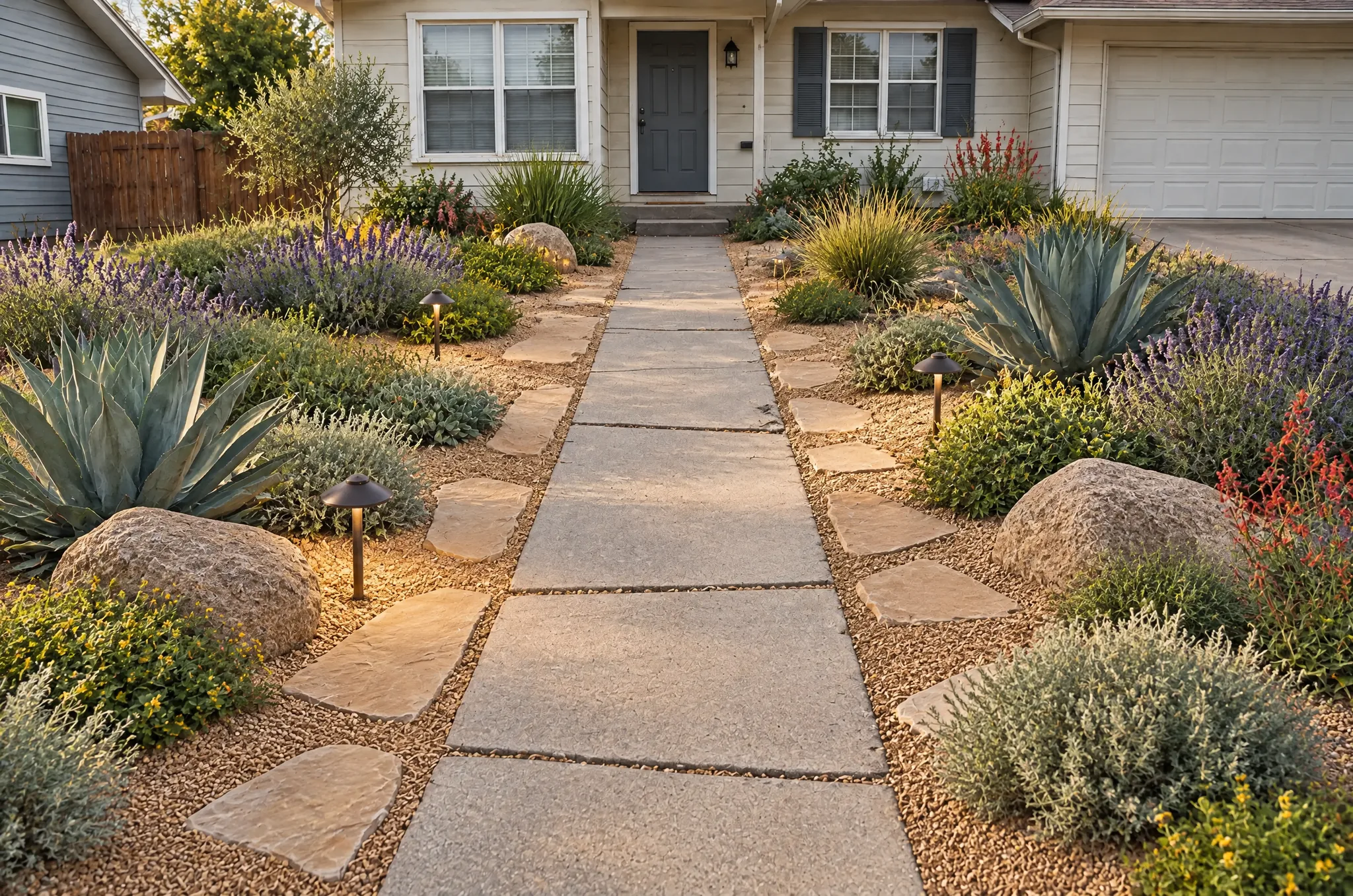
The philosophy starts with a single premise: work with California's climate, not against it. That means selecting plants that evolved under the same sun, the same dry summers, and the same lean soils — California natives like Ceanothus, Manzanita, and Toyon alongside adapted Mediterranean species like lavender, rosemary, and olive trees. It means replacing thirsty turf with permeable surfaces — decomposed granite, flagstone, and gravel — that conserve water, reduce runoff, and echo the natural ground plane of the coastal chaparral, the Central Valley grassland, and the Southern California hillside.
But drought-tolerant does not mean austere. The best California drought-tolerant landscapes are among the most visually rich in residential design. Silvery-green sage foliage catches the late-afternoon light. Red Yucca sends up coral flower spikes against a warm DG ground plane. Kangaroo Paw adds sculptural orange and yellow blooms that hummingbirds fight over. The color palette is warm, textured, and distinctly Californian — a landscape that looks like it belongs here because it does.
The rules now point the same way. California's Model Water Efficient Landscape Ordinance (MWELO) covers new landscapes over 500 square feet and rehabilitated landscapes over 2,500 square feet that need a permit or plan review. Smaller projects (500–2,499 square feet) can use the prescriptive path, which asks for climate-adapted plants with an average WUCOLS plant factor of 0.3 or below across 75% of the plant area (edible gardens and recycled-water areas excluded). Larger projects follow the performance path, where the water budget caps the ET adjustment factor at 0.55 for residential landscapes. The state's Department of Water Resources cites research showing that landscapes meeting MWELO use about 80% less water than traditionally designed ones. Turf-replacement rebates, such as the $2-per-square-foot base rebate from SoCal Water$mart, make the conversion cheaper to start.
Key Design Elements
- Climate-Adapted Plant Palette — California natives and Mediterranean-adapted species selected for USDA zones 8–11, requiring little to no supplemental water once established (WUCOLS plant factor ≤ 0.3).
- Decomposed Granite Ground Plane — Warm-toned DG in gold, buff, or sandy brown as the dominant permeable surface, replacing traditional lawn; the surface itself needs no irrigation, and it stays permeable so rain soaks in.
- Hydrozoning — Grouping plants by water need: a small oasis zone near the patio with slightly higher water use, a transition zone with moderate-water shrubs, and a dry zone at the perimeter with zero-irrigation natives.
- Drip Irrigation with Smart Controllers — Pressure-compensating emitters on weather-based smart controllers that adjust watering schedules based on evapotranspiration data. Drip is also the efficient choice on paper: MWELO-style water budgets assume 0.81 irrigation efficiency for drip versus 0.75 for overhead spray.
- Boulder and Rock Accents — Locally sourced boulders partially buried to look geological, anchoring planting clusters and adding naturalistic structure without any water demand.
- Dry Creek Beds — Functional drainage channels lined with river rock that manage stormwater runoff while creating a beautiful landscape feature during dry months.
- Fire-Resistant Plant Spacing — In wildfire-prone areas, defensible-space principles guide plant selection and spacing — low-fuel, high-moisture plants in the first five feet from structures, with gravel or DG breaks.
Recommended Plants & Materials
Plants
- Native Shrubs: California lilac / Ceanothus (Ceanothus spp.) — deep blue-purple spring blooms; needs sharp drainage (mound the root ball in heavy soil), little or no summer water after year two for the most drought-proof species, and only tip pruning, since cutting into old wood leaves dead branches; Manzanita (Arctostaphylos spp.) — sculptural red bark, evergreen, drought-proof; Toyon (Heteromeles arbutifolia) — California holly with red winter berries, bird magnet
- Flowering Accents: California buckwheat (Eriogonum fasciculatum) — white-to-rust flower clusters beloved by butterflies; Cleveland sage (Salvia clevelandii) — fragrant purple spikes, hummingbird favorite; Penstemon (Penstemon spectabilis) — violet tubular flowers on tall stems
- Structural Plants: Red Yucca (Hesperaloe parviflora) — coral flower spikes, extremely heat and drought tolerant; Agave (Agave americana, A. parryi) — bold sculptural rosettes as focal points; Desert Spoon (Dasylirion wheeleri) — silvery-blue sphere of narrow leaves
- Ornamental Grasses: Deer grass (Muhlenbergia rigens) — California native bunchgrass that matures around 4–5 feet tall and 5–7 feet wide, so plant it about 5 feet back from paths; Blue grama (Bouteloua gracilis) — delicate seed heads, prairie texture. Skip the green or tan species fountain grass (Pennisetum setaceum): Cal-IPC rates it Moderate as an invasive in California, and only the sterile red cultivar is treated as non-invasive
- Mediterranean Additions: Lavender (Lavandula spp.) — fragrant, purple, and pollinator-friendly; Rosemary (Salvia rosmarinus) — evergreen, edible, and cascading; Olive trees (Olea europaea 'Swan Hill' fruitless) — silver-green canopy, iconic California silhouette
- Groundcovers: Trailing lantana (Lantana montevidensis) — purple or white flowers, fast-spreading, heat-proof; Dymondia (Dymondia margaretae) — silver-green mat, foot traffic tolerant; Creeping thyme (Thymus serpyllum) — fragrant, stepping-stone filler
Materials & Colors
- Primary Surface: Decomposed granite (DG) in California gold, sandy buff, or warm tan — permeable and naturally cohesive. Material alone runs about $40–$100 per cubic yard for natural DG and $100–$225 for stabilized DG (2026 retail, before delivery); installed quotes vary widely with base prep, depth, and region, so get at least three
- Pathways: Flagstone in earthy tones (Arizona buff, Santa Barbara sandstone) set in DG or sand — organic, timeless look
- Accent Rock: River rock in warm gray for dry creek beds; locally sourced boulders in tan or brown for focal anchors
- Mulch: 3/4-inch crushed rock or pea gravel over weed barrier — lasts indefinitely compared to organic mulch that decomposes in one California summer
- Edging: Weathered Corten steel (rusted finish echoes the natural landscape), natural stone borders, or steel landscape edging in matte black
- Color Palette: California gold, sage green, terracotta, warm sand, silvery blue-green — punctuated by the seasonal pops of Ceanothus blue, Penstemon violet, Red Yucca coral, and buckwheat rust
Best For
California drought-tolerant design is ideal for homeowners who want a landscape that is both beautiful and responsible in one of the world's most water-stressed regions:
- California homeowners in USDA zones 8–11 — from the Bay Area to San Diego, the Inland Empire to the Central Coast, anywhere with hot dry summers and mild winters
- Turf-replacement rebate participants — in Metropolitan Water District territory, SoCal Water$mart's base rebate is $2 per square foot for up to 5,000 square feet per year (so up to $10,000 before any local top-up). You must reserve the rebate and get approval before removing any turf, and the finished project needs at least three plants per 100 square feet and no invasive plants
- New-construction and renovation projects — MWELO applies to permitted new landscapes over 500 square feet and rehabilitated landscapes over 2,500 square feet; on the prescriptive path that means climate-adapted plants for 75% of the plant area
- Low-maintenance lifestyle — once established (typically one to two years), these landscapes require no mowing, minimal pruning, and rare fertilizing
- Fire-conscious properties — in Very High Fire Hazard Severity Zones, drought-tolerant design with proper spacing and low-fuel plant selection satisfies defensible-space requirements while remaining beautiful
- Environmentally motivated homeowners — cutting outdoor water use sharply while supporting native pollinators, birds, and beneficial insects
The style also adapts beautifully to other hot, dry climates — Arizona, Nevada, Texas Hill Country, and even southern Mediterranean Europe — with minor adjustments to the native plant palette. For related approaches, see our Desert Xeriscape style guide and drought-tolerant landscaping blog post.
Budget Guide
| Level | Scope | Estimated Cost (USD) |
|---|---|---|
| DIY Starter | Turf removal + decomposed granite + 8–12 drought-tolerant plants + basic drip irrigation | $2,500 – $6,000 |
| Mid-Range | Professional design + DG pathways + boulder accents + layered native planting + smart irrigation controller | $10,000 – $25,000 |
| Premium | Landscape architect design + specimen plants + flagstone hardscape + dry creek bed + landscape lighting + mature tree installation | $25,000 – $60,000 |
The tiers above are planning estimates; plant maturity, hardscape complexity, and boulder sourcing move the total most. Rebates can offset part of the conversion: SoCal Water$mart's base rebate is $2 per square foot (up to 5,000 square feet per year) in Metropolitan's service area, and your local water agency may add to it, so check your address on their rebate estimator before you start. The long-term payoff is lower irrigation demand — DWR cites about 80% less water for landscapes that meet MWELO — though your actual savings depend on your rates and the plants you choose.
Maintenance Level
Low — This is one of the defining advantages of California drought-tolerant design. MWELO treats most plants as established after one or two years of growth, and the first year needs regular watering. After that, needs vary by plant: deer grass does well with a deep watering every three to four weeks, some Ceanothus species want none after year two while others like one or two deep soakings a month, and the hottest inland valleys need the most.
The seasonal maintenance calendar is minimal: winter cutback of deer grass only when the clump gets ragged (to 3 inches or lower, every one to three years), early-spring inspection of drip irrigation lines and emitter flow rates, summer monitoring for weeds in gravel beds (minimal with proper weed barrier and 3-inch rock mulch), and fall cleanup of spent flower stalks and seed heads. Fertilization is rarely needed — most California native plants evolved in lean soils and actually decline with heavy feeding. Smart irrigation controllers handle seasonal watering adjustments automatically based on local weather station data, eliminating manual schedule changes.
FAQ
Do I need a permit or water budget for a drought-tolerant redo?
Only if your project needs a permit or plan review and crosses MWELO's size thresholds: more than 500 square feet of new landscape, or more than 2,500 square feet of rehabilitated landscape. Projects between 500 and 2,499 square feet can use the prescriptive checklist (75% of plant area at a WUCOLS plant factor of 0.3 or below). Your city or county applies the ordinance, so ask the planning counter first.
Can I get paid to remove my lawn?
Often, yes. In Metropolitan Water District territory the SoCal Water$mart base rebate is $2 per square foot for up to 5,000 square feet per year, and your local agency may add more. You have to apply and get a reservation before removing turf, remove at least 250 square feet (or all turf on a smaller lot), plant at least three plants per 100 square feet, and keep the area permeable. Invasive plants do not qualify, even drought-tolerant ones.
Is purple fountain grass a good choice?
Be careful. Cal-IPC rates the species Pennisetum setaceum as a Moderate invasive in California, and nurseries often label the sterile red 'Rubrum' as the same species when it is likely a hybrid. Native deer grass (Muhlenbergia rigens) gives similar fountain-like movement without that risk.
Sources
Facts were checked against these references in October 2026. Rebate amounts and material prices change, and the prices are 2026 national retail or cost-guide figures, not California quotes.
- California DWR — MWELO applicant brochure (thresholds, pathways, 80% water-use figure)
- California DWR — Model Water Efficient Landscape Ordinance text (ETAF 0.55, establishment period)
- City of San Carlos — MWELO prescriptive compliance standards (75% at plant factor 0.3)
- City of Fontana — residential landscape plan check (drip 0.81 vs spray 0.75 efficiency)
- SoCal Water$mart — Turf Replacement Program
- SoCal Water$mart — Turf Replacement terms and conditions
- Cal-IPC — Pennisetum setaceum profile
- PlantRight — Pennisetum setaceum ('Rubrum' note)
- UC Davis Arboretum — deergrass
- UC Master Gardeners of Sonoma County — Ceanothus
- UC Master Gardeners of Sonoma County — Muhlenbergia rigens
- HomeGuide — Decomposed granite cost (2026)
Try It Now
Upload your photo and see your space transformed into California Drought-Tolerant style in seconds — free to try.