
Design Philosophy
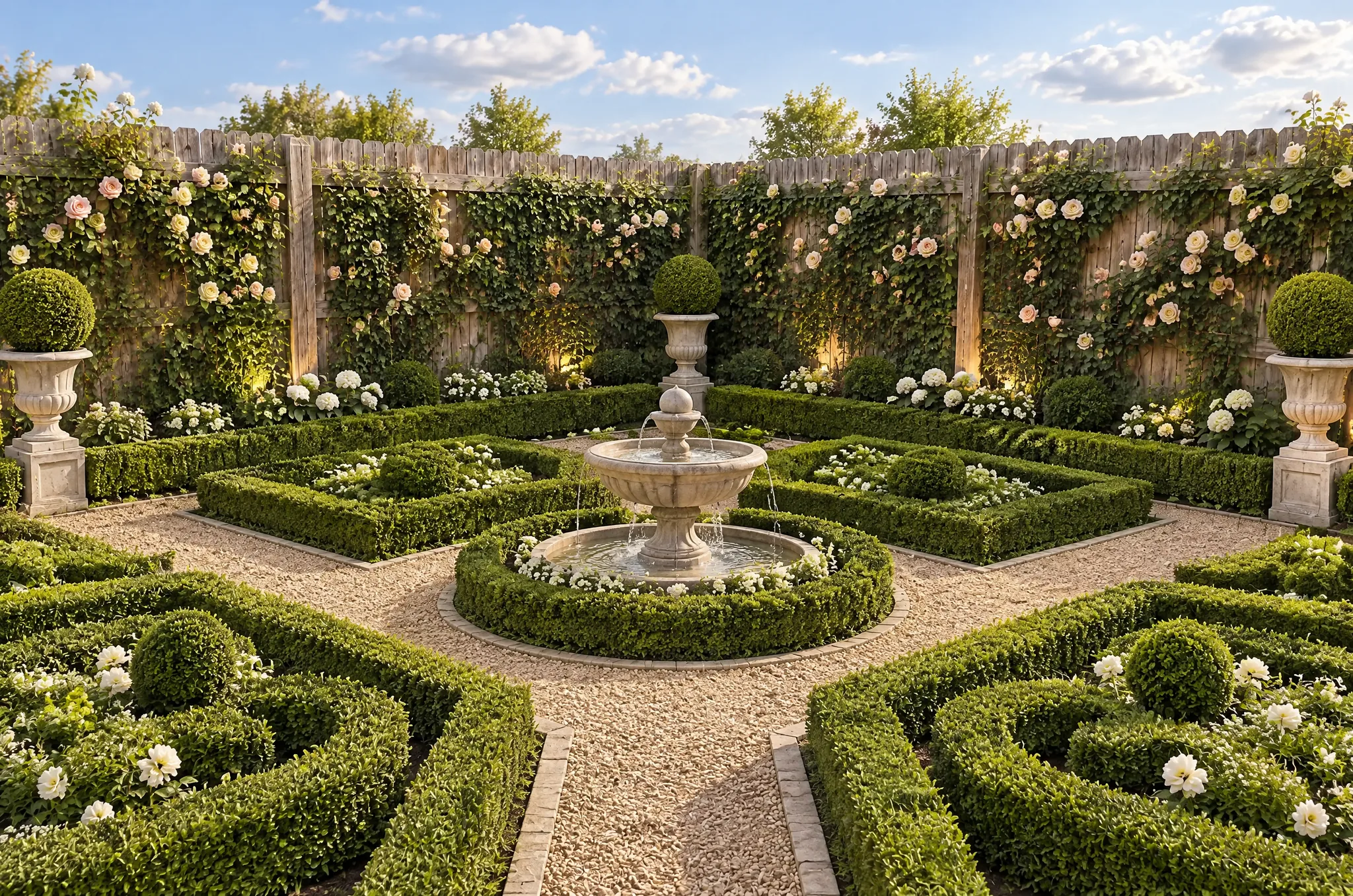
The classical European garden is an exercise in ordered beauty — a tradition that stretches from Roman villa courtyards through Italian Renaissance terraces to the grand formal gardens of Versailles. Where naturalistic styles celebrate wilderness, the classical European approach celebrates human intellect applied to nature: symmetry, proportion, axial views, and geometry are the tools that transform raw land into living architecture. The garden is not a retreat from civilization — it is civilization's most refined outdoor expression.
This design philosophy crystallized during the Renaissance, when architects like Bramante and Pirro Ligorio applied the same mathematical principles to gardens that they used for palaces. A central axis divides the space into mirror-image halves. Cross-axes create secondary views and intersections marked by fountains, statues, or specimen trees. Hedges become walls, gravel paths become corridors, and the sky becomes the ceiling of an outdoor room whose proportions follow classical rules of harmony. André Le Nôtre perfected the formula at Versailles in the 1660s, extending the central axis to the horizon and proving that a garden could be as monumental as a cathedral.
In 2026, the classical European garden remains relevant — not as an exercise in aristocratic excess, but as a design framework that brings order, elegance, and year-round structure to properties of any size. A 20-foot courtyard with a single boxwood parterre, a gravel path, and a central urn is as authentically classical as Versailles. The principles scale down because they are mathematical, not material: symmetry works at every dimension.
Key Design Elements
- Axial Symmetry — A central axis runs from the house or main viewpoint through the garden, dividing the space into balanced halves. Secondary axes intersect at right angles, creating a grid of visual corridors.
- Geometric Parterres — Planting beds arranged in precise geometric patterns — squares, circles, scrolls, or knot patterns — typically edged with low clipped hedges of boxwood or yew.
- Clipped Hedging and Topiary — Evergreen plants pruned into formal shapes: cones, spheres, pyramids, and architectural walls of green. These living structures define rooms, frame views, and provide year-round backbone.
- Gravel Paths and Stone Terraces — Pale gravel walkways and natural stone terracing establish the ground plane with clean, crunching surfaces that reflect light and complement green hedging.
- Water Features — Formal fountains, reflecting pools, and rectangular basins placed at axis intersections. Still water mirrors the sky; moving water adds sound and animation to the otherwise quiet geometry.
- Statuary and Ornament — Classical urns, stone benches, obelisks, and figurative sculptures placed at focal points along axes. These objects punctuate the garden's rhythm like notes in a musical composition.
- Green Walls and Bosquets — Tall hedges or pleached trees forming walls that enclose garden rooms. Bosquets (formal groves) provide shade, vertical mass, and contrast to the open parterre areas.
- Terracing and Level Changes — On sloped sites, stone retaining walls and staircases create terraced platforms that display the garden in layers, each level offering a different view.
Recommended Plants & Materials
Plants
- Hedging and Topiary: Boxwood (Buxus sempervirens) for low parterres and knot gardens — hardy in zones 5–8 but highly susceptible to boxwood blight, so choose a less susceptible cultivar and see the FAQ below. English yew (Taxus baccata) for tall hedges and topiary shapes — it needs well-drained soil and is highly toxic to people, dogs, cats, and horses. Holly (Ilex aquifolium) for dense evergreen screening. Skip privet (Ligustrum spp.) as a fast-growing shortcut: European, Chinese, and border privet are regulated or on invasive-plant lists in many states.
- Specimen Trees: Italian cypress (Cupressus sempervirens) for vertical punctuation — zones 7–10 only, and it can reach 40 feet or more, so it suits large sites better than a small front yard. Pleached hornbeam (Carpinus betulus) or linden (Tilia spp.) for formal allées. Standard bay laurel (Laurus nobilis) in matched pairs flanking entries — hardy outdoors only in zones 8–10, so in colder climates keep it in pots and move it to a bright, cool spot for winter.
- Roses: Hybrid tea roses and David Austin English roses in formal beds — white, pink, and deep red in classical combinations. Train climbing roses on obelisks and pergolas for vertical bloom.
- Perennials and Bulbs: Lavender (Lavandula angustifolia) for edging paths, catmint (Nepeta spp.) for soft purple drifts, allium for structural spring spheres, tulips and hyacinths in geometric block planting
- Ground Cover: Chamomile (Chamaemelum nobile) for aromatic paths, low-growing thyme in gravel joints, Irish moss (Sagina subulata) between stepping stones
- Climbers: Wisteria on a sturdy freestanding pergola rather than the house (and American wisteria instead of Chinese wisteria in the Southeast, where Chinese wisteria is invasive), climbing hydrangea (Hydrangea anomala subsp. petiolaris) for north-facing surfaces, espaliered fruit trees (apple, pear) against warm south walls — functional and ornamental
Materials & Colors
- Natural Stone: Limestone and sandstone for paving, terraces, steps, and balustrades. Aged stone with weathering and patina is preferred over polished or pristine finishes.
- Gravel: Fine crushed limestone or pale gravel in warm cream or honey tones for paths and parterre surrounds. The crunch underfoot and the tidy, raked appearance are integral to the formal aesthetic.
- Wrought Iron: Gates, railings, arches, and furniture in traditional black or dark green forged iron. Decorative scrollwork on gates adds period authenticity.
- Terracotta and Stone Ornament: Classical urns, Versailles-style planters (square wooden boxes with finial feet), stone benches, and obelisks in natural or aged white finishes.
- Color Palette: Evergreen greens (boxwood, yew) as the dominant color, gravel cream and stone gray as the ground tones, with flower color limited to a controlled range — white, pink, lavender, deep red, and blue. Bright yellows and oranges are used sparingly or avoided entirely to maintain the restrained formality.
Best For
Classical European garden design is ideal for homeowners who appreciate structure, tradition, and year-round visual presence. It works especially well for:
- Properties with formal architecture — Georgian, Colonial Revival, French Provincial, Mediterranean, or classical-style homes gain a natural extension in a formal garden
- Front yards and entry sequences — the symmetry and axial design create powerful curb appeal and guide visitors along a clear arrival path
- Flat or gently terraced sites — the geometric layout is easiest to execute on level ground, though terracing adds drama on slopes
- Homeowners who value order over wildness — if a cottage garden feels chaotic and a naturalistic meadow feels unfinished, the classical European garden offers the visual clarity you crave
- Four-season structure — because the design depends on evergreen hedging and stone rather than flowers, it looks strong and intentional in January as well as June
The style adapts to smaller spaces more easily than its grand estate origins suggest. A single parterre of boxwood enclosing lavender, two matched Italian cypresses flanking a bench, and a gravel path on axis with the front door — that is a classical European garden in 200 square feet.
Budget Guide
| Level | Scope | Estimated Cost (USD) |
|---|---|---|
| DIY Weekend | Boxwood parterre + gravel path + central urn or fountain + lavender edging + pair of container topiary | $3,000 – $7,000 |
| Mid-Range | Professional stone terracing + formal hedging installation + fountain + rose beds + wrought iron gate + landscape lighting | $15,000 – $35,000 |
| Premium | Architect-designed with imported stone, mature topiary specimens, custom water features, statuary, pleached allée, and full irrigation system | $50,000 – $120,000+ |
The primary cost drivers are stone (both material and skilled masonry labor) and mature topiary or hedging (large boxwood and yew specimens command premium prices). Significant savings come from planting small hedging stock (bare-root boxwood or yew at 6–8 inches) and allowing 2–3 years for it to fill in. Gravel is among the most cost-effective surfacing options and covers large areas affordably.
Maintenance Level
Medium to High — Classical European gardens require more regular maintenance than naturalistic styles because their beauty depends on precision. The clipped hedges and topiary that define the style need shaping 1–3 times per year, and gravel paths need periodic raking and edging.
Seasonal tasks include:
- Spring: Prune topiary and hedges for the first shaping of the season. Plant summer-flowering annuals in parterre beds. Feed roses and perennials.
- Summer: Deadhead roses regularly. Shear boxwood hedges in early June, after the main growth flush, and thin them once a year so light and air reach the center. Water newly planted hedging weekly. Rake gravel paths smooth.
- Fall: Do not shear boxwood after mid-August, because late growth will not harden off before frost. Plant tulip and allium bulbs in geometric drifts. Clear fallen leaves from gravel surfaces and parterre beds. If boxwood blight ever appears, remove the infected plants and all fallen leaves around them.
- Winter: The evergreen structure carries the garden through dormancy with no intervention needed. Enjoy the clean geometry of bare branches against clipped green walls.
The reward for this effort is a garden that never has an off-season. While cottage borders collapse in winter and prairie plantings reduce to brown stubble, the classical European garden stands composed and elegant through every month of the year.
FAQ
What replaces boxwood if boxwood blight is a risk in my area?
Boxwood blight is a destructive fungal disease that has spread across the United States since 2011, and common boxwood (Buxus sempervirens), especially the edging form 'Suffruticosa', is among the most susceptible. In a multi-year field trial, 'Green Beauty' (a Japanese boxwood) sat in the low-susceptibility group while 'Suffruticosa' lost 85–96% of its leaves in blight years. If you still want boxwood, buy from reputable growers, quarantine new plants, sanitize pruning tools, and remove fallen leaves. Yew is the classic alternative for formal hedges, but it needs well-drained soil.
Is yew safe around kids and pets?
No. English yew is highly toxic to people, dogs, cats, and horses. Foliage, bark, and seeds contain taxine alkaloids that can cause tremors, breathing trouble, and sudden heart failure. Only the red fleshy aril around the seed is not poisonous. Keep yew away from playgrounds and pet areas, or use boxwood or another non-toxic hedge there.
Can I grow Italian cypress and bay laurel in a cold climate?
Not reliably in the ground. Italian cypress is rated for zones 7–10 and bay laurel for zones 8–10. Extension programs in colder states treat bay as a container plant: bring it indoors before nights drop to about 40°F and keep it bright, cool (50–65°F), and on the dry side. For vertical accents in zones 6–7, an upright English yew such as 'Fastigiata' is the hardier formal substitute.
Can I grow wisteria on the house wall?
Avoid it. Wisteria is heavy and strong enough to damage siding, gutters, and trellises, and Utah State recommends sturdy posts or steel supports. Chinese wisteria is also invasive in the Southeast, where American wisteria is the better-behaved choice. Train it on a freestanding pergola and prune it regularly.
Sources
Plant and safety facts were checked against these references (October 2026).
- Clemson HGIC — Boxwood (zones, thinning, shearing in early June, not after mid-August)
- UMass Extension — Boxwood common health issues (B. sempervirens zones 5–8, boxwood blight)
- HortTechnology — Field performance of Buxus cultivars against boxwood leafminer and boxwood blight
- Virginia Tech Extension — Taxus spp. (well-drained soil, toxicity, 'Fastigiata')
- ASPCA — English yew toxicity
- Missouri Botanical Garden — Cupressus sempervirens (zones 7–10, 40–70 ft)
- Illinois Extension — Bay laurel (zones 8+, container plant in colder zones)
- Iowa State Extension — How do I grow bay laurel? (winter care 50–65°F)
- Illinois Extension — Invasive privet (state regulation and invasive lists)
- Utah State University Extension — Wisteria in the garden (strong posts, keep off siding and gutters)
- UF/IFAS — Wisteria (Chinese wisteria invasive in the Southeast; American wisteria alternative)
Try It Now
Upload your photo and see your space transformed into Classical European Garden style in seconds — free to try.