
Design Philosophy
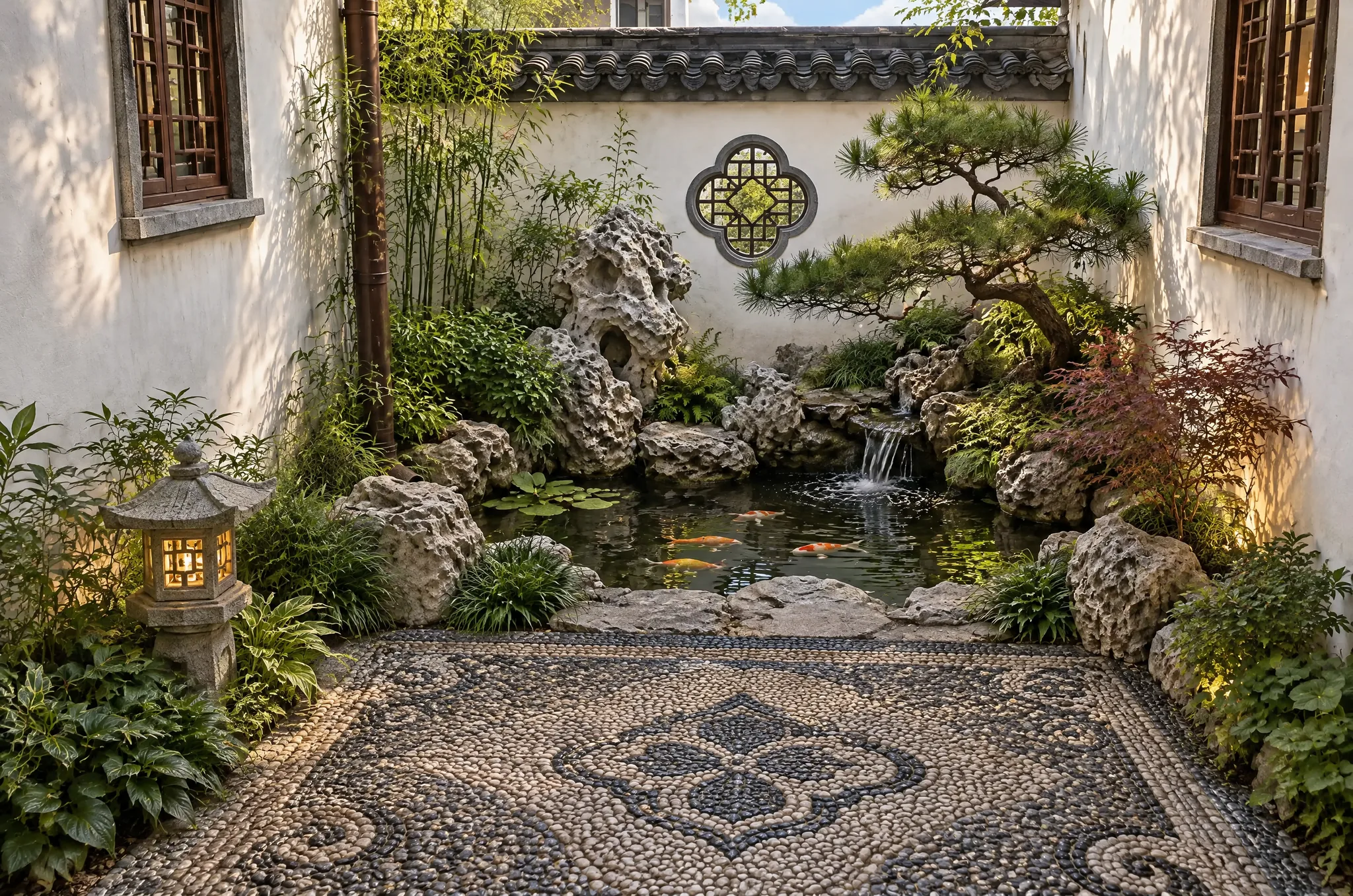
Jiangnan garden design is one of the oldest and most sophisticated landscape traditions on earth, with roots stretching back over 2,500 years to the water towns south of the Yangtze River. The philosophy is captured in a single phrase from the Ming-dynasty treatise Yuan Ye (The Craft of Gardens, 1631): "Though made by human hands, it appears created by heaven." Every Jiangnan garden compresses the vastness of mountains, rivers, and forests into a private courtyard, creating a miniature universe where a scholar could retreat from the world and live among poetry, painting, and nature.
Private gardens began appearing around the 4th century and reached their climax in the 18th century, when wealthy officials and literati in cities like Suzhou, Yangzhou, Nanjing, and Hangzhou competed to build ever more refined private retreats. Nine classical gardens in Suzhou are now UNESCO World Heritage sites (four inscribed in 1997, five more added in 2000) — not as historical relics, but as masterworks of spatial design that still teach us how to make small spaces feel infinite.
What distinguishes Jiangnan gardens from other Asian garden traditions is their theatricality. A Japanese Zen garden asks you to sit still and contemplate; a Jiangnan garden asks you to walk, turn, pause, discover, and be surprised. Every winding path, every moon gate, every lattice window is a plot device — hiding the next scene until the precise moment of maximum impact. The garden is a narrative you inhabit, not a picture you observe.
Key Design Elements
- Borrowed Scenery (借景) — Incorporating views from outside the garden walls — distant hills, tall trees, passing clouds — to extend the garden's perceived boundaries far beyond its physical limits.
- Moon Gates and Lattice Windows — Circular doorways and decorative wall openings that frame internal views like paintings and create transitions between garden zones.
- Taihu Rockery — Sculptural limestone formations prized for their thinness, wrinkling, permeability, and transparency — qualities that suggest mountains in miniature.
- Central Water Feature — A still pond with koi and lotus, reflecting sky and architecture, serving as the spatial and philosophical heart of the garden.
- Zigzag Bridges and Winding Paths — Non-linear circulation that multiplies views, extends perceived distance, and creates the classical experience of "one step, one scene."
- Whitewashed Walls with Gray Tiles — The signature Jiangnan canvas — plain white walls that serve as backdrops for shadow play, bamboo silhouettes, and lattice windows.
- Layered Spatial Sequence — Gardens are divided into interconnected "rooms" using walls, corridors, and planting, each with its own theme and mood.
- Literary Naming — Pavilions, halls, and scenic vignettes are named after classical poetry and philosophy, embedding cultural meaning into the physical space.
Recommended Plants & Materials
Plants
- The Four Gentlemen: Plum blossom (Prunus mume) for winter resilience — zones 6–9, 15–20 feet tall, and in colder zones its early flowers can be frozen. Orchid (Cymbidium spp.) for spring elegance — a pot plant in most of the US that tolerates light frost but should come indoors before a hard freeze. Bamboo (Phyllostachys spp.) for year-round integrity — a running bamboo that needs a rhizome barrier (see Maintenance Level). Chrysanthemum for autumn endurance.
- Water Plants: Lotus (Nelumbo nucifera) — the essential Jiangnan pond plant — plus water lily, sweet flag (Acorus calamus), and water iris
- Specimen Trees: Cloud-pruned pine (Pinus thunbergii), weeping willow (Salix babylonica), Chinese scholar tree (Styphnolobium japonicum)
- Fragrance Plants: Osmanthus (Osmanthus fragrans) for autumn, wintersweet (Chimonanthus praecox) for winter, wisteria for spring (grow it on a sturdy freestanding frame, and use American wisteria in the Southeast, where Chinese wisteria, Wisteria sinensis, is invasive)
- Texture Plants: Banana (Musa basjoo) for tropical drama and rain sounds, nandina (Nandina domestica) for winter berries — but it is a Category I invasive in northern and central Florida and its berries are toxic to animals, so choose the UF/IFAS-approved non-invasive cultivars 'Harbour Dwarf' or 'Firepower' there — and moss for rock surfaces
Materials & Colors
- Stone: Taihu limestone for rockery and feature stones; granite or bluestone for paving; river pebbles for mosaic paths
- Walls: Lime-plastered whitewash with dark gray tile coping — the classic Jiangnan "粉墙黛瓦" (white walls, dark tiles)
- Timber: Dark-stained or naturally weathered cedar, teak, or camphor for bridges, pavilion frames, railings, and lattice screens
- Water: Still ponds with natural stone edging — no concrete coping or formal pool shapes
- Color Palette: Predominantly white, gray, and green with seasonal accents — pink plum blossoms, golden osmanthus, red autumn leaves, white lotus
Best For
Jiangnan garden design is ideal for homeowners who want a garden with narrative depth — a space that tells a story as you walk through it rather than revealing everything at a glance. It works especially well for:
- Enclosed backyards of 500–3,000 sq ft — The style was designed for small urban sites, and its spatial tricks work best within walls and boundaries
- Privacy-conscious homeowners — Walls, screens, and dense bamboo planting create complete seclusion without feeling claustrophobic
- Koi and water garden enthusiasts — The pond is the spiritual center of the design, not an afterthought
- Culturally curious gardeners — Appreciation for the literary and philosophical layers adds a dimension no other style offers
- Mild to warm climates (USDA zones 6–10) — Key plants like lotus, bamboo, and osmanthus thrive in warm, humid conditions. Cold-climate adaptations are possible with hardier substitutions
Budget Guide
| Level | Scope | Estimated Cost (USD) |
|---|---|---|
| DIY Starter | Feature stone + small lined pond + bamboo screen + stepping stone path + 5–8 plants | $2,500 – $6,000 |
| Mid-Range | Rendered wall with moon gate + koi pond + rockery group + timber bridge + full planting + lighting | $10,000 – $25,000 |
| Premium | Professional masonry walls + multiple garden rooms + pavilion + stream system + mature specimens + custom lattice windows | $30,000 – $70,000 |
The style rewards patience over spending. A single well-placed rock, a small pond, and a bamboo screen create more atmosphere than an unfocused $50,000 landscape. Build walls and water features first; add planting and refinement over subsequent seasons.
Maintenance Level
Medium — More involved than a minimalist gravel garden, but less demanding than a formal rose garden. The main ongoing tasks are pond water quality management and bamboo control. Running bamboo requires a continuous HDPE rhizome barrier at least 30 inches (about 75 cm) deep, 60 mil or thicker, with a couple of inches left above the soil, plus a yearly check for rhizomes arching over it. A koi pond needs a section at least 3 feet deep, a filter sized to the water volume and fish load, and weekly monitoring. Cloud-pruned pines need annual shaping in late spring. Whitewashed walls may need touch-up every 2–3 years. Rockery, moss, and mature plantings require minimal intervention — in fact, the beauty of a Jiangnan garden increases with age as stone weathers, moss spreads, and trees develop character.
FAQ
How deep should a Jiangnan koi pond be?
Plan on at least 3 feet for koi. Utah State Extension says koi need a 3-foot-deep pond plus filtration, and Oklahoma State notes that many year-round outdoor water gardens have a section 3–4 feet deep that does not freeze and gives large koi a cool refuge in summer. In the deep South, 18–24 inches can work with only a few fish and plenty of floating plants for shade. Keep the pond away from overhanging trees and utility lines, and check local rules for fencing and permits.
How do I keep bamboo from taking over a small courtyard?
Use a running bamboo only if you will install a continuous HDPE barrier at least 30 inches deep (the New York Botanical Garden suggests at least 3 feet), 60–80 mil, with the top tilted outward and about 2 inches above the soil so rhizomes are easy to see and cut. University of Maryland Extension warns that growing running bamboo in a pot is not a viable long-term fix, because the rhizomes escape through drain holes and can break the pot. Clumping bamboos are the lower-risk choice for tight spaces.
Can I grow plum and orchids in a cold-winter garden?
Japanese apricot (Prunus mume) is hardy in zones 6–8 (listed for 6–9) but marginal in colder parts of that range, where the early flowers may open and then freeze. Cymbidium orchids are rated for zones 10–12 and are usually grown in pots: they can stay outside in fall until nights approach freezing, then need a bright, cool spot indoors. Missouri Botanical Garden suggests a sunny, protected spot for plum, such as the south side of a wall.
Is nandina safe to plant for winter berries?
It depends on where you live. UF/IFAS rates heavenly bamboo (Nandina domestica) as invasive in northern and central Florida, and its berries contain cyanogenic compounds that are toxic to animals. If you want the look, use a cultivar that UF/IFAS assessed as noninvasive, such as 'Harbour Dwarf' or 'Firepower', or pick a native berried shrub for your region.
Sources
Facts were checked against these references (October 2026).
- UNESCO World Heritage Centre — Classical Gardens of Suzhou (nine gardens, 1997 and 2000 inscriptions)
- UNESCO — Decision 24 COM X.C.2 (extension with five gardens in 2000)
- North American Japanese Garden Association — The Craft of Gardens by Ji Cheng (Yuan Ye, c. 1631)
- University of Maryland Extension — Containing and removing bamboo (barrier depth, material, pots do not contain running bamboo)
- NYBG Mertz Library — What kind of barrier do I need for running bamboo? (3 feet deep, 2 inches above ground)
- Utah State University Extension — Water features for the garden (koi need 3 feet and filtration)
- Oklahoma State University Extension — Water gardens (3–4 ft section, filtration types)
- Missouri Botanical Garden — Prunus mume (zones 6–9, 15–20 ft, protected site)
- Missouri Botanical Garden — Cymbidium (zones 10–12, bring in before frost)
- UF/IFAS Center for Aquatic and Invasive Plants — Nandina domestica (invasive, approved cultivars)
- UF/IFAS — Wisteria (Chinese wisteria invasive in the Southeast; American wisteria alternative)
Try It Now
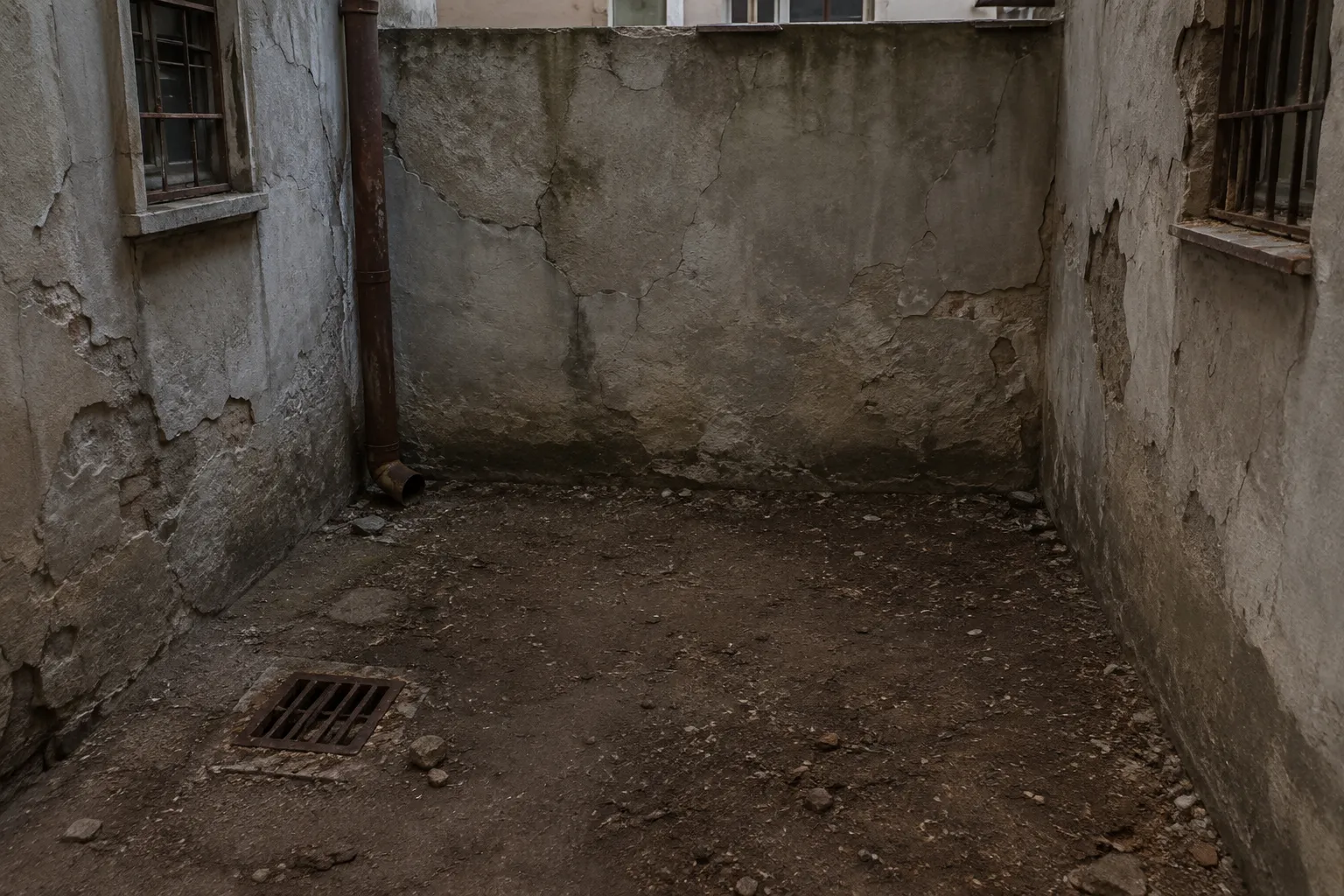
Upload your photo and see your space transformed into Chinese Jiangnan Garden style in seconds — free to try.