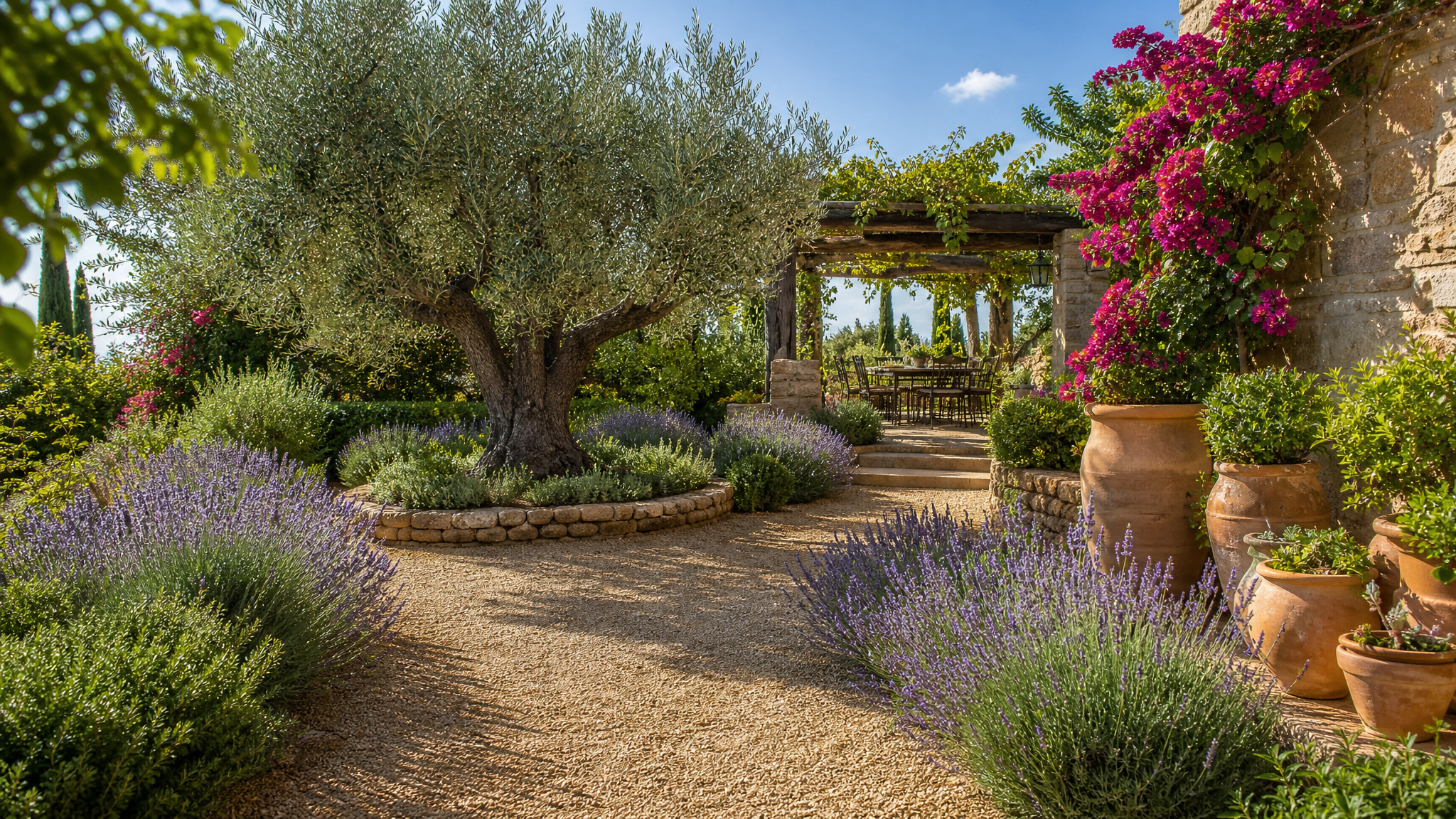
There is a reason Mediterranean gardens have endured for centuries while other trends come and go. When you combine sun-hardened plants, warm natural stone, and the scent of lavender drifting across a gravel courtyard, you get a space that feels both effortless and deeply considered. The Mediterranean style borrows from the coastal landscapes of Provence, Tuscany, Andalusia, and the Greek islands — places where gardens evolved to thrive on intense sun, poor soil, and very little rain.
In 2026, the approach is more relevant than ever. Hotter summers, tighter water restrictions, and a shift toward outdoor living have made Mediterranean gardens a practical choice, not just an aesthetic one. This guide covers every step: the plants that define the look, the materials that ground it, and the layout strategies that turn a generic backyard into a sun-drenched retreat.
What Makes a Mediterranean Garden
A Mediterranean garden is not just a collection of drought-tolerant plants arranged in gravel. It is a design philosophy built on five interconnected ideas:
1. Climate-Driven Plant Selection
Every plant earns its place by thriving — not merely surviving — in heat and dry soil. Silver-leaved shrubs like lavender, rosemary, and santolina reflect sunlight and conserve moisture through waxy or hairy leaves. Structural trees like olives and Italian cypresses provide vertical drama without demanding regular watering.
2. Warm, Natural Material Palette
The materials come from the ground itself: pale limestone, golden gravel, terracotta tiles, and lime-washed render in whites and warm ochres. Synthetic materials and bright painted surfaces are absent. The effect is a garden that looks as though it grew out of the landscape rather than being imposed upon it.
3. Outdoor Living as the Core Purpose
In Mediterranean cultures, the garden is an extension of the home. A shaded dining area under a pergola, a reading corner beside a bubbling wall fountain, a herb bed within arm's reach of the kitchen — every zone serves a specific daily ritual.
4. Layered Sensory Experience
Fragrance is as important as appearance. Brushing past rosemary, crushing thyme underfoot, and catching lavender on the evening breeze are designed moments, not happy accidents. The sound of water — even a single spout trickling into a stone basin — completes the atmosphere.
5. Relaxed Geometry
Unlike formal French gardens with clipped symmetry or modern minimalist landscapes with rigid geometry, Mediterranean design favors an organized looseness. Paths curve gently. Planting spills over edges. Pots cluster in odd-numbered groups rather than standing in perfect rows.
Essential Plants for Your Mediterranean Garden
The right plant palette is the foundation. Choose from these categories and your garden will look authentic while demanding minimal maintenance.
Structural Trees
| Tree | Character | USDA Zones | Notes |
|---|---|---|---|
| Olive (Olea europaea) | Silver leaves, sculptural trunk | 8–10 | The signature Mediterranean tree; slow-growing and drought-proof once established |
| Italian Cypress (Cupressus sempervirens) | Narrow columnar form | 7–10 | Vertical exclamation marks that anchor sight lines and frame views |
| Bay Laurel (Laurus nobilis) | Dense evergreen, aromatic leaves | 8–10 | Clip into standards for formal accents; edible leaves are a bonus |
| Fig (Ficus carica) | Bold lobed foliage, spreading canopy | 6–10 | Dappled shade for seating areas; fruiting varieties add seasonal interest |
Aromatic Shrubs and Perennials
- Lavender (Lavandula angustifolia, L. stoechas) — Plant at 18–24 inch centers in full sun. Thrives in poor, fast-draining soil. Cut back hard after flowering to prevent woody leggy growth.
- Rosemary (Salvia rosmarinus) — Use upright cultivars as informal hedging or trailing varieties to cascade over walls. Needs zero irrigation once established.
- Santolina — Silver foliage, button-yellow flowers. Clip into low mounds for structure along pathways.
- Rock Rose (Cistus) — Papery flowers in whites and pinks through early summer. Tolerates the poorest soil.
- Sage (Salvia officinalis) — Gray-green textured foliage and purple flower spikes. Combines beautifully with lavender.
- Thyme — Creeping varieties planted between paving stones release scent underfoot.
Climbers for Vertical Interest
- Bougainvillea — Explosive color in hot climates (Zones 9–11). Train over pergolas and walls for maximum drama.
- Wisteria — Best over a sturdy pergola or house wall. Needs patience but delivers a spectacular spring display.
- Star Jasmine (Trachelospermum jasminoides) — Evergreen, intensely fragrant, and well-behaved on trellises.
- Grape Vine (Vitis vinifera) — Authentic shading for a pergola dining area with seasonal foliage change.
Ground-Level Plants
- Ornamental Grasses: Stipa tenuissima and Pennisetum bring movement and soften hard edges.
- Agapanthus: Bold blue or white flower heads on tall stems; perfect for pot displays.
- Sedum and Sempervivum: Low-water groundcovers for dry walls and rock gardens.
- Gaura: Airy pink or white flowers that dance in the breeze from late spring through fall.
Materials and Hardscape
In a Mediterranean garden, hardscape covers 40–50% of the total area. Choosing the right materials sets the entire mood.
Paving
Use natural stone or terracotta for patios and main seating areas. Sawn limestone in warm buff tones or reclaimed terracotta tiles create the most authentic look. Large-format pavers reduce grout lines and make small spaces feel larger. Avoid dark gray concrete — it absorbs heat and clashes with the warm palette.
Gravel and Pathways
Gravel is the workhorse of the Mediterranean garden. Choose decomposed granite in golden tones, limestone chippings (10–14mm), or pale flint gravel. Lay over compacted sub-base with landscape membrane to prevent weeds. For pathways, 3/8-inch to 3/4-inch angular gravel compacts well and stays stable underfoot.
Walls and Boundaries
- Lime render in white or warm ochre mimics plastered courtyard walls of southern Spain
- Natural stone walls (dry-stacked or mortared) add rustic texture
- Timber pergola beams in chunky oak or clean-lined powder-coated steel support climbing plants and define outdoor rooms
Accents and Focal Points
Terracotta pots are non-negotiable. Group them in odd numbers (3, 5, 7), vary the heights, and plant with a single species per pot — a standard olive, a lavender ball, or trailing rosemary. A blue-glazed pot adds a classic pop of Mediterranean color.
For water features, keep it simple: a stone basin with a wall-mounted spout, a narrow rill set into paving, or a low bubbler bowl. The sound of water matters more than the spectacle. Ornate tiered fountains belong in public squares, not residential gardens.
Layout Strategy: Designing Your Mediterranean Garden
Zone Your Space
Divide the garden into three functional zones connected by gravel or stone paths:
-
Living Zone — Adjacent to the house. A paved or stone terrace under a pergola, large enough for a dining table and seating. This is where you spend 80% of your garden time.
-
Planting Zone — Surrounding beds filled with aromatic shrubs, structural trees, and groundcovers. Use gravel as mulch rather than bark — it reflects the Mediterranean aesthetic and lasts indefinitely.
-
Feature Zone — A focal destination at the garden's far end. A water feature, a specimen olive tree in a terracotta pot, or a built-in bench against a rendered wall gives the eye somewhere to travel.
Design Principles
- Frame views with vertical elements (cypress pairs, pergola posts, tall pots) to create depth
- Vary levels with raised beds, low retaining walls, or sunken seating areas for visual interest
- Create shade — a pergola is essential, not optional. Without shade, no one uses the garden in midsummer
- Keep pathways generous — 4 feet wide minimum for main routes; narrower for secondary paths through planting
- Face seating toward the best view — usually back toward the house or toward a focal feature
Small Garden Adaptation
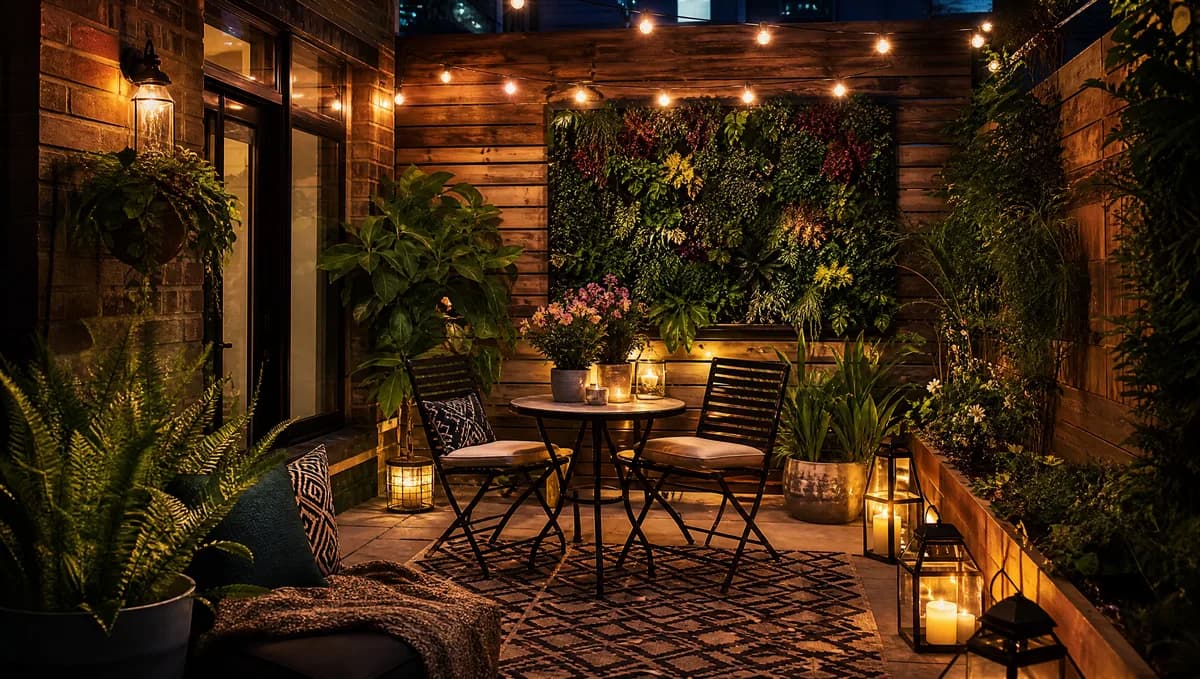
Even a 200-square-foot courtyard can feel Mediterranean. Use a single large terracotta urn as the focal point, pave the floor in limestone or gravel, train jasmine up the walls, and add a bistro table under a wall-mounted sail shade. The small garden ideas page has more compact layout inspiration.
Budget Guide
Mediterranean gardens offer genuine flexibility across budgets because the core materials — gravel, terracotta, and drought-tolerant plants — are inherently affordable.
| Level | What You Get | Estimated Cost (USD) |
|---|---|---|
| DIY Starter | Gravel courtyard + 6–8 aromatic plants + terracotta pots + basic edging | $1,500 – $3,500 |
| Mid-Range | Stone paving terrace + pergola + gravel pathways + specimen olive + planted borders | $8,000 – $20,000 |
| Premium | Natural stone throughout + custom pergola + water feature + mature specimens + lighting | $25,000 – $50,000+ |
Money-saving tips: Grow lavender and rosemary from inexpensive small plugs rather than buying mature plants — they fill out within two seasons. Source terracotta pots from independent importers rather than garden centers. Use reclaimed stone where available. Phase the project: start with the living zone and add planting zones over the following seasons.
Maintenance Calendar
One of the greatest advantages of a Mediterranean garden is the low ongoing effort:
- Spring: Cut back lavender and santolina to prevent woody growth. Feed citrus and fig trees. Check irrigation drip lines.
- Summer: Water newly planted trees deeply once weekly until established. Mature plants need almost no watering. Deadhead roses and remove spent flower stems.
- Fall: Plant new shrubs and perennials (fall planting establishes better in warm climates). Top up gravel mulch. Prune wisteria after leaf drop.
- Winter: Protect tender plants (young olives, bougainvillea) from hard frost with fleece. Enjoy the structural beauty of evergreen herbs and bare fig branches.
Common Mistakes to Avoid
Overplanting. A Mediterranean garden depends on visible ground plane — gravel, stone, bare earth. When planting fills every inch, the garden loses its character and becomes a generic mixed border that happens to contain lavender.
Using the wrong soil. Mediterranean plants die in wet feet. If you have clay soil, build raised beds and mix in coarse grit (20–30% by volume) to create the fast drainage these plants demand.
Ignoring shade. Full sun is essential for the plants, but miserable for the humans. A pergola, large umbrella, or mature tree providing dappled shade over the seating area is non-negotiable.
Cheap terracotta. Mass-produced thin terracotta cracks in the first frost. Invest in thick-walled, frost-rated pots — they last decades and develop a beautiful patina.
Visualize Before You Build
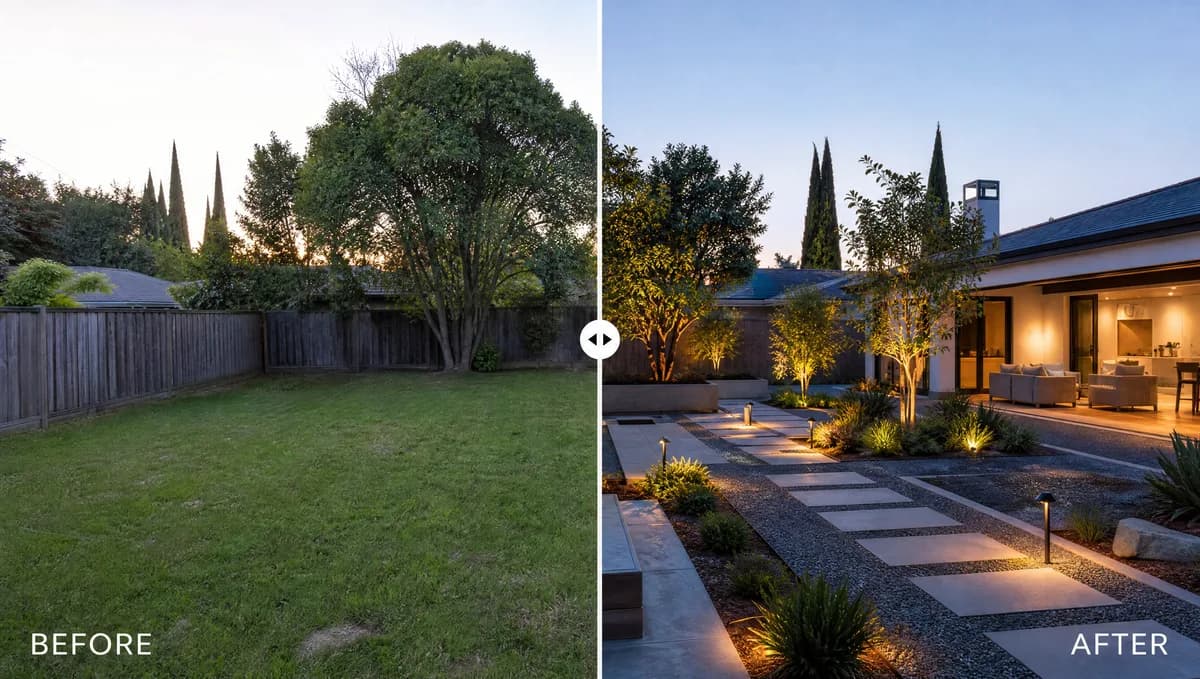
Not sure whether Mediterranean is the right style for your space? Upload a photo of your yard to our AI landscape design tool and see it transformed into a lush Mediterranean garden in seconds. You can also compare it with related styles like Tropical Resort for a bolder plant palette, or Desert Xeriscape for an even more water-wise approach.
The AI preserves your existing structures and reimagines the landscape around them — no commitment required, no sign-up needed.