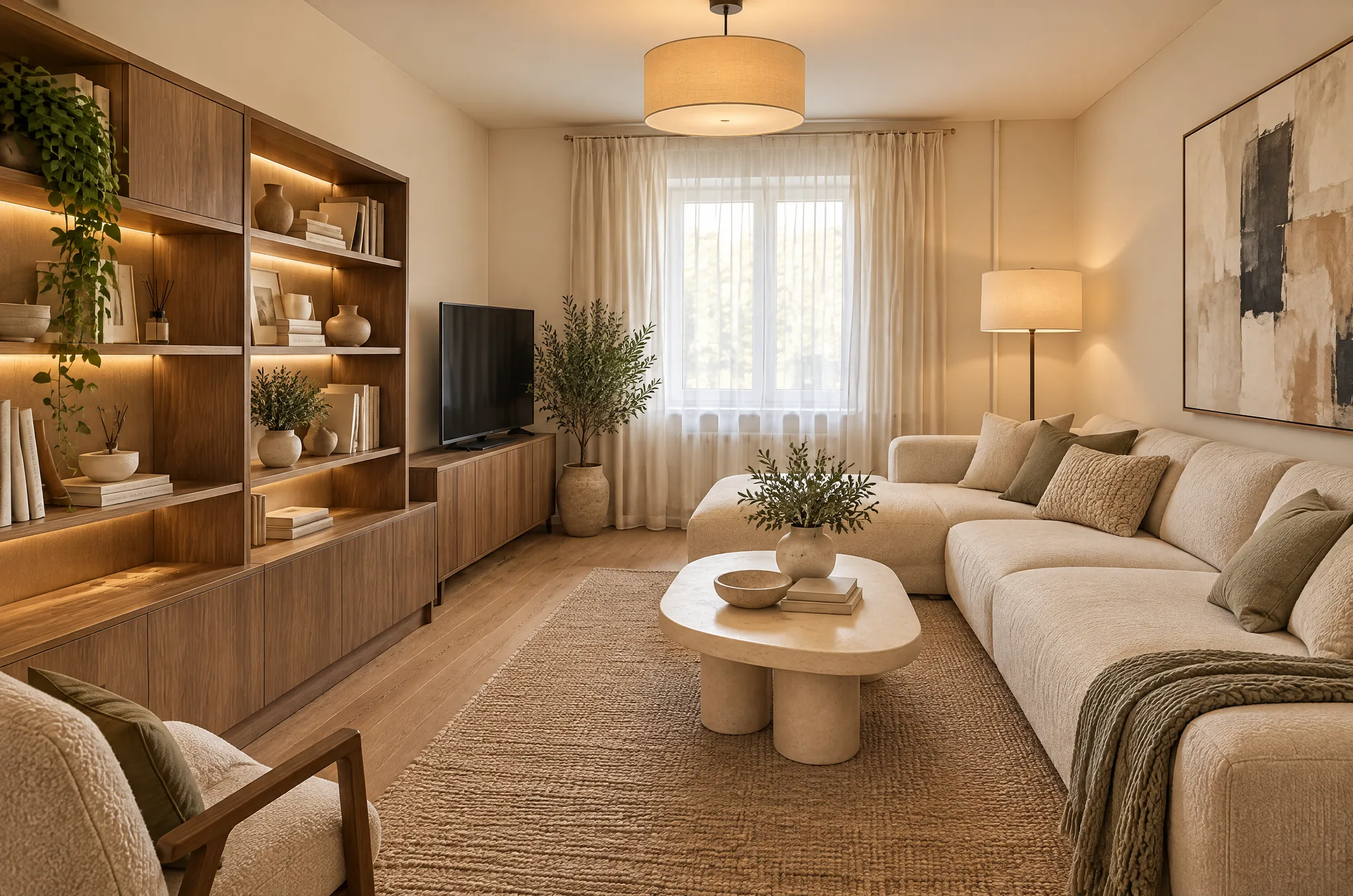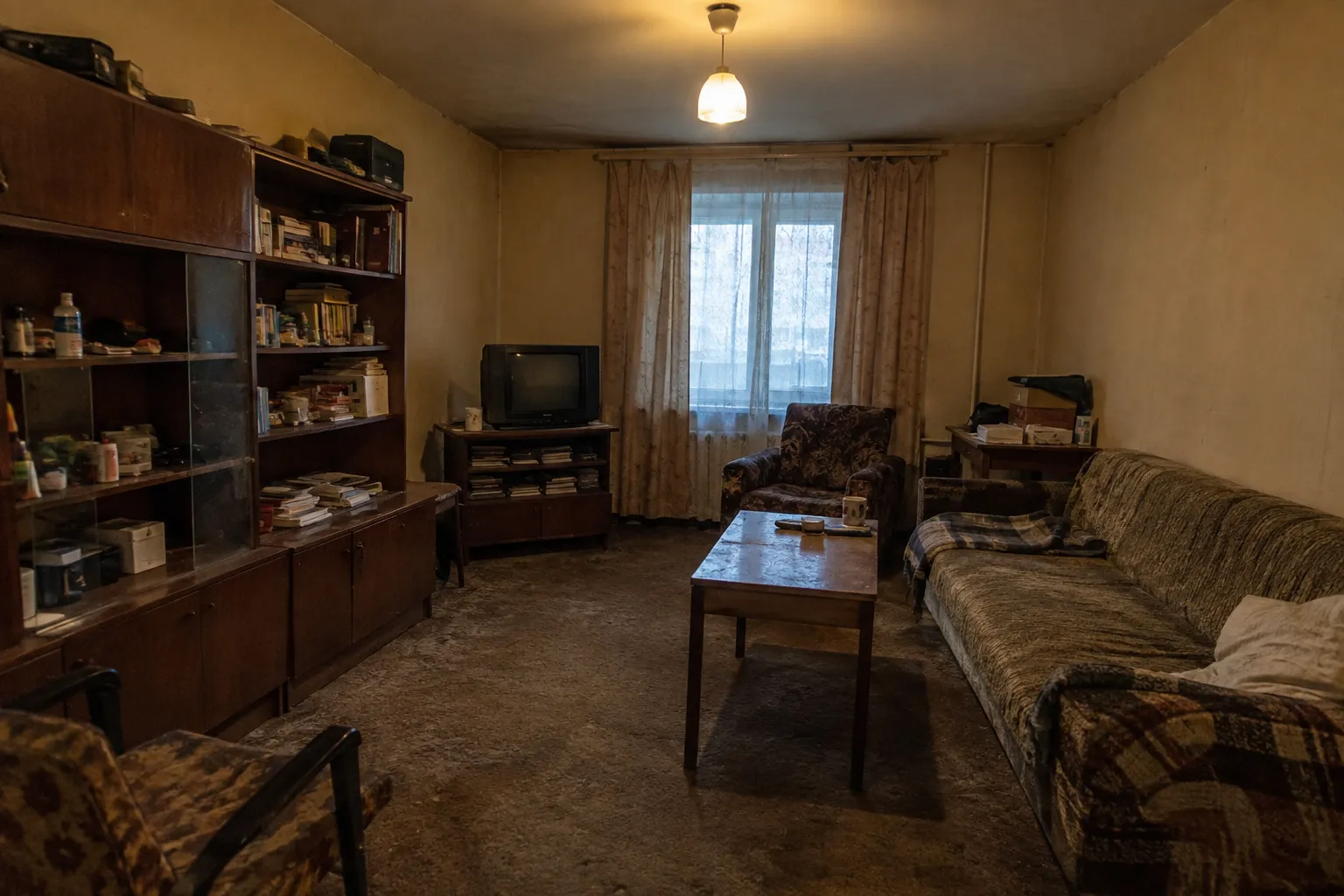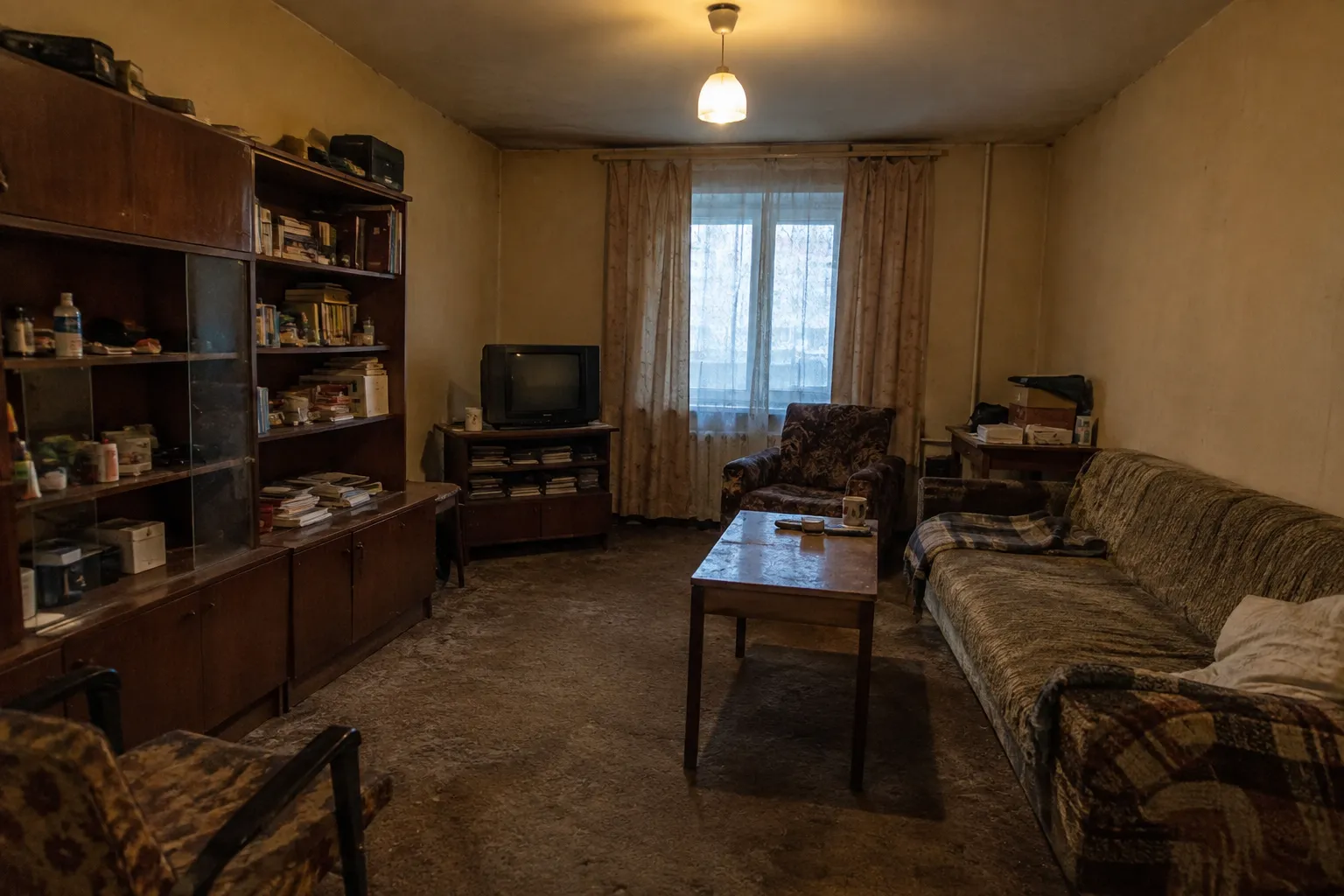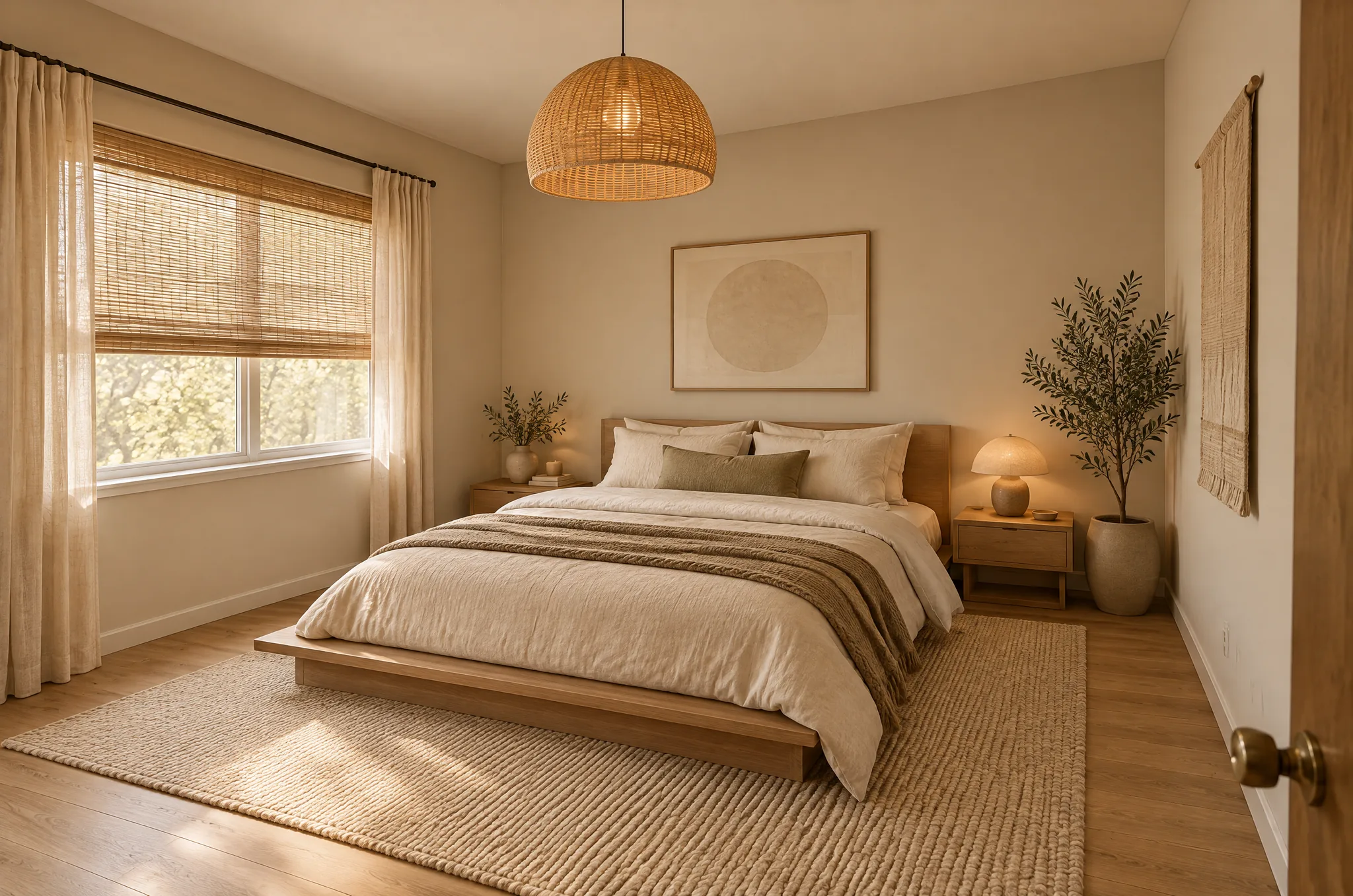


How to Choose a Home Office Style
A home office needs to help you focus, so style choices should support concentration as much as appearance. Think about how long you work there, whether you take video calls and how much storage you need. The four styles below each have an idea page with desks, chairs and lighting recommendations.
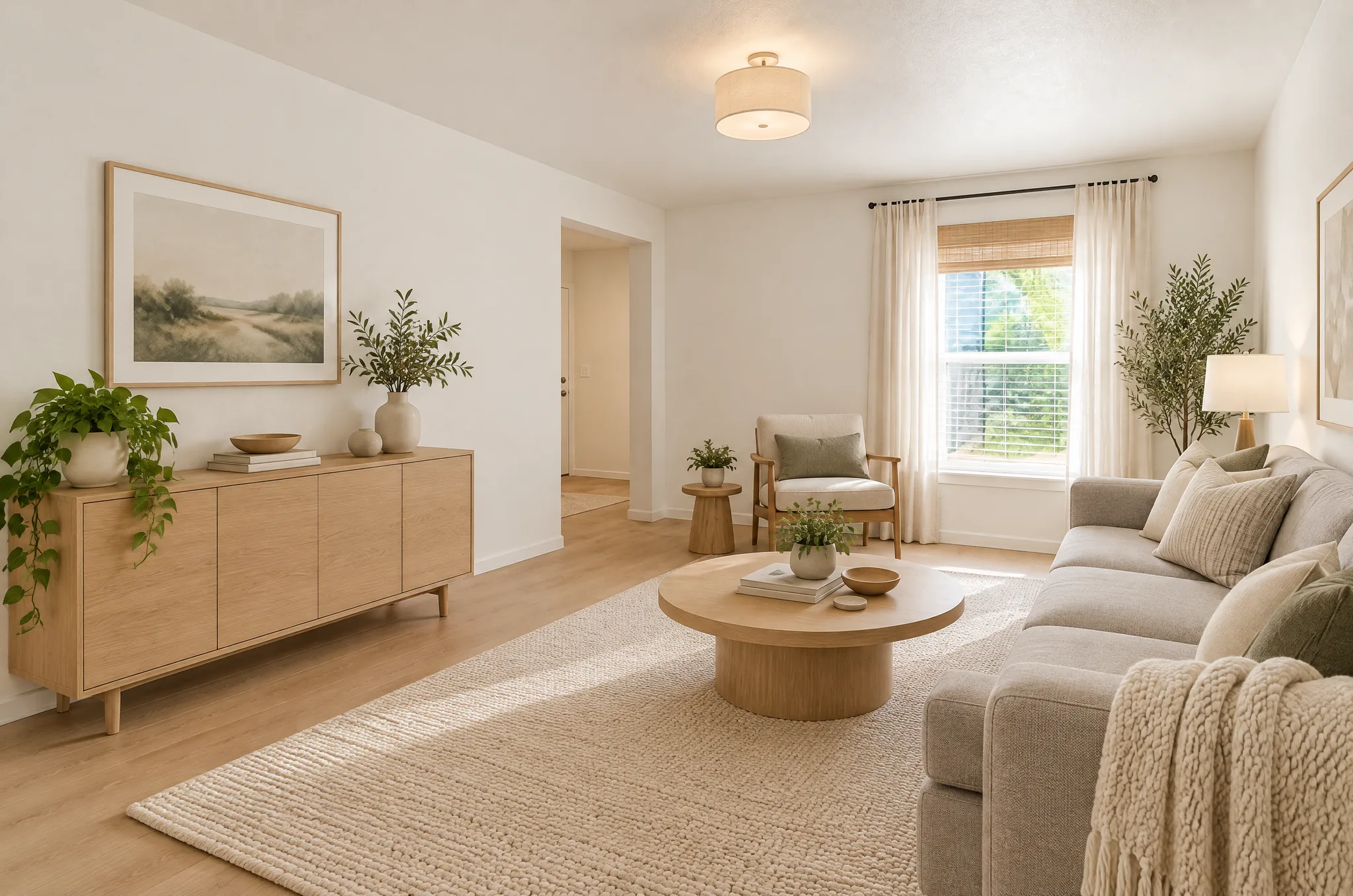
- Scandinavian — Pale wood, white walls and warm task lighting create a bright, calm workspace. Ideal for small rooms and spare corners. See the Scandinavian overview.
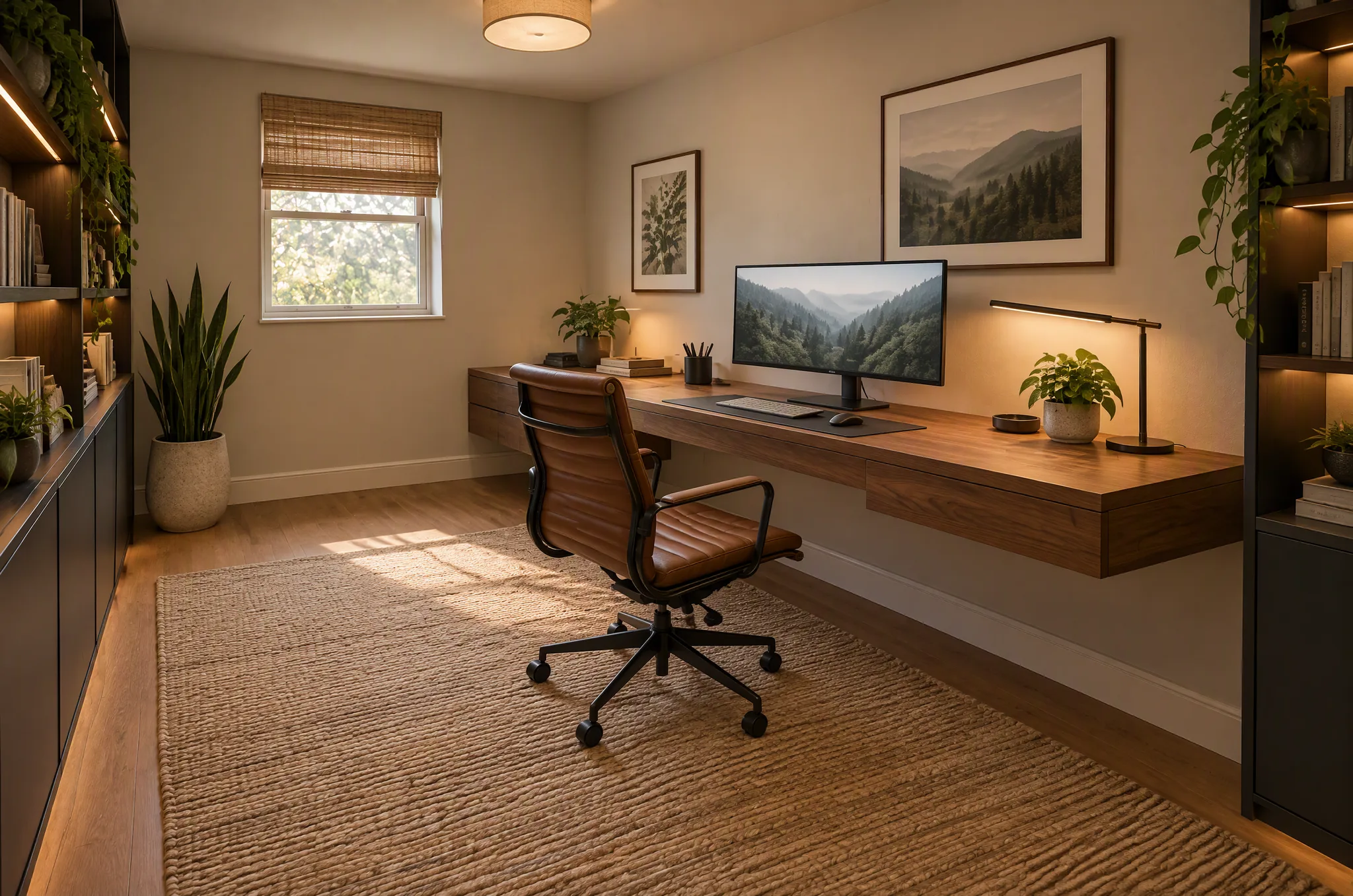
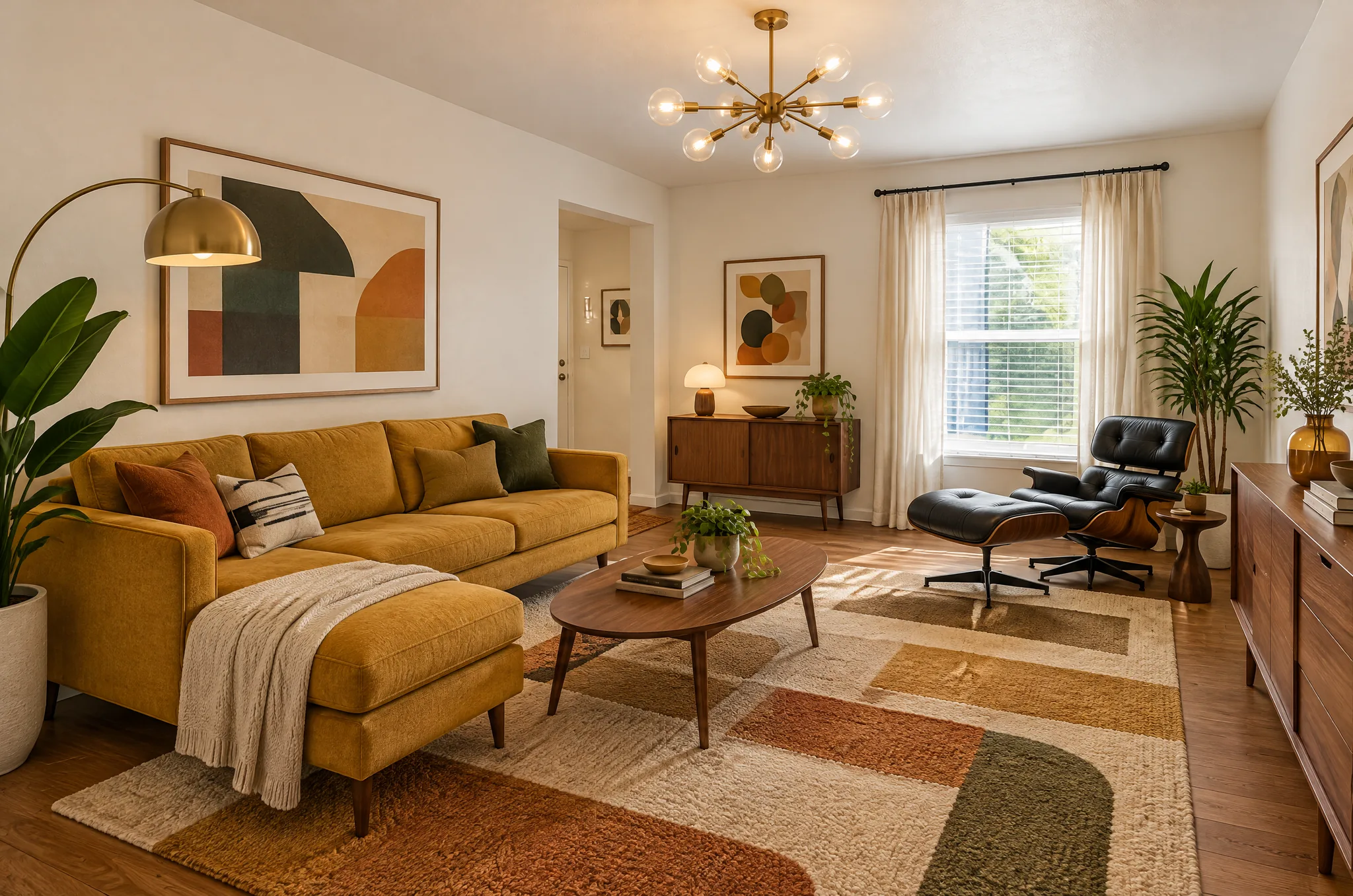
- Mid-century modern — A walnut desk, a classic task chair and a sculptural lamp bring character and warmth. Read about mid-century modern.
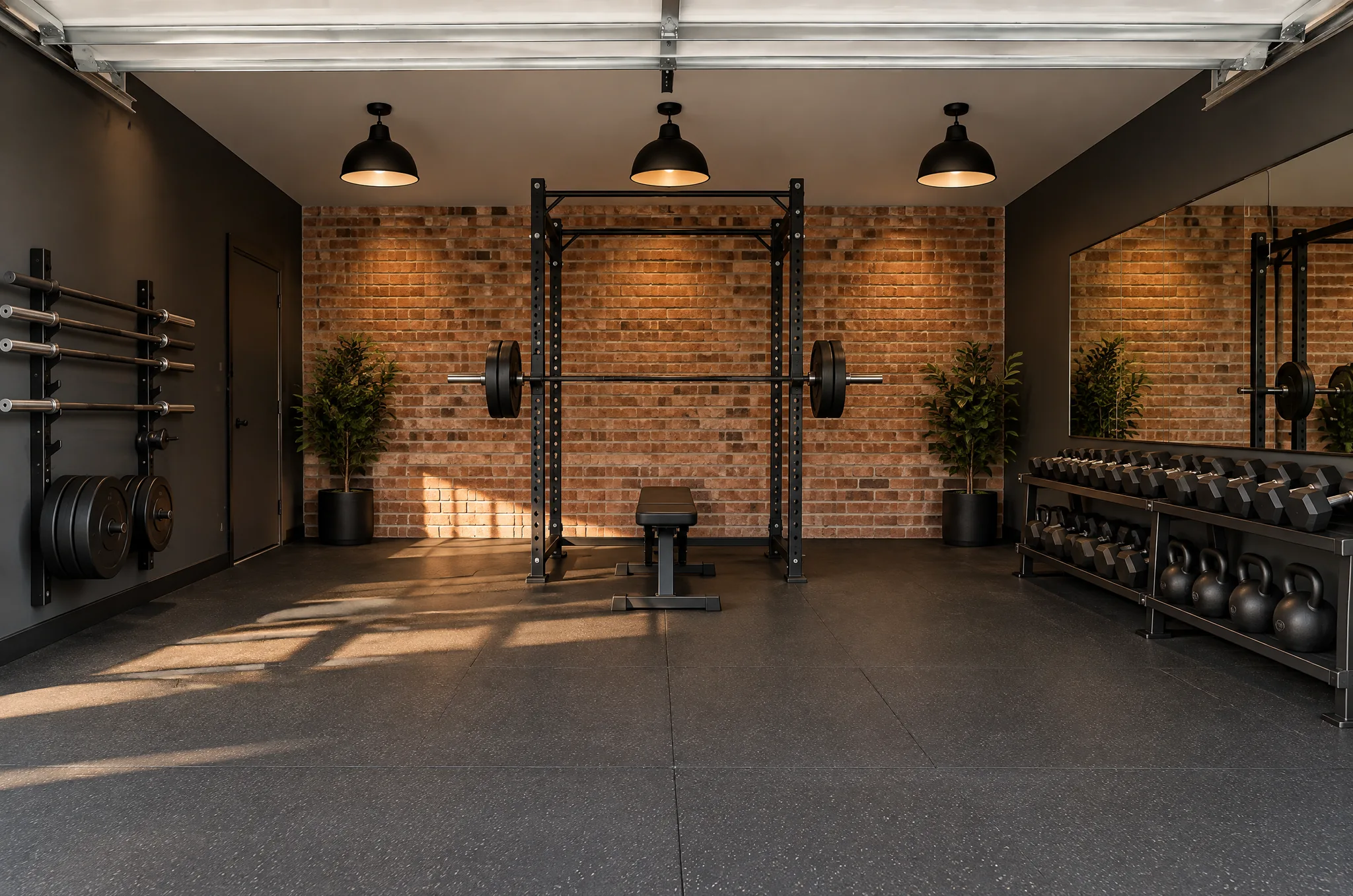
- Industrial — Steel-and-wood desks, metal shelving and track lighting suit a studio feel. Learn about the industrial style.
- Modern minimalist — A clean desk, concealed cables and one task lamp keep distractions to a minimum. Explore the modern minimalist style.
Layout and Sizing Basics
A comfortable office is about ergonomics first and decoration second:
- Set the desk height — Most desks are 28 to 30 inches high. Elbows should rest at about 90 degrees with shoulders relaxed.
- Position the screen — Place it about an arm's length away, with the top at or slightly below eye level.
- Control the light — Place the desk at right angles to the window to reduce glare. Add a task lamp and a dimmable overhead light.
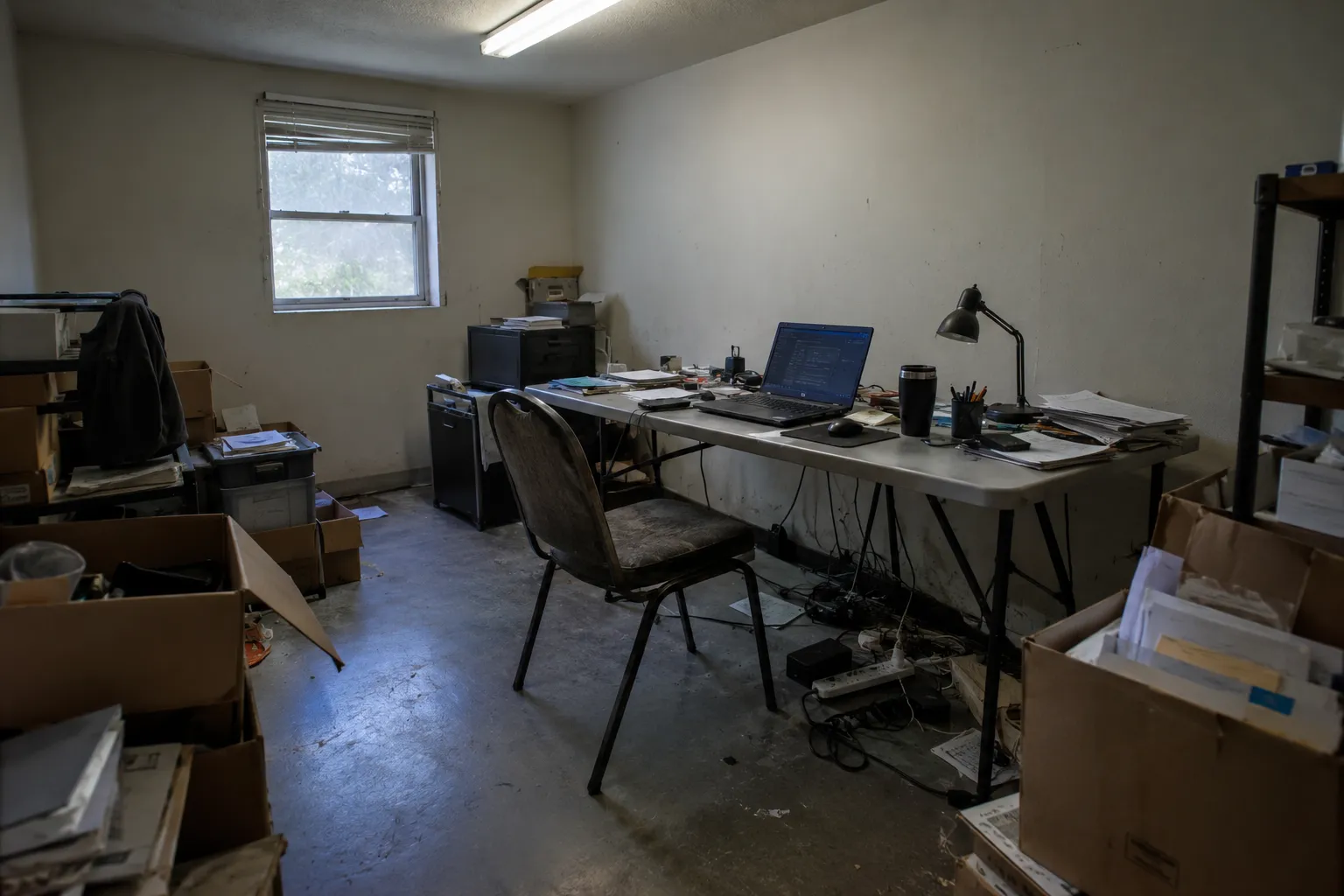
- Plan for cables — Use a surge protector mounted under the desk, cable trays and adhesive clips to keep wires out of sight.
- Choose a good chair — Adjustable height, lumbar support and armrests are worth the investment if you sit for hours.
- Sort storage — Keep daily items within reach, and move reference materials and spare supplies to closed cabinets.
Common Mistakes
- Working on a dining chair — Poor seating leads to discomfort and reduces focus. Spend on the chair first.
- Facing a blank wall — If possible, face the room or the window, rather than a wall that feels confining.
- Ignoring the video background — Place a bookshelf, artwork or plant behind you, and keep clutter out of the frame.
- Poor lighting — Dim rooms strain your eyes. Combine daylight, a task lamp and ambient lighting.
- Letting paper pile up — Keep a simple filing system and clear the desk at the end of each day.
Budget Overview
The ranges below are typical for a home office of around 80 to 120 square feet and vary by region and brand.
- Refresh ($300 – $1,500) — A new lamp, organizers, a better chair, plants and paint.
- Mid-range ($2,500 – $8,000) — A quality desk and chair, shelving, lighting, a rug and acoustic or window treatments.
- Premium ($10,000 – $25,000+) — Custom built-ins, a sit-stand desk, designer seating and full lighting design.
Invest in the chair, desk and lighting first. Preview different looks for your workspace with our AI room design tool.